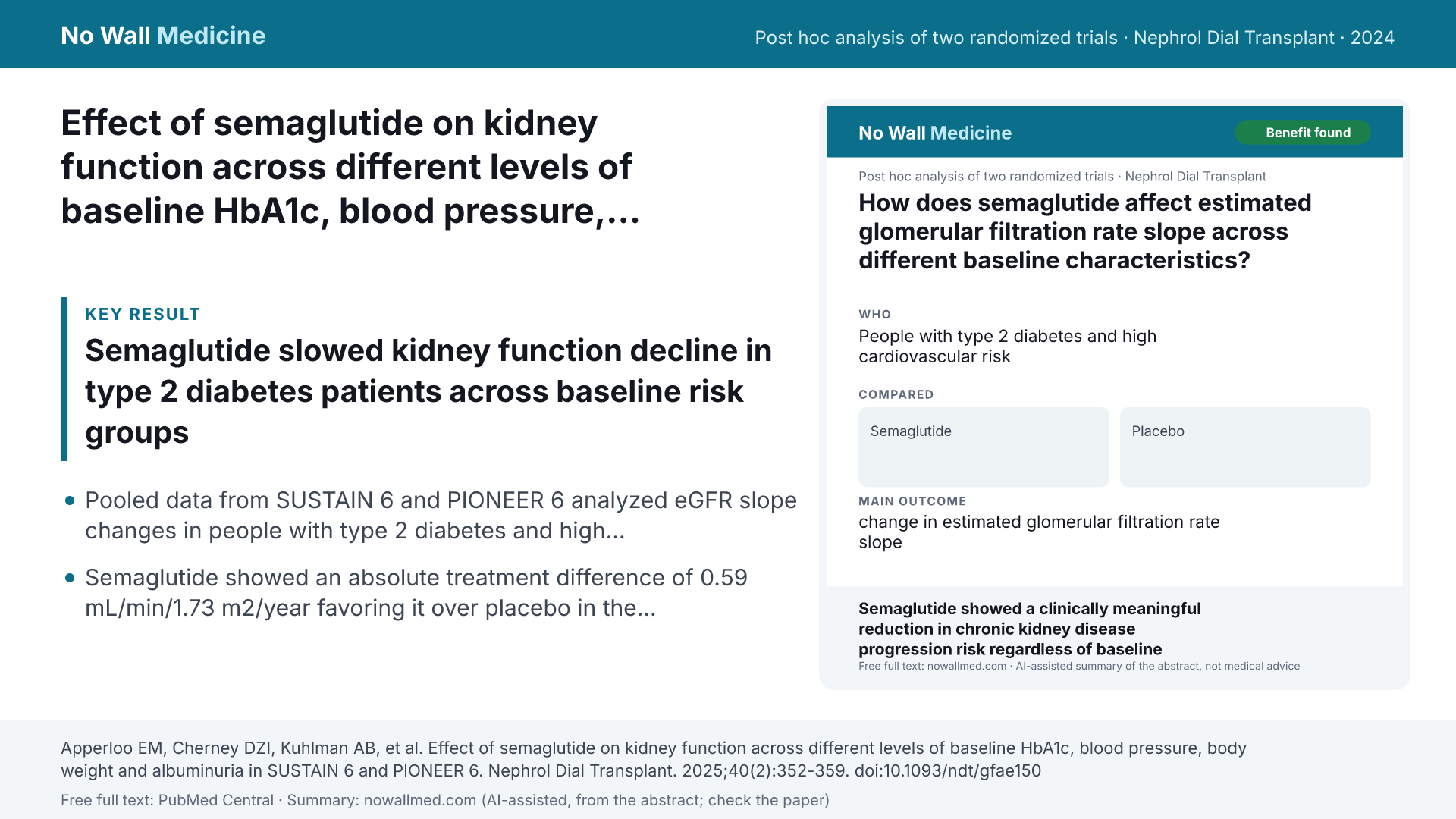
Semaglutide slowed kidney function decline in type 2 diabetes patients across baseline risk groups
Effect of semaglutide on kidney function across different levels of baseline HbA1c, blood pressure, body weight and albuminuria in SUSTAIN 6 and PIONEER 6
Post hoc analysis of two randomized trialsBenefit found
How does semaglutide affect estimated glomerular filtration rate slope across different baseline characteristics?
Who
People with type 2 diabetes and high cardiovascular risk
Compared
Semaglutide
Placebo
Main outcome
change in estimated glomerular filtration rate slope
Result: 0.59 (95% CI 0.29 to 0.89) mL/min/1.73 m2/year
Bottom line: Semaglutide showed a clinically meaningful reduction in chronic kidney disease progression risk regardless of baseline glycemic, blood pressure, or weight levels.
Nephrol Dial Transplant · 2024-07-03 · Save PNG
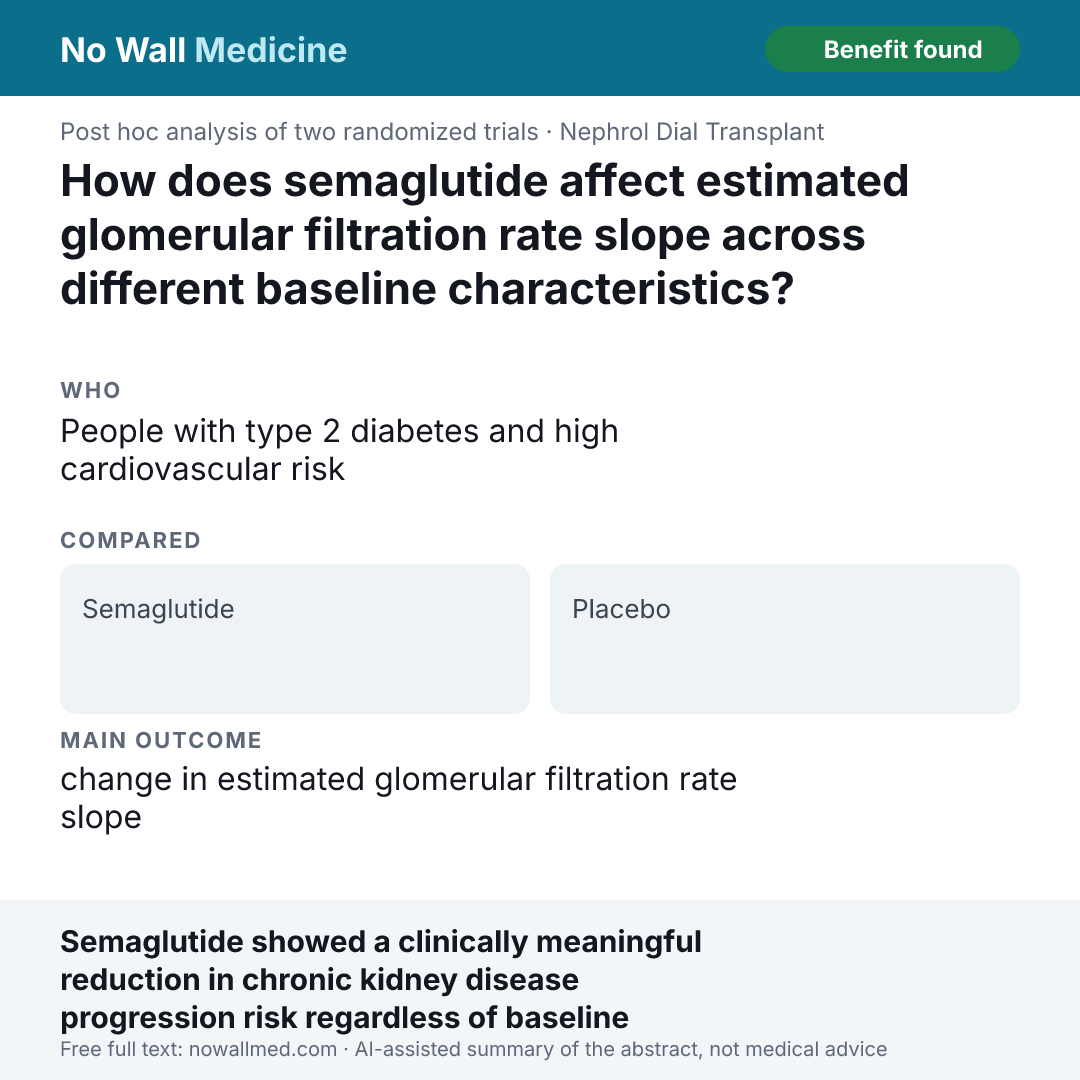
Clinical question: How does semaglutide affect estimated glomerular filtration rate slope across different baseline characteristics?
Why it matters: Applies to people with type 2 diabetes and high cardiovascular risk; suggests semaglutide may slow kidney decline regardless of baseline HbA1c, BP, BMI, or albuminuria.
Key points
- Pooled data from SUSTAIN 6 and PIONEER 6 analyzed eGFR slope changes in people with type 2 diabetes and high cardiovascular risk.
- Semaglutide showed an absolute treatment difference of 0.59 mL/min/1.73 m2/year favoring it over placebo in the pooled analysis.
- This benefit was consistent across all subgroups defined by HbA1c, blood pressure, BMI, and albuminuria levels.
Headline and key points written with AI from the paper’s abstract, with every number checked against it. Read the paper before relying on them.
Was this summary helpful?
Subject terms
Headline, design, result, key points, caveat and citation as plain text.
Cite this article
Apperloo EM, Cherney DZI, Kuhlman AB, et al. Effect of semaglutide on kidney function across different levels of baseline HbA1c, blood pressure, body weight and albuminuria in SUSTAIN 6 and PIONEER 6. Nephrol Dial Transplant. 2025;40(2):352-359. doi:10.1093/ndt/gfae150
Spotted a mistake? Suggest a correction