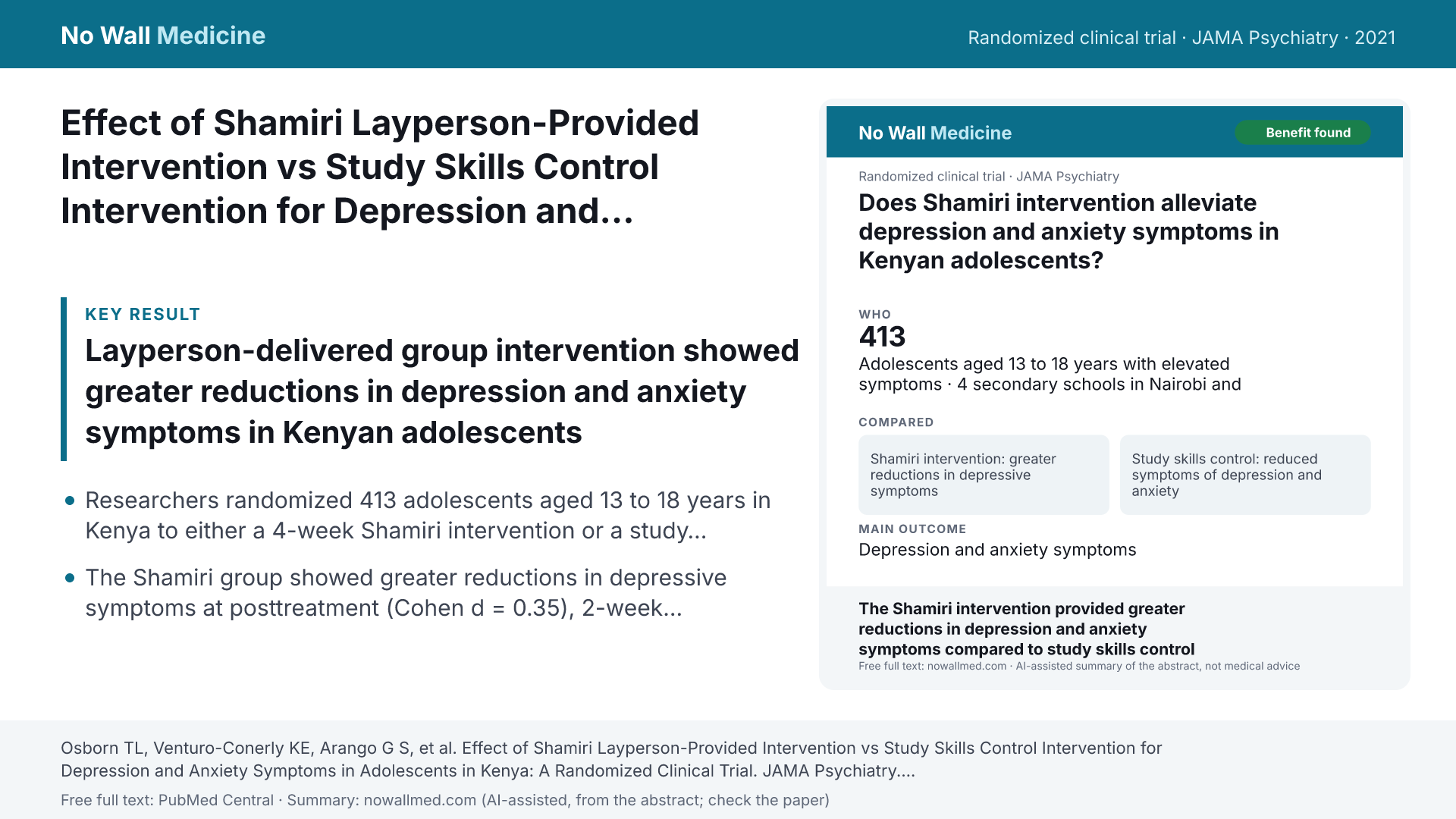
Effect of Shamiri Layperson-Provided Intervention vs Study Skills Control Intervention for Depression and Anxiety Symptoms in Adolescents in Kenya: A Randomized Clinical Trial
Key result: Layperson-delivered group intervention showed greater reductions in depression and anxiety symptoms in Kenyan adolescents
Key points
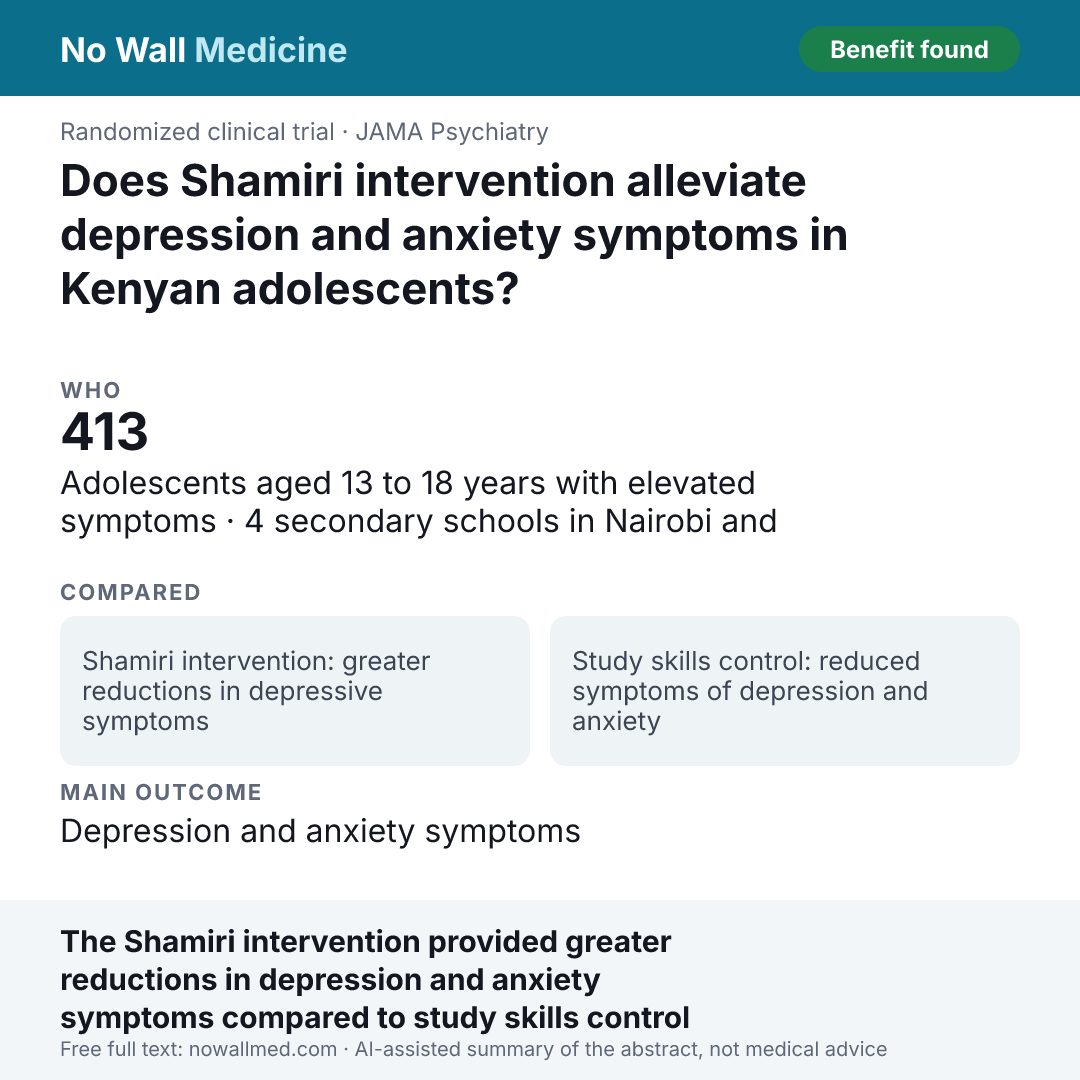
- Researchers randomized 413 adolescents aged 13 to 18 years in Kenya to either a 4-week Shamiri intervention or a study skills control group.
- The Shamiri group showed greater reductions in depressive symptoms at posttreatment (Cohen d = 0.35), 2-week follow-up (Cohen d = 0.28), and 7-month follow-up (Cohen d = 0.45).
- The Shamiri group also showed greater reductions in anxiety symptoms at posttreatment (Cohen d = 0.37) and 7-month follow-up (Cohen d = 0.44).
Why it matters: Low-cost interventions are needed in low-resource countries like those in Sub-Saharan Africa to address adolescent depression and anxiety.
Discussion prompts
- Would these patients look like yours? Who was left out?
- Is the main outcome one that matters to patients?
- Is the difference large enough to change what you do?
Cite: Osborn TL, Venturo-Conerly KE, Arango G S, et al. Effect of Shamiri Layperson-Provided Intervention vs Study Skills Control Intervention for Depression and Anxiety Symptoms in Adolescents in Kenya: A Randomized Clinical Trial. JAMA Psychiatry. 2021;78(8):829-837. doi:10.1001/jamapsychiatry.2021.1129
Free full text: PubMed Central · Summary and visual abstract: nowallmed.com/a/effect-of-shamiri-layperson-provided-intervention-vs-study-skills-w0znhm/ (AI-assisted from the abstract; check the paper before relying on it).