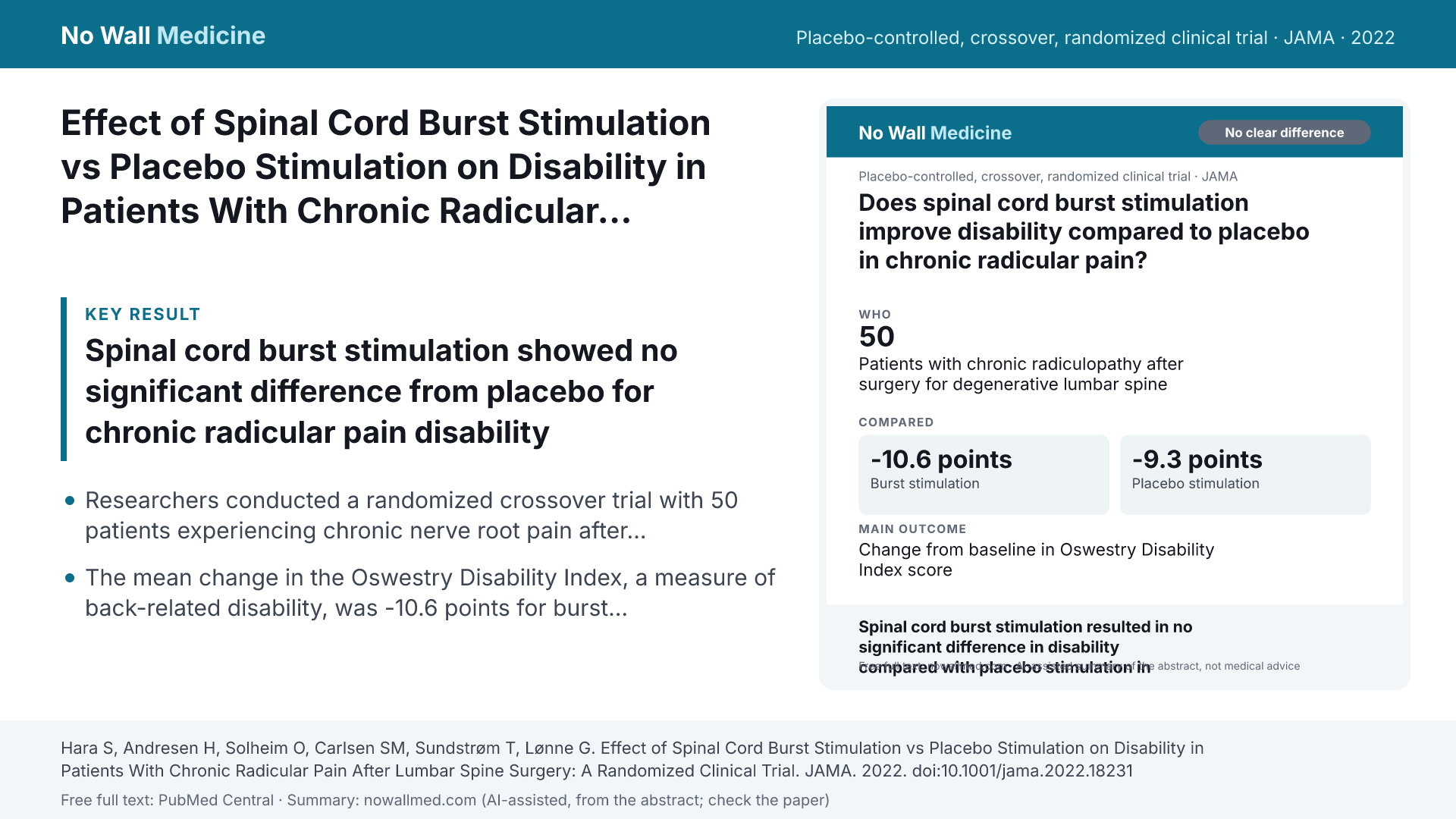
Spinal cord burst stimulation showed no significant difference from placebo for chronic radicular pain disability
Effect of Spinal Cord Burst Stimulation vs Placebo Stimulation on Disability in Patients With Chronic Radicular Pain After Lumbar Spine Surgery: A Randomized Clinical Trial
Placebo-controlled, crossover, randomized clinical trialNo clear difference
Does spinal cord burst stimulation improve disability compared to placebo in chronic radicular pain?
Who
50
Patients with chronic radiculopathy after surgery for degenerative lumbar spine disorders · St Olavs University Hospital in Norway
Compared
-10.6 pointsBurst stimulation
-9.3 pointsPlacebo stimulation
Main outcome
Change from baseline in Oswestry Disability Index score
Result: -1.3 points (95% CI, -3.9 to 1.3 points)
Bottom line: Spinal cord burst stimulation resulted in no significant difference in disability compared with placebo stimulation in patients with chronic radicular pain.
JAMA · 2022-10-18Download image
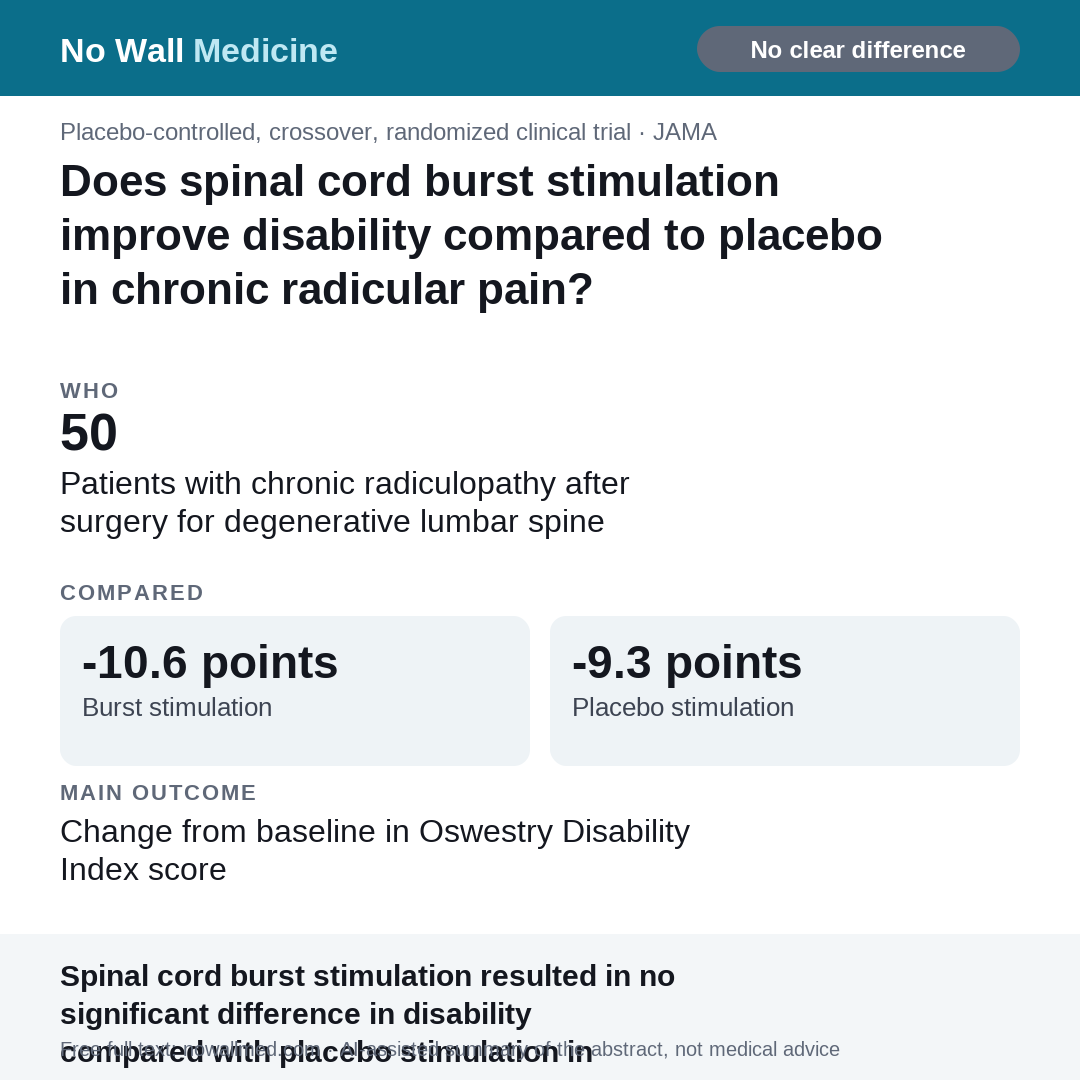
Clinical question: Does spinal cord burst stimulation improve disability compared to placebo in chronic radicular pain?
Why it matters: Rigorous evidence regarding the efficacy of spinal cord burst stimulation for chronic pain after lumbar spine surgery is lacking.
Key points
- Researchers conducted a randomized crossover trial with 50 patients experiencing chronic nerve root pain after lumbar spine surgery.
- The mean change in the Oswestry Disability Index, a measure of back-related disability, was -10.6 points for burst stimulation and -9.3 points for placebo, with a difference of -1.3 points.
- Adverse events occurred in 18% of patients, including 8% who required surgical revision of the implanted system.
Headline and key points written with AI from the paper’s abstract, with every number checked against it. Read the paper before relying on them.
Was this summary helpful?
Subject terms
Cite this article
Hara S, Andresen H, Solheim O, Carlsen SM, Sundstrøm T, Lønne G. Effect of Spinal Cord Burst Stimulation vs Placebo Stimulation on Disability in Patients With Chronic Radicular Pain After Lumbar Spine Surgery: A Randomized Clinical Trial. JAMA. 2022. doi:10.1001/jama.2022.18231
Spotted a mistake? Suggest a correction