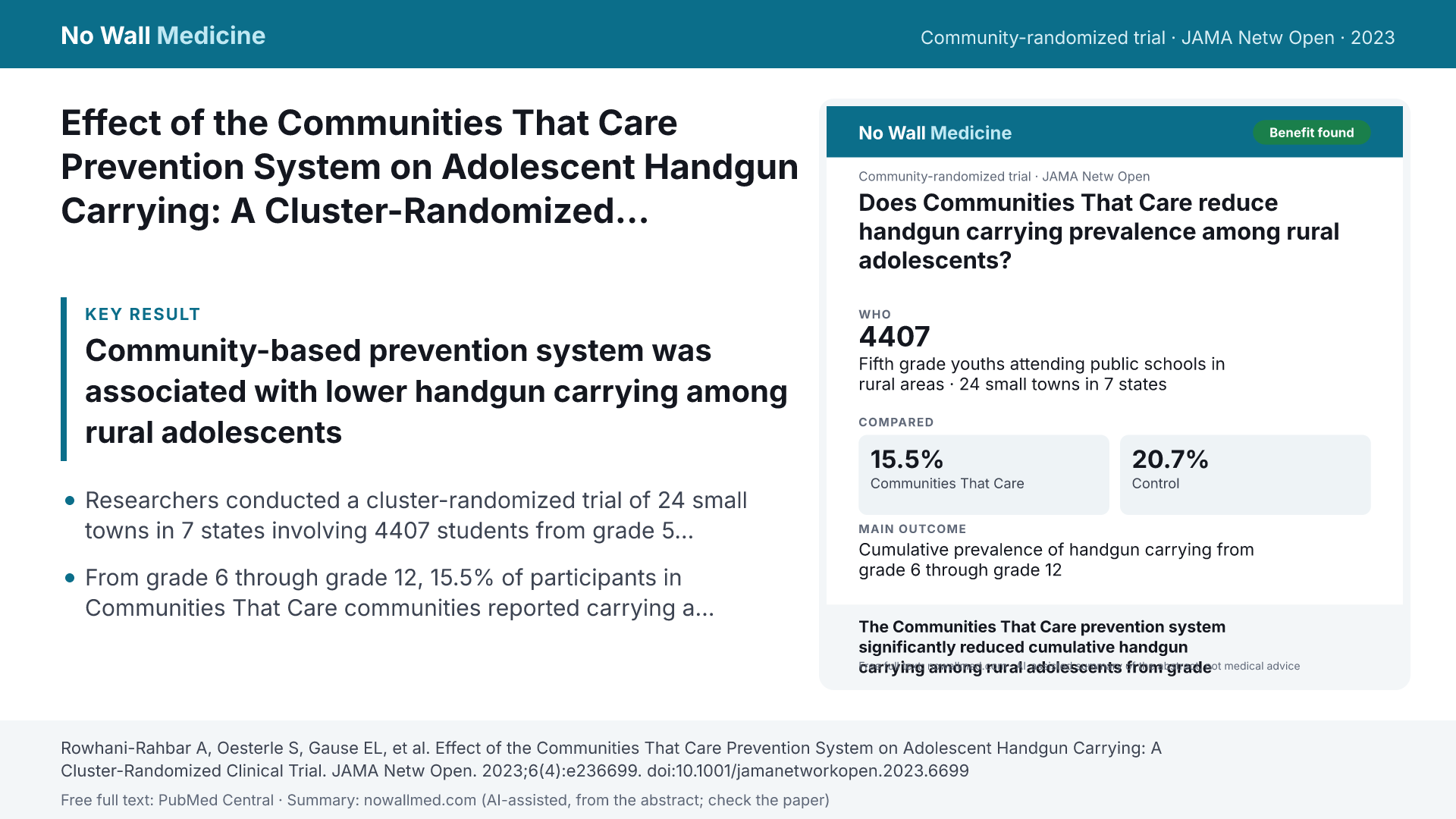
Community-based prevention system was associated with lower handgun carrying among rural adolescents
Effect of the Communities That Care Prevention System on Adolescent Handgun Carrying: A Cluster-Randomized Clinical Trial
Community-randomized trialBenefit found
Does Communities That Care reduce handgun carrying prevalence among rural adolescents?
Who
4407
Fifth grade youths attending public schools in rural areas · 24 small towns in 7 states
Compared
15.5%Communities That Care
20.7%Control
Main outcome
Cumulative prevalence of handgun carrying from grade 6 through grade 12
Result: odds ratio 0.76 (95% CI, 0.70-0.84)
Bottom line: The Communities That Care prevention system significantly reduced cumulative handgun carrying among rural adolescents from grade 6 through grade 12.
JAMA Netw Open · 2023-04-03Download image
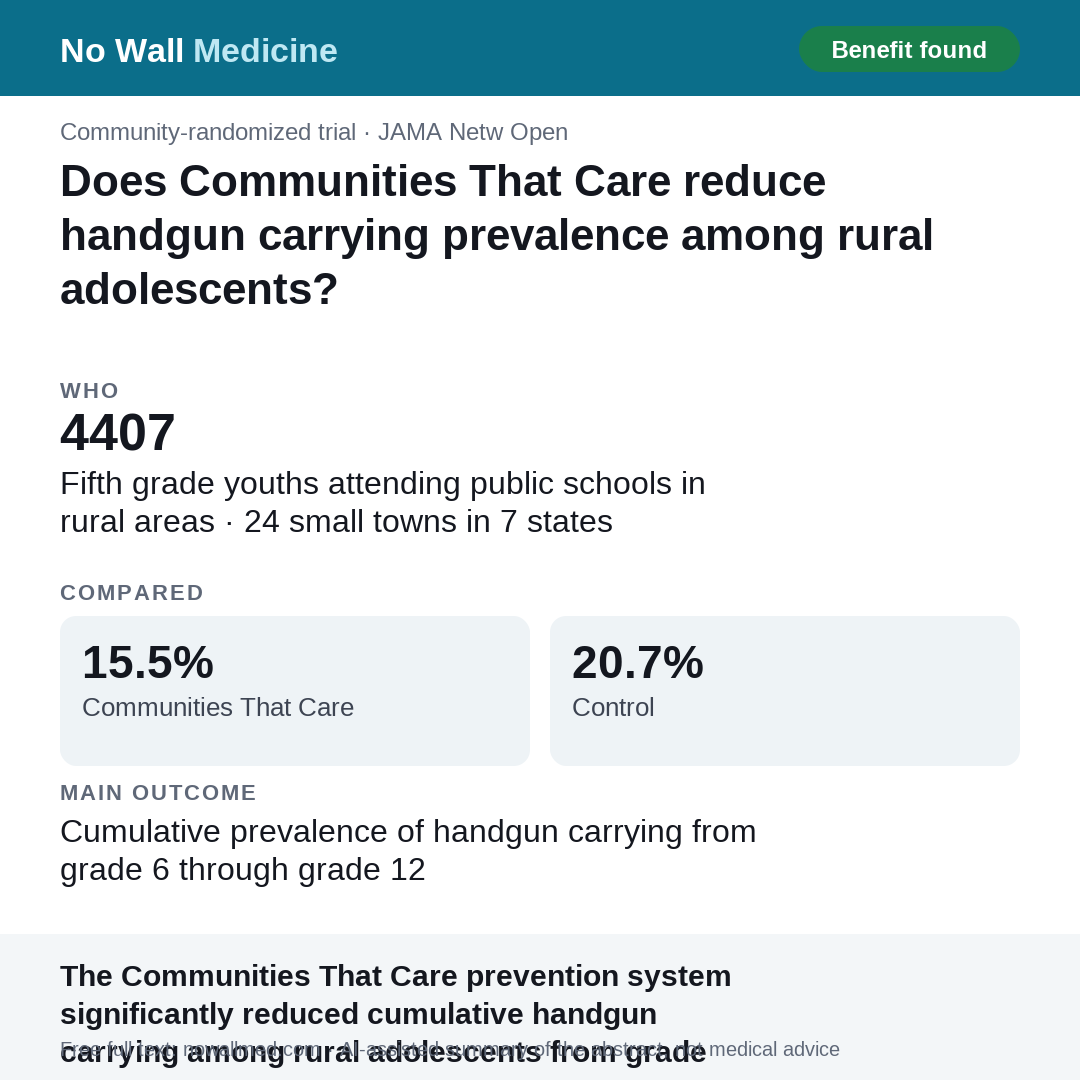
Clinical question: Does Communities That Care reduce handgun carrying prevalence among rural adolescents?
Why it matters: It was unknown if community-based prevention systems focusing on risk and protective factors could reduce handgun carrying among adolescents in rural areas.
In absolute numbers
Communities That Care: 15.5% · Control: 20.7% → a difference of 5.2 percentage points, so about 20 people would need the treatment for 1 more to benefit (number needed to treat) over the trial’s follow-up.
Worked out by us from the two group results above, not reported by the authors. Check the paper for the exact outcome and timing.
Key points
- Researchers conducted a cluster-randomized trial of 24 small towns in 7 states involving 4407 students from grade 5 through grade 12.
- From grade 6 through grade 12, 15.5% of participants in Communities That Care communities reported carrying a handgun at least once compared to 20.7% in control communities.
- The prevention system was associated with a 27% reduction in past-year handgun carrying at a given grade and a 24% cumulative reduction through grade 12.
Headline and key points written with AI from the paper’s abstract, with every number checked against it. Read the paper before relying on them.
Was this summary helpful?
Subject terms
Cite this article
Rowhani-Rahbar A, Oesterle S, Gause EL, Kuklinski MR, Ellyson AM, Schleimer JP. Effect of the Communities That Care Prevention System on Adolescent Handgun Carrying: A Cluster-Randomized Clinical Trial. JAMA Netw Open. 2023. doi:10.1001/jamanetworkopen.2023.6699
Spotted a mistake? Suggest a correction
Top studies every Monday
The week’s key trials and guidelines in your specialties, plus any topics you follow. By email, free.
Get the weekly digest