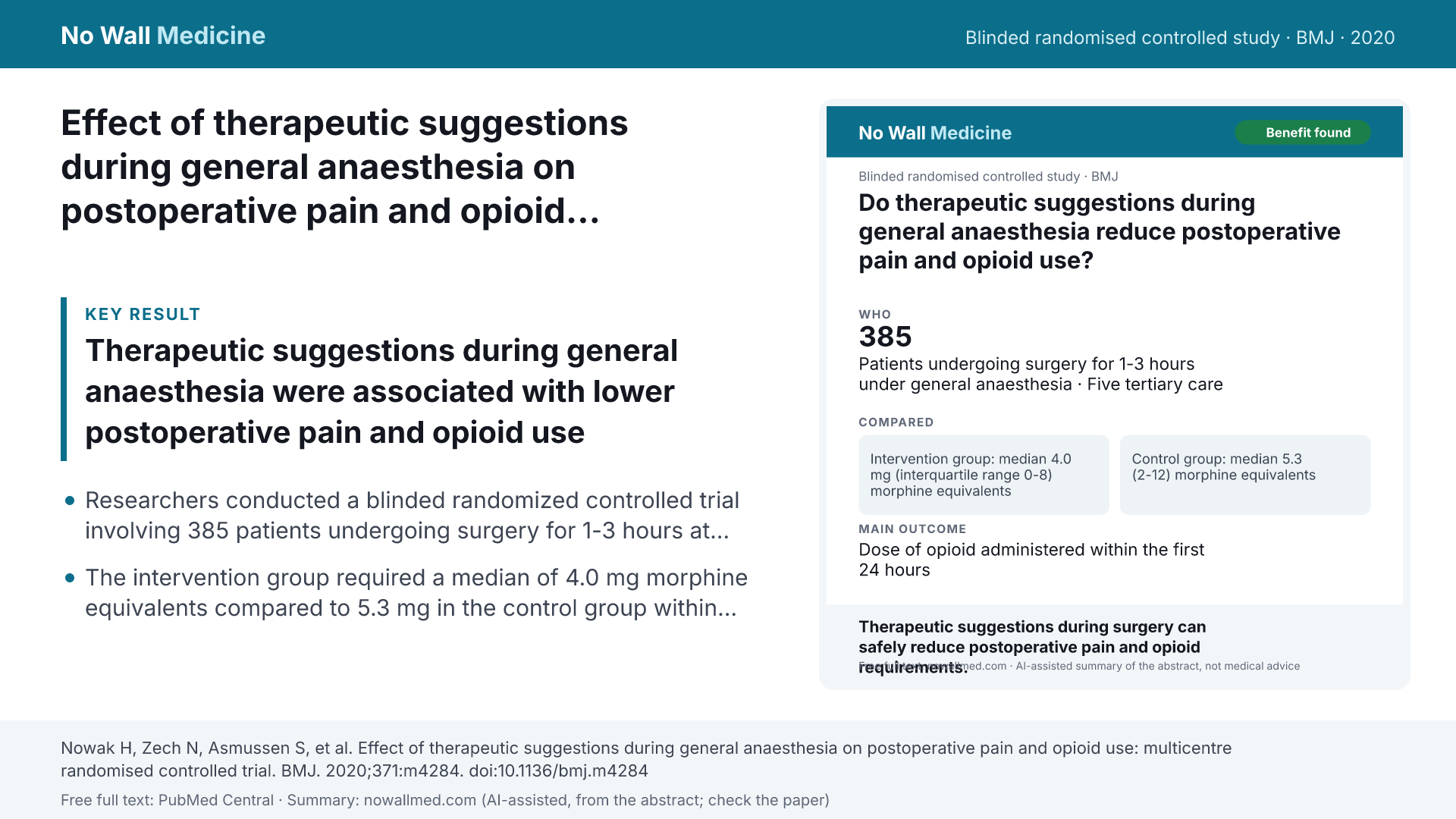
Therapeutic suggestions during general anaesthesia were associated with lower postoperative pain and opioid use
Effect of therapeutic suggestions during general anaesthesia on postoperative pain and opioid use: multicentre randomised controlled trial
Blinded randomised controlled studyBenefit found
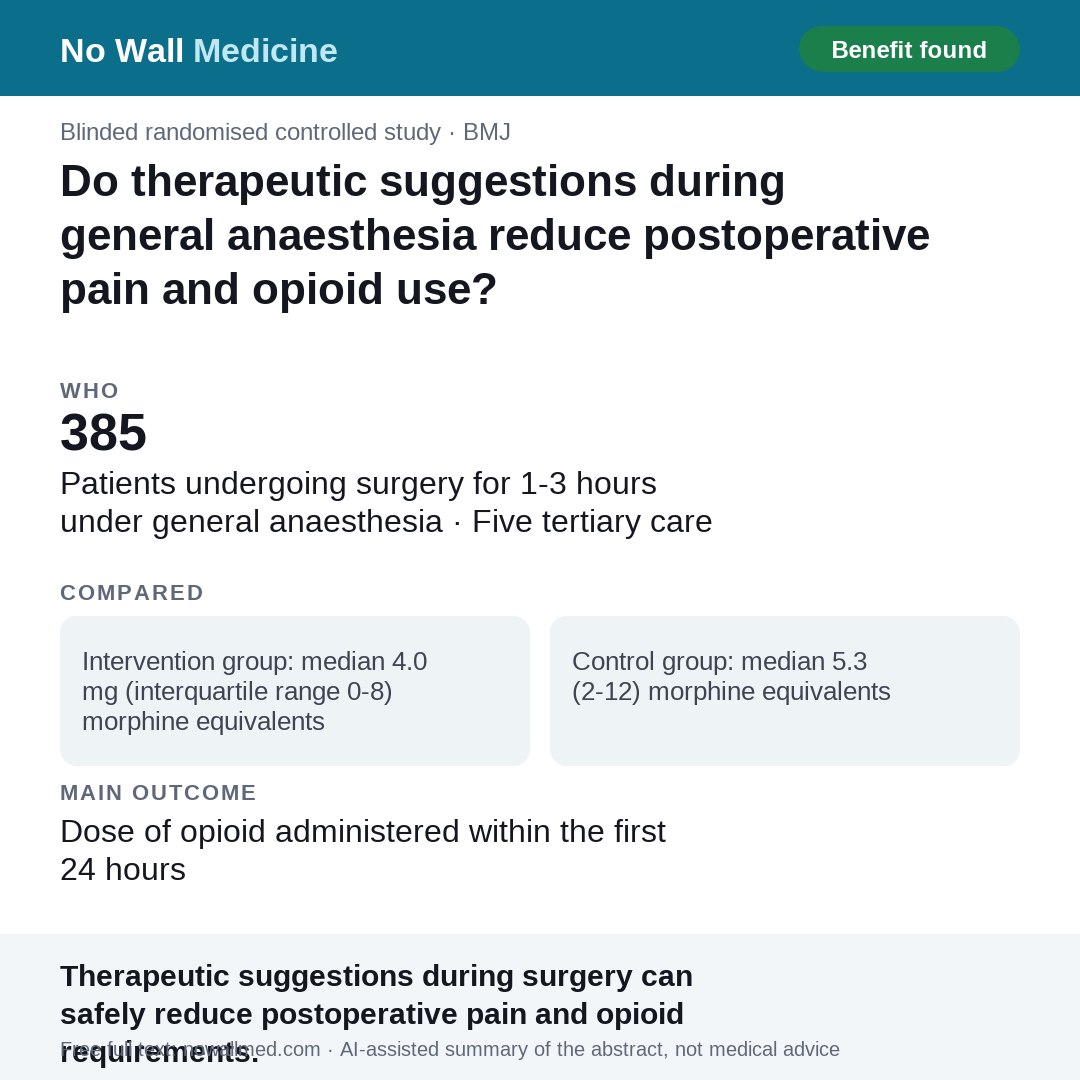
Do therapeutic suggestions during general anaesthesia reduce postoperative pain and opioid use?
Who
385
Patients undergoing surgery for 1-3 hours under general anaesthesia · Five tertiary care hospitals in Germany
Compared
Intervention group: median 4.0 mg (interquartile range 0-8) morphine equivalents
Control group: median 5.3 (2-12) morphine equivalents
Main outcome
Dose of opioid administered within the first 24 hours
Result: Cohen's d 0.36 (95% confidence interval 0.16 to 0.56)
Bottom line: Therapeutic suggestions during surgery can safely reduce postoperative pain and opioid requirements.
BMJ · 2020-12-10Download image
Clinical question: Do therapeutic suggestions during general anaesthesia reduce postoperative pain and opioid use?
Key points
- Researchers conducted a blinded randomized controlled trial involving 385 patients undergoing surgery for 1-3 hours at five hospitals in Germany.
- The intervention group required a median of 4.0 mg morphine equivalents compared to 5.3 mg in the control group within 24 hours after surgery.
- Pain scores were 25% lower on average in the intervention group, and 63% of those patients required opioids compared to 80% in the control group.
Headline and key points written with AI from the paper’s abstract, with every number checked against it. Read the paper before relying on them.
Was this summary helpful?
Abstract
Objective
To investigate the effect of therapeutic suggestions played to patients through earphones during surgery on postoperative pain and opioid use. Design
Blinded randomised controlled study. Setting
Five tertiary care hospitals in Germany. Participants
385 of 400 patients consecutively recruited from January to December 2018 who were to undergo surgery for 1-3 hours under general anaesthesia. In the per protocol analysis 191 patients were included in the intervention group and 194 patients in the control group. Intervention
The intervention comprised an audiotape of background music and positive suggestions based on hypnotherapeutic principles, which was played repeatedly for 20 minutes followed by 10 minutes of silence to patients through earphones during general anaesthesia. Patients in the control group were assigned to a blank tape. Main outcome measures
The main outcome was dose of opioid administered by patient controlled analgesia or nurse controlled analgesia within the first postoperative 24 hours, based on regular evaluation of pain intensity on a numerical rating scale (range 0-10, with higher scores representing more severe pain). Results
Compared with the control group, the intervention group required a significantly (P=0.002) lower opioid dose within 24 hours after surgery, with a median of 4.0 mg (interquartile range 0-8) morphine equivalents versus 5.3 (2-12), and an effect size (Cohen's d) of 0.36 (95% confidence interval 0.16 to 0.56). The number of patients who needed opioids postoperatively was significantly (P=0.001) reduced in the intervention group: 121 of 191 (63%, 95% confidence interval 45% to 70%) patients in the intervention group versus 155 of 194 (80%, 74% to 85%) in the control group. The number needed to treat to avoid postoperative opioids was 6. Pain scores were consistently and significantly lower in the intervention group within 24 hours after surgery, with an average reduction of 25%. No adverse events were reported. Conclusions
Therapeutic suggestions played through earphones during general anaesthesia could provide a safe, feasible, inexpensive, and non-drug technique to reduce postoperative pain and opioid use, with the potential for more general use. Based on the finding of intraoperative perception by a considerable number of patients, surgeons and anaesthetists should be careful about background noise and conversations during surgery. Trial registration
German Clinical Trial Register DRKS00013800.
Abstract reproduced under the article’s CC BY NC licence.
Subject terms
Cite this article
Nowak H, Zech N, Asmussen S, et al. Effect of therapeutic suggestions during general anaesthesia on postoperative pain and opioid use: multicentre randomised controlled trial. BMJ. 2020. doi:10.1136/bmj.m4284
Spotted a mistake? Suggest a correction