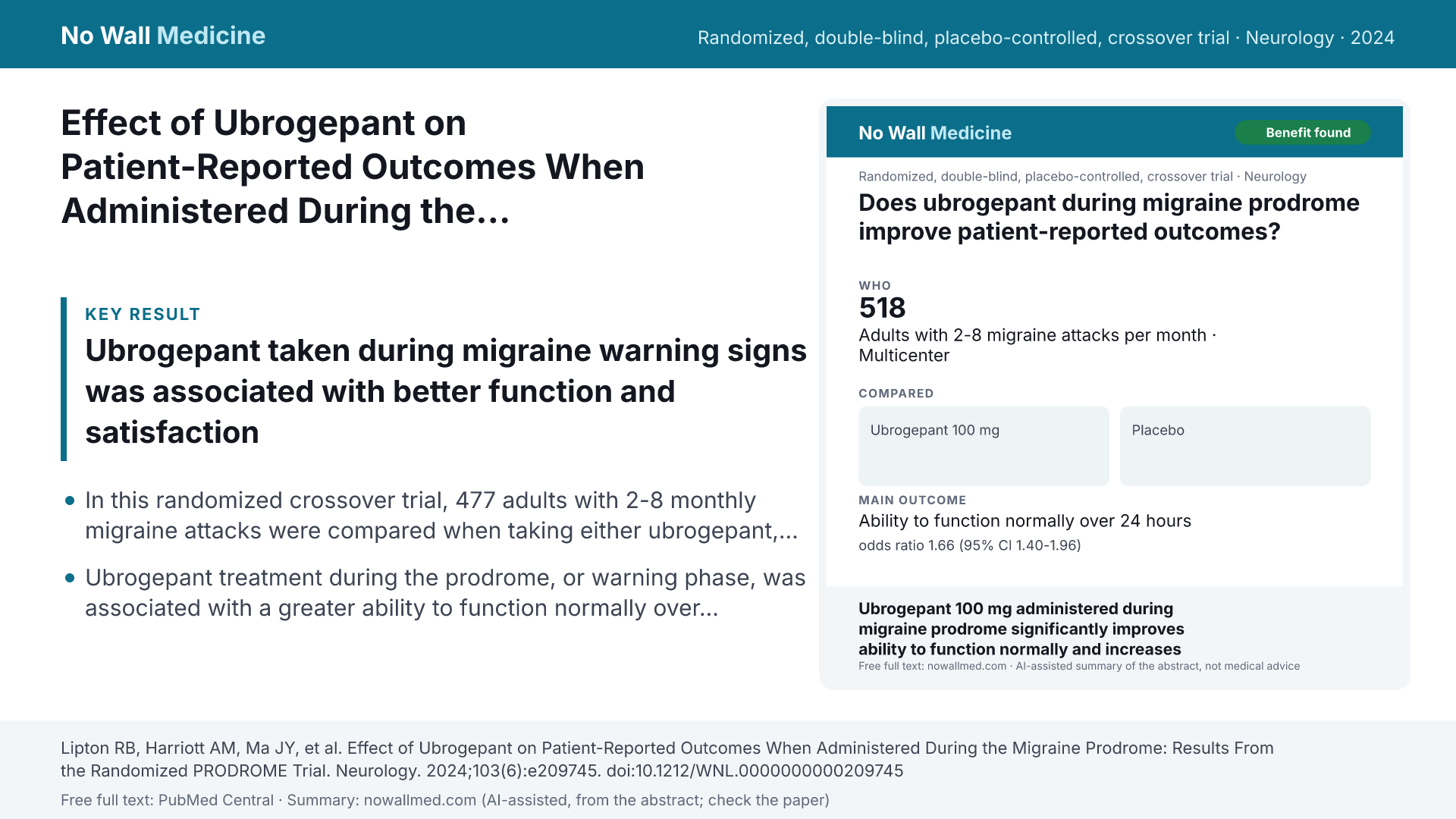
Ubrogepant taken during migraine warning signs was associated with better function and satisfaction
Effect of Ubrogepant on Patient-Reported Outcomes When Administered During the Migraine Prodrome: Results From the Randomized PRODROME Trial
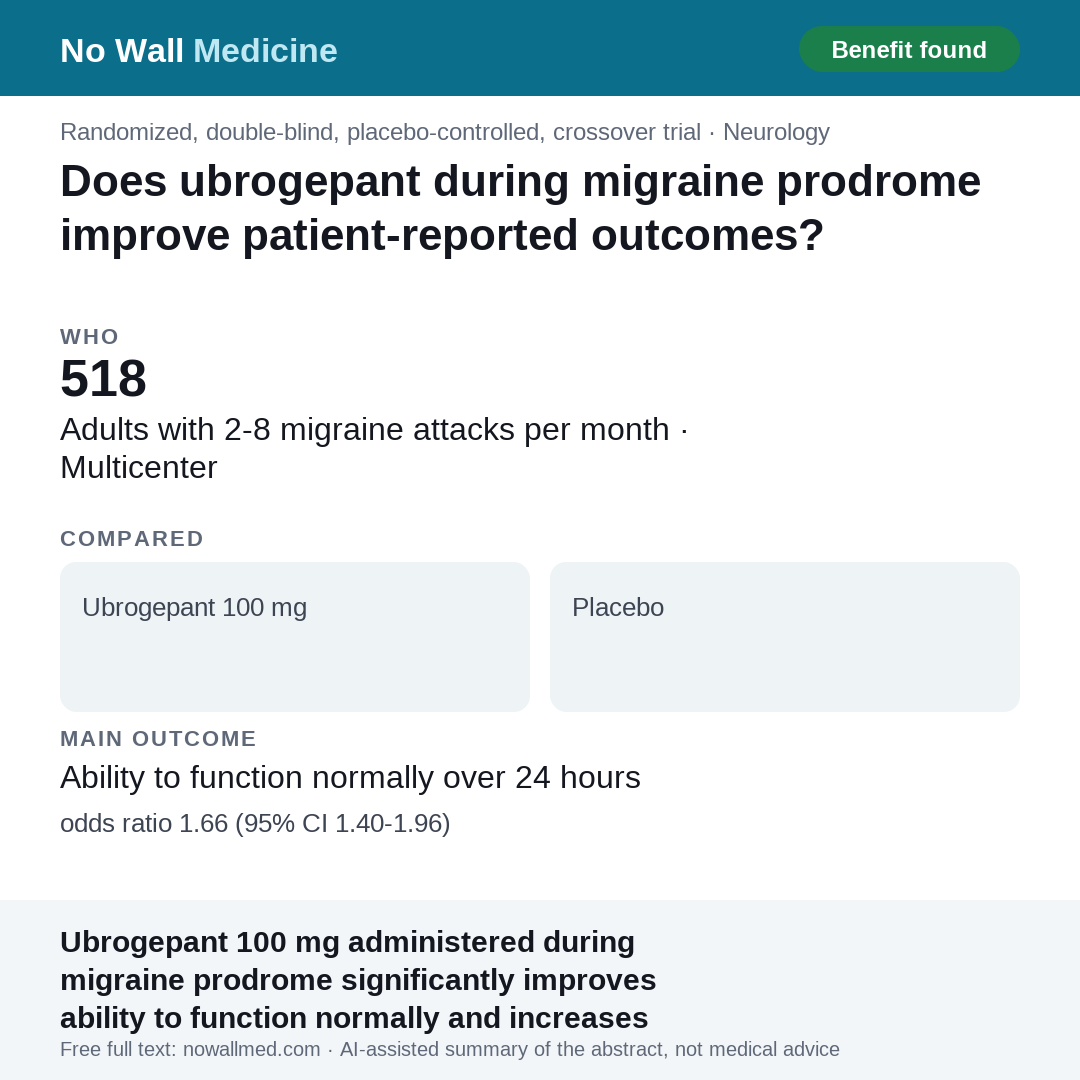
Randomized, double-blind, placebo-controlled, crossover trialBenefit found
Does ubrogepant during migraine prodrome improve patient-reported outcomes?
Who
518
Adults with 2-8 migraine attacks per month · Multicenter
Compared
Ubrogepant 100 mg
Placebo
Main outcome
Ability to function normally over 24 hours
Result: odds ratio 1.66 (95% CI 1.40-1.96)
Bottom line: Ubrogepant 100 mg administered during migraine prodrome significantly improves ability to function normally and increases patient satisfaction.
Neurology · 2024-08-28Download image
Clinical question: Does ubrogepant during migraine prodrome improve patient-reported outcomes?
Why it matters: It was unknown how taking ubrogepant during the migraine prodrome phase affects patient-reported outcomes like daily functioning and medication satisfaction.
Key points
- In this randomized crossover trial, 477 adults with 2-8 monthly migraine attacks were compared when taking either ubrogepant, a calcitonin gene-related peptide receptor antagonist, or a placebo.
- Ubrogepant treatment during the prodrome, or warning phase, was associated with a greater ability to function normally over 24 hours (OR 1.66) and fewer activity limitations (OR 2.07).
- Participants reported higher satisfaction with the medication at 8 hours (OR 2.37) and 24 hours (OR 2.32) after taking ubrogepant compared to placebo.
Headline and key points written with AI from the paper’s abstract, with every number checked against it. Read the paper before relying on them.
Was this summary helpful?
Subject terms
Cite this article
Lipton RB, Harriott AM, Ma JY, et al. Effect of Ubrogepant on Patient-Reported Outcomes When Administered During the Migraine Prodrome: Results From the Randomized PRODROME Trial. Neurology. 2024. doi:10.1212/WNL.0000000000209745
Spotted a mistake? Suggest a correction