Effect of weight loss on cardiometabolic risk: observational analysis of two randomised controlled trials of community weight-loss programmes
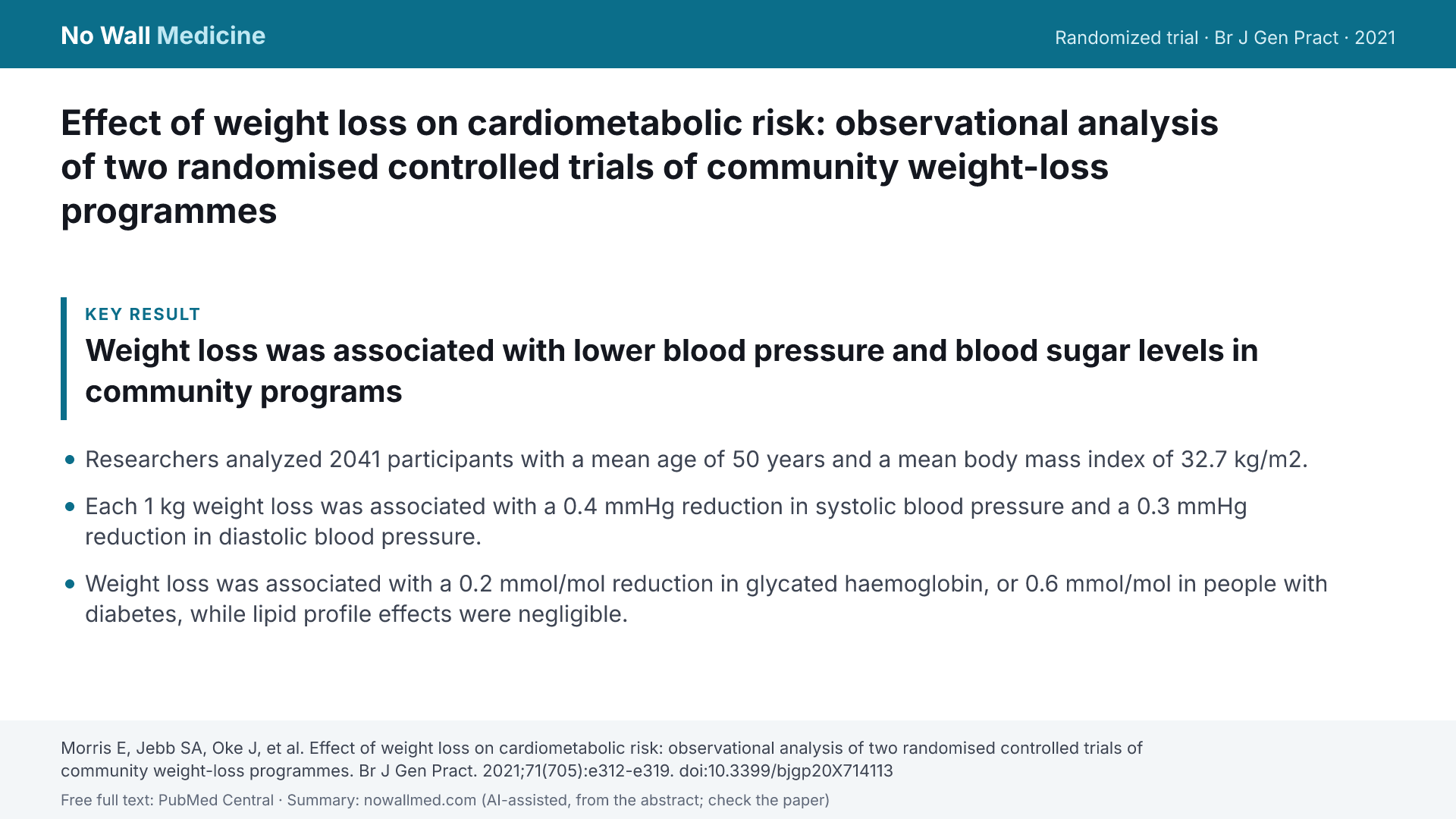
Key result: Weight loss was associated with lower blood pressure and blood sugar levels in community programs
Key points
- Researchers analyzed 2041 participants with a mean age of 50 years and a mean body mass index of 32.7 kg/m2.
- Each 1 kg weight loss was associated with a 0.4 mmHg reduction in systolic blood pressure and a 0.3 mmHg reduction in diastolic blood pressure.
- Weight loss was associated with a 0.2 mmol/mol reduction in glycated haemoglobin, or 0.6 mmol/mol in people with diabetes, while lipid profile effects were negligible.
Why it matters: Clinicians lack individual level data quantifying how weight change affects cardiometabolic risk factors to help guide consultations in primary care.
Discussion prompts
- Would these patients look like yours? Who was left out?
- Is the main outcome one that matters to patients?
- Is the difference large enough to change what you do?
Cite: Morris E, Jebb SA, Oke J, et al. Effect of weight loss on cardiometabolic risk: observational analysis of two randomised controlled trials of community weight-loss programmes. Br J Gen Pract. 2021;71(705):e312-e319. doi:10.3399/bjgp20X714113
Free full text: PubMed Central · Summary and visual abstract: nowallmed.com/a/effect-of-weight-loss-on-cardiometabolic-risk-observational-analysis-8poglp/ (AI-assisted from the abstract; check the paper before relying on it).