Virtual reality shows potential for improving pain and movement in non-specific neck pain patients
Effectiveness and adverse effects of immersive technologies used for rehabilitation of patients with non-specific neck pain: a systematic review
Systematic review of randomized controlled trialsBenefit found
Are immersive technologies effective for rehabilitation of patients with non-specific neck pain?
Who
203
Individuals with non-specific neck pain
Compared
virtual reality
control
Main outcome
pain, functioning, and range of motion
Bottom line: Virtual reality therapy may provide benefits for rehabilitating patients with non-specific neck pain.
Limitation: Studies lack information regarding the applicability of virtual reality therapy and safety data.
J Rehabil Med · 2025-01-31Download image
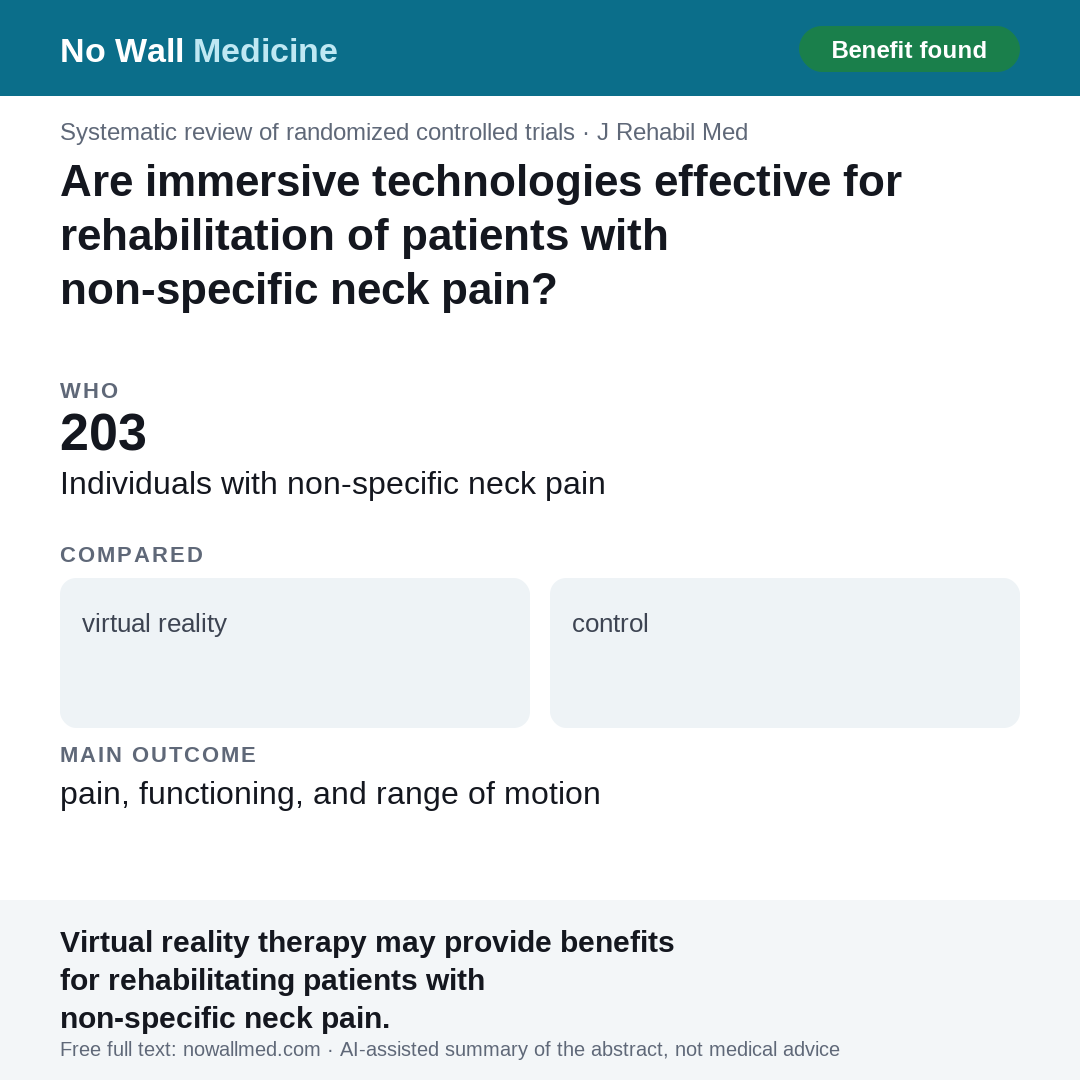
Clinical question: Are immersive technologies effective for rehabilitation of patients with non-specific neck pain?
Why it matters: It is unknown how effective immersive technologies are for rehabilitating patients with non-specific neck pain and what side effects they may cause.
Key points
- Researchers reviewed five randomized controlled trials involving 203 participants, including 129 women and 74 men, with non-specific neck pain.
- Most studies showed that both virtual reality and control groups improved in pain, neck-related function, and range of motion.
- Two studies found the virtual reality group had greater improvements in pain and some range of motion movements, but not in function.
Limitation the authors note: The studies analyzed lack much information regarding the applicability of virtual reality therapy and data on safety and adverse events are insufficient.
Headline and key points written with AI from the paper’s abstract, with every number checked against it. Read the paper before relying on them.
Was this summary helpful?
Subject terms
Cite this article
Kostka JS, Zawadzka-Fabijan A, Działa D, Bruc B, Pruszyńska M, Figas G. Effectiveness and adverse effects of immersive technologies used for rehabilitation of patients with non-specific neck pain: a systematic review. J Rehabil Med. 2025. doi:10.2340/jrm.v57.42108
Spotted a mistake? Suggest a correction
Top studies every Monday
The week’s key trials and guidelines in your specialties, plus any topics you follow. By email, free.
Get the weekly digest