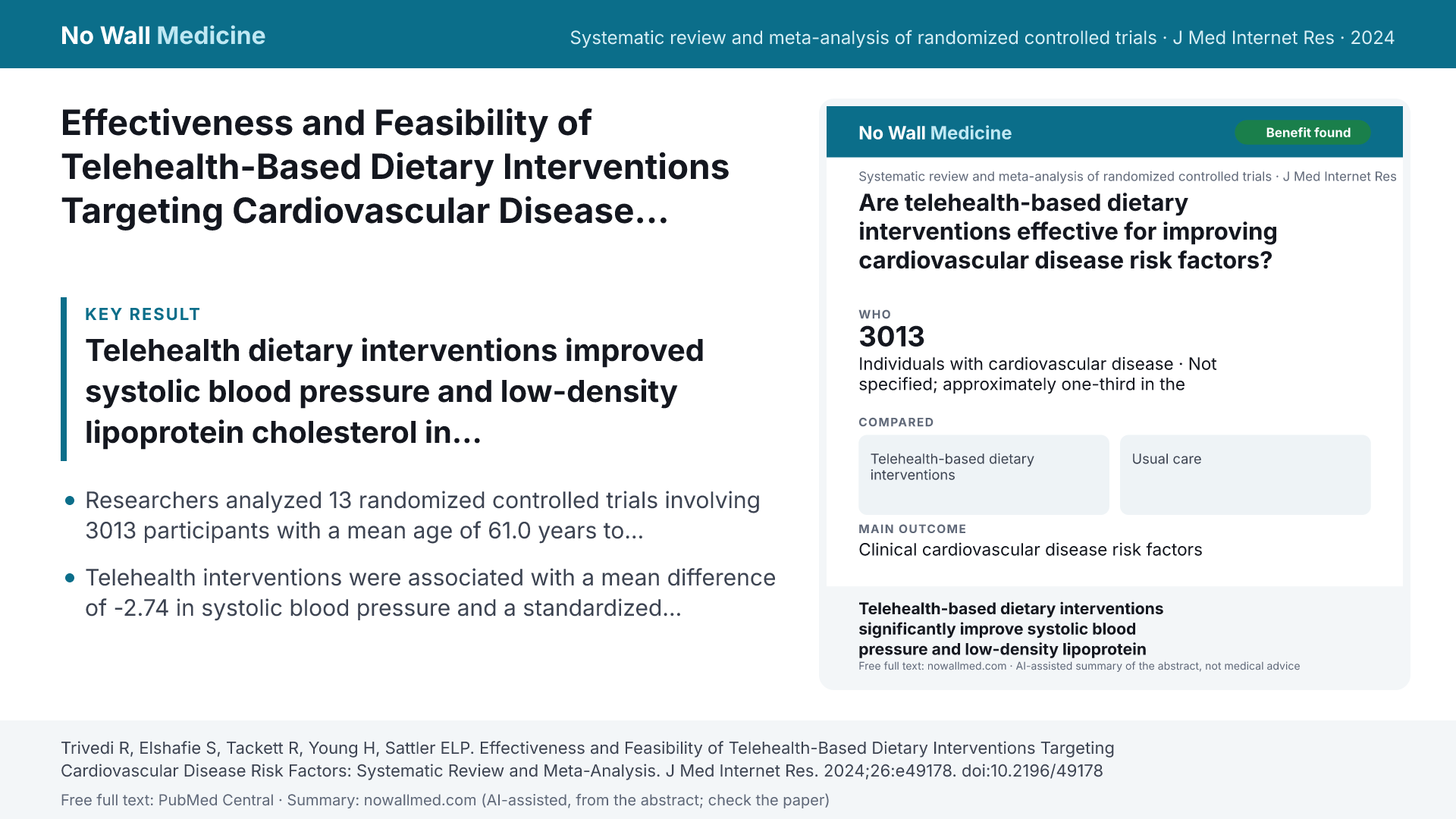
Telehealth dietary interventions improved systolic blood pressure and low-density lipoprotein cholesterol in cardiovascular disease patients
Effectiveness and Feasibility of Telehealth-Based Dietary Interventions Targeting Cardiovascular Disease Risk Factors: Systematic Review and Meta-Analysis
Systematic review and meta-analysis of randomized controlled trialsBenefit found
Are telehealth-based dietary interventions effective for improving cardiovascular disease risk factors?
Who
3013
Individuals with cardiovascular disease · Not specified; approximately one-third in the United States
Compared
Telehealth-based dietary interventions
Usual care
Main outcome
Clinical cardiovascular disease risk factors
Result: systolic blood pressure MD -2.74 (95% CI -4.93 to -0.56); low-density lipoprotein cholesterol standardized MD -0.11 (95% CI -0.19 to -0.03)
Bottom line: Telehealth-based dietary interventions significantly improve systolic blood pressure and low-density lipoprotein cholesterol in individuals with cardiovascular disease.
Limitation: Significant I2 indicated moderate to considerable heterogeneity.
J Med Internet Res · 2024-02-16 · Save PNG
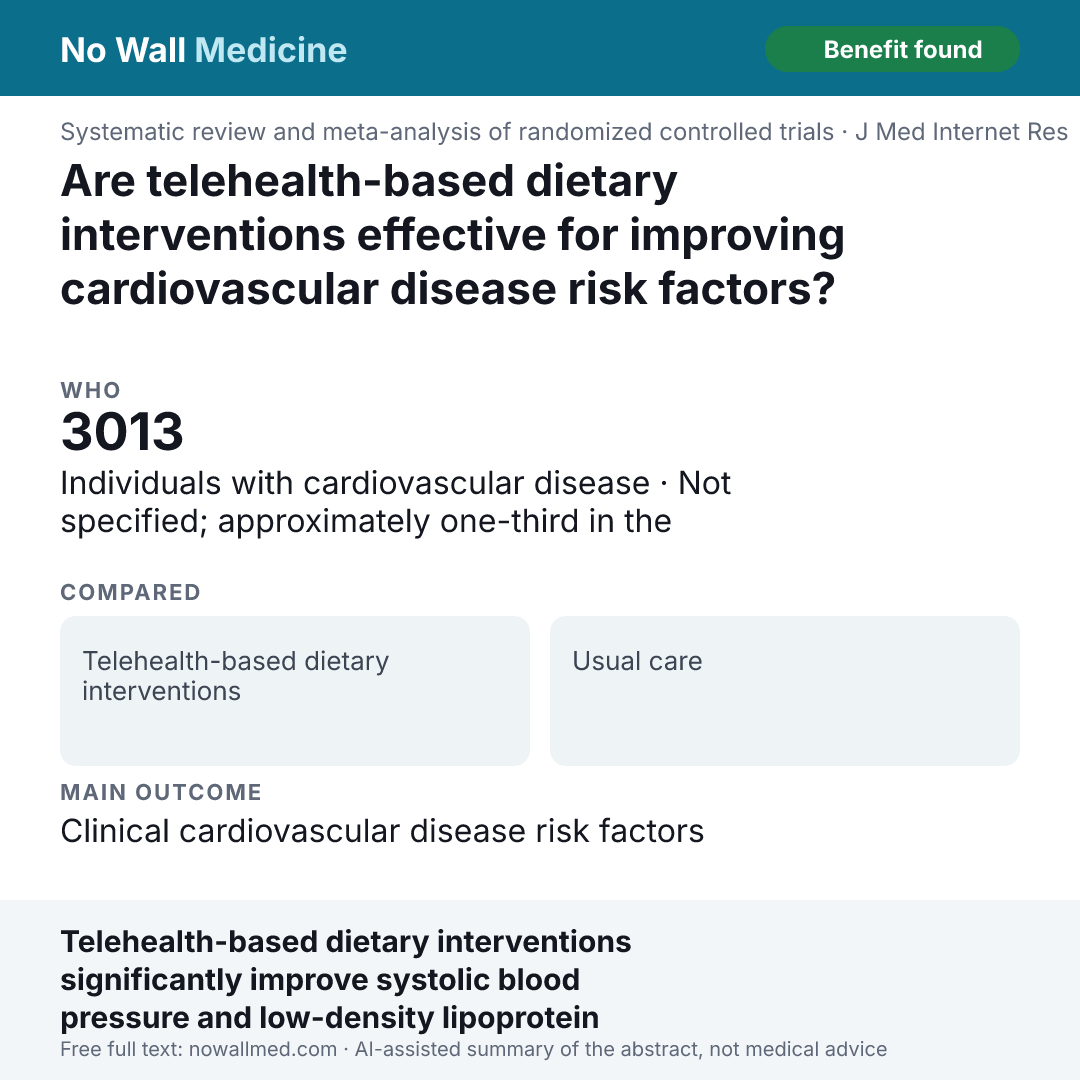
Clinical question: Are telehealth-based dietary interventions effective for improving cardiovascular disease risk factors?
Why it matters: Data regarding the effectiveness and feasibility of telehealth-based dietary interventions for managing cardiovascular disease risk factors were limited.
Key points
- Researchers analyzed 13 randomized controlled trials involving 3013 participants with a mean age of 61.0 years to compare telehealth dietary interventions with usual care.
- Telehealth interventions were associated with a mean difference of -2.74 in systolic blood pressure and a standardized mean difference of -0.11 in low-density lipoprotein cholesterol.
- No significant differences were found for weight, body mass index, diastolic blood pressure, total cholesterol, high-density lipoprotein, triglycerides, or intervention feasibility.
Limitation the authors note: Significant I2 indicated moderate to considerable heterogeneity.
Headline and key points written with AI from the paper’s abstract, with every number checked against it. Read the paper before relying on them.
Was this summary helpful?
Subject terms
Headline, design, result, key points, caveat and citation as plain text.
Cite this article
Trivedi R, Elshafie S, Tackett R, Young H, Sattler ELP. Effectiveness and Feasibility of Telehealth-Based Dietary Interventions Targeting Cardiovascular Disease Risk Factors: Systematic Review and Meta-Analysis. J Med Internet Res. 2024;26:e49178. doi:10.2196/49178
Spotted a mistake? Suggest a correction