Virtual reality interventions reduced pain and depressive symptoms in adults receiving hemodialysis
Effectiveness and Safety of Virtual Reality Interventions for Symptom Management in Adults Undergoing Hemodialysis: Systematic Review and Meta-Analysis of Randomized Controlled Trials
Systematic review and meta-analysis of 19 randomized controlled trialsBenefit found
Do virtual reality interventions improve symptom-related outcomes and safety in adults undergoing hemodialysis?
Who
1228
Adults receiving hemodialysis · 10 countries
Compared
Virtual reality interventions
Usual care or no virtual reality
Main outcome
Symptom-related outcomes and safety
Bottom line: Virtual reality may reduce pain, depressive symptoms, and improve gait speed and walking distance in hemodialysis patients.
Limitation: Safety evidence remains limited.
J Med Internet Res · 2026-09-28Download image
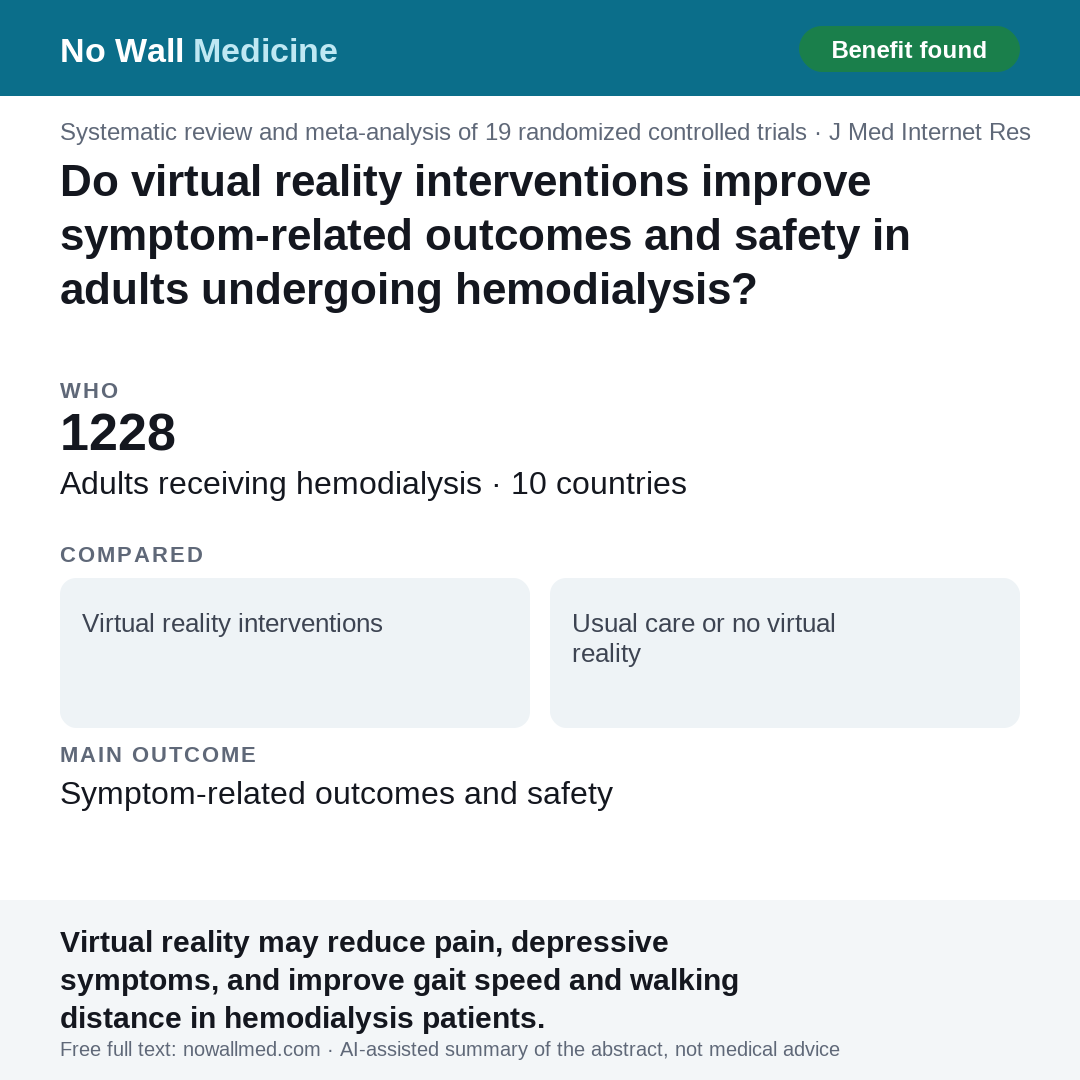
Clinical question: Do virtual reality interventions improve symptom-related outcomes and safety in adults undergoing hemodialysis?
Why it matters: Evidence is limited regarding nonpharmacological interventions that are safe and easy to integrate into routine care for adults receiving hemodialysis.
Key points
- Researchers analyzed 19 randomized controlled trials involving 1228 participants to evaluate virtual reality for symptom management during hemodialysis.
- Virtual reality reduced pain during arteriovenous fistula cannulation, improved gait speed, increased 6-minute walk distance, and reduced depressive symptoms.
- No serious adverse events related to virtual reality were reported, though the authors noted that safety evidence remains limited.
Limitation the authors note: Safety evidence remains limited.
Headline and key points written with AI from the paper’s abstract, with every number checked against it. Read the paper before relying on them.
Topics
Spotted a mistake? Suggest a correction