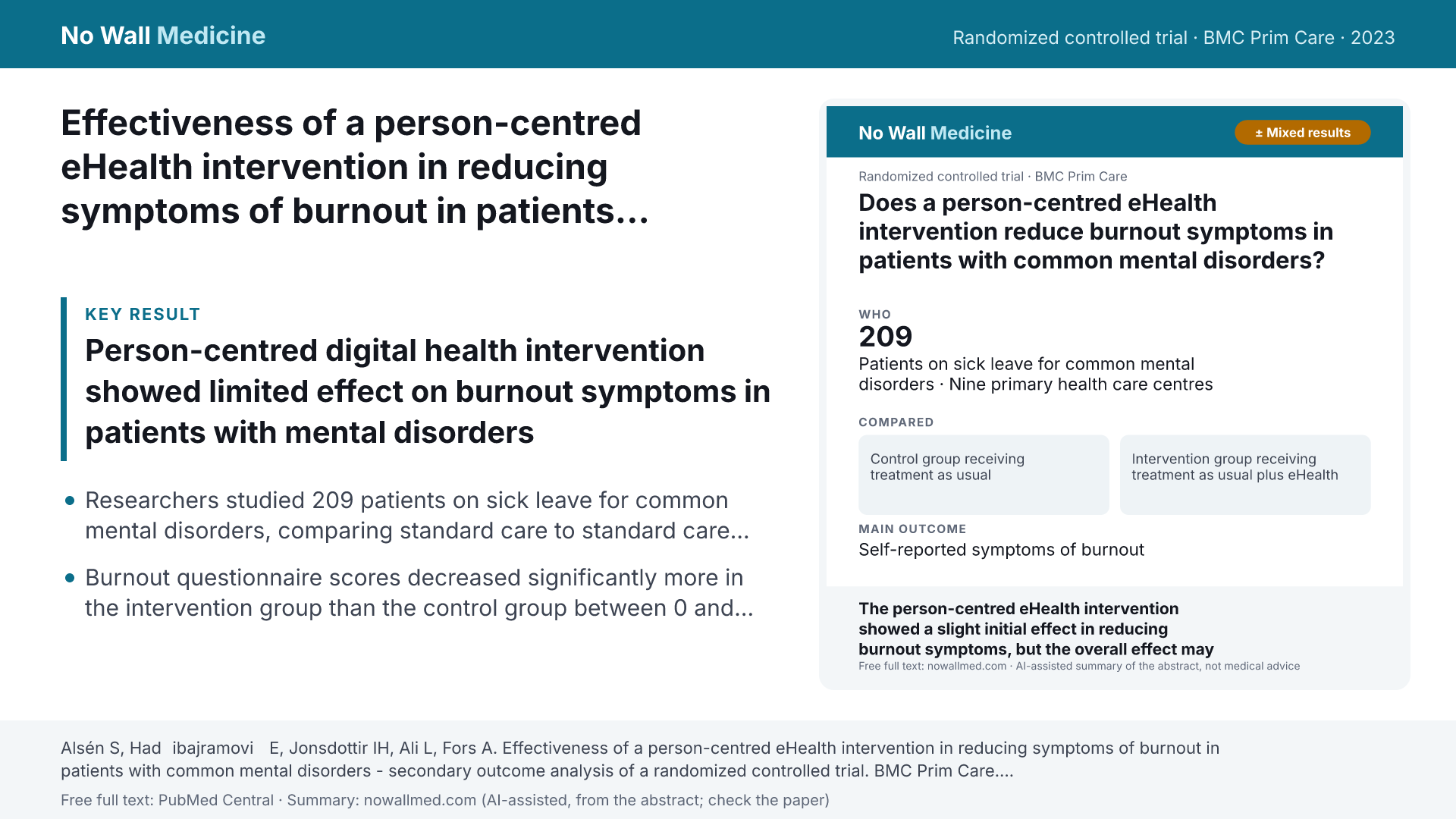
Person-centred digital health intervention showed limited effect on burnout symptoms in patients with mental disorders
Effectiveness of a person-centred eHealth intervention in reducing symptoms of burnout in patients with common mental disorders - secondary outcome analysis of a randomized controlled trial
Randomized controlled trialMixed results
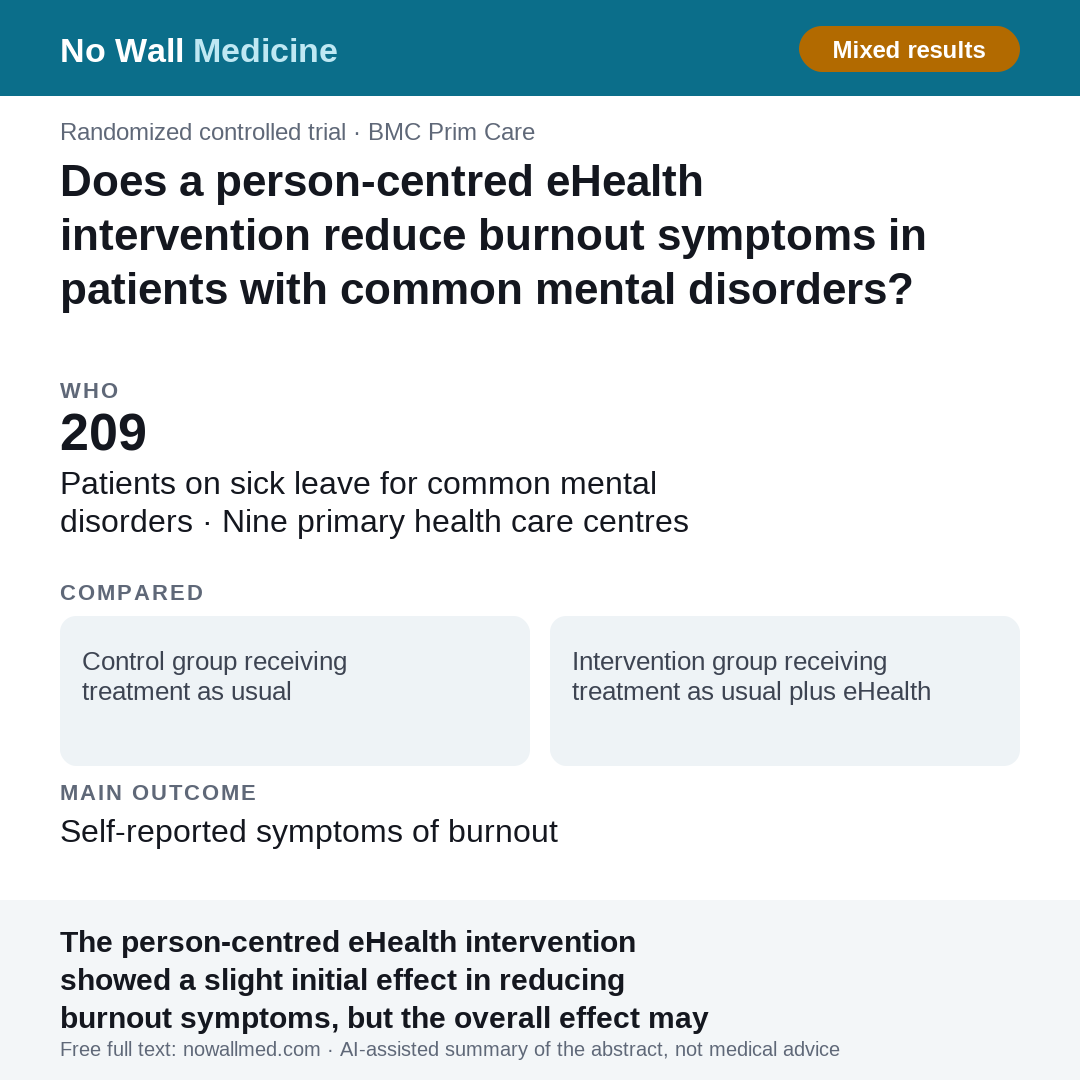
Does a person-centred eHealth intervention reduce burnout symptoms in patients with common mental disorders?
Who
209
Patients on sick leave for common mental disorders · Nine primary health care centres
Compared
Control group receiving treatment as usual
Intervention group receiving treatment as usual plus eHealth
Main outcome
Self-reported symptoms of burnout
Bottom line: The person-centred eHealth intervention showed a slight initial effect in reducing burnout symptoms, but the overall effect may be limited.
Limitation: The overall effect may be considered limited as both groups reported comparable scores throughout the study.
BMC Prim Care · 2023-10-19Download image
Clinical question: Does a person-centred eHealth intervention reduce burnout symptoms in patients with common mental disorders?
Why it matters: It was unknown if adding a person-centred digital health intervention to standard care could reduce burnout symptoms in patients with common mental disorders.
Key points
- Researchers studied 209 patients on sick leave for common mental disorders, comparing standard care to standard care plus a digital platform and phone support.
- Burnout questionnaire scores decreased significantly more in the intervention group than the control group between 0 and 3 months and between 0 and 6 months.
- No significant difference in burnout scores was found between the two groups overall, and no differences in change were seen between the 3- and 6-month follow-ups.
Headline and key points written with AI from the paper’s abstract, with every number checked against it. Read the paper before relying on them.
Was this summary helpful?
Subject terms
Cite this article
Alsén S, Hadžibajramović E, Jonsdottir IH, Ali L, Fors A. Effectiveness of a person-centred eHealth intervention in reducing symptoms of burnout in patients with common mental disorders - secondary outcome analysis of a randomized controlled trial. BMC Prim Care. 2023. doi:10.1186/s12875-023-02172-9
Spotted a mistake? Suggest a correction