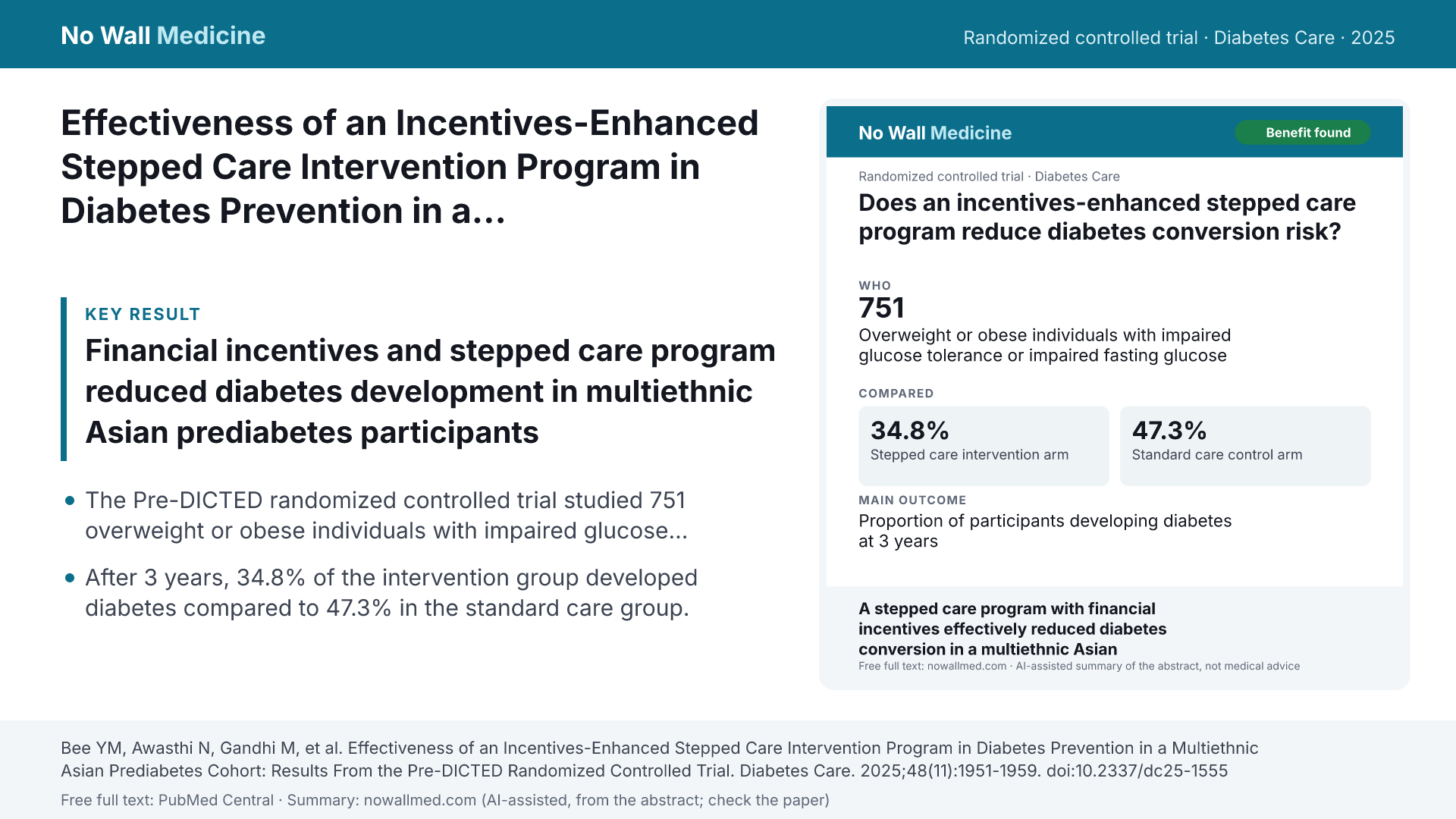
Financial incentives and stepped care program reduced diabetes development in multiethnic Asian prediabetes participants
Effectiveness of an Incentives-Enhanced Stepped Care Intervention Program in Diabetes Prevention in a Multiethnic Asian Prediabetes Cohort: Results From the Pre-DICTED Randomized Controlled Trial
Randomized controlled trialBenefit found
Does an incentives-enhanced stepped care program reduce diabetes conversion risk?
Who
751
Overweight or obese individuals with impaired glucose tolerance or impaired fasting glucose · Singapore
Compared
34.8%Stepped care intervention arm
47.3%Standard care control arm
Main outcome
Proportion of participants developing diabetes at 3 years
Result: adjusted relative risk 0.74 (95% CI 0.62-0.88)
Bottom line: A stepped care program with financial incentives effectively reduced diabetes conversion in a multiethnic Asian prediabetes cohort.
Diabetes Care · 2025-09-19 · Save PNG
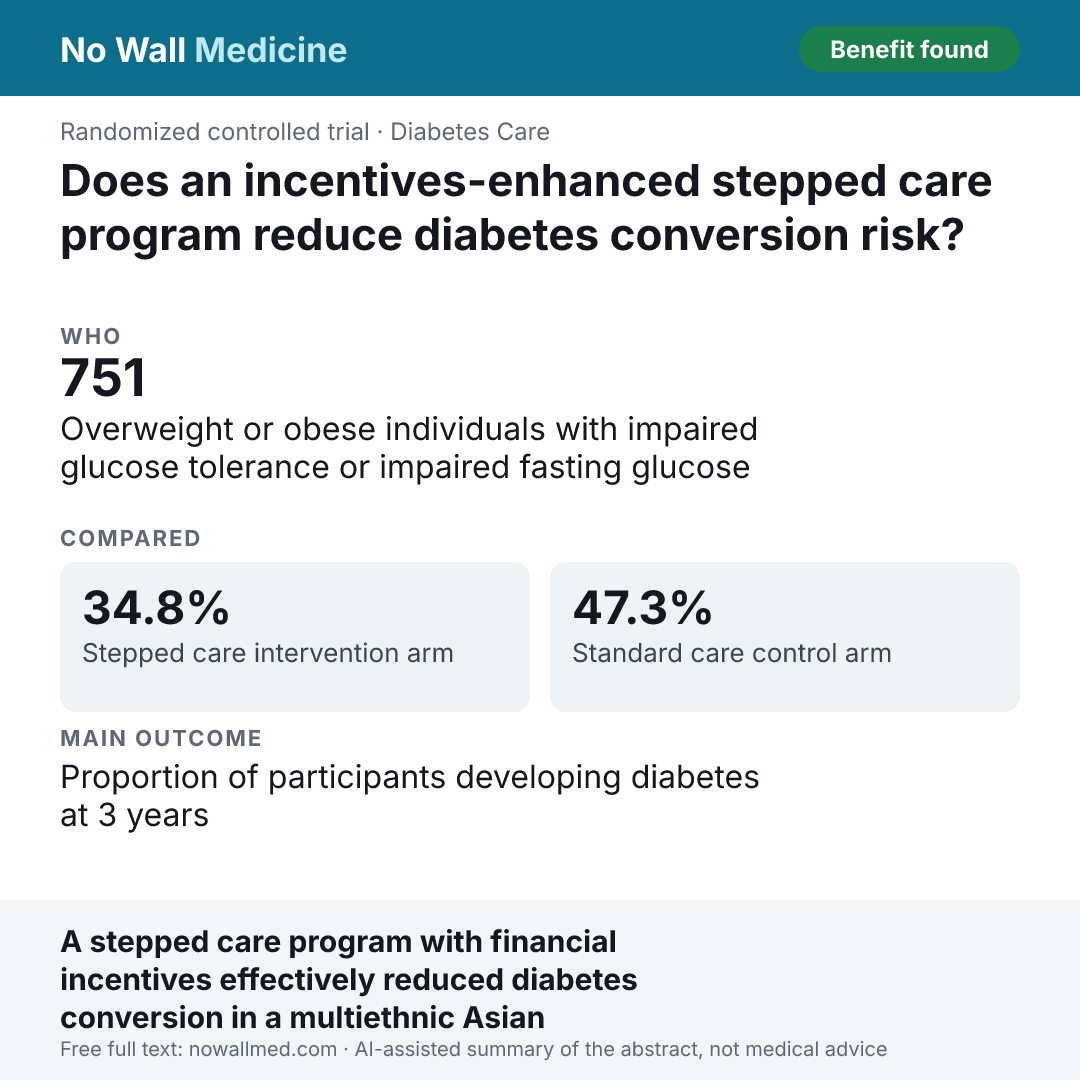
Clinical question: Does an incentives-enhanced stepped care program reduce diabetes conversion risk?
Why it matters: Diabetes prevention in real-world settings is challenged by difficulties in maintaining adherence to interventions and sustaining behavior change.
Key points
- The Pre-DICTED randomized controlled trial studied 751 overweight or obese individuals with impaired glucose tolerance or impaired fasting glucose.
- After 3 years, 34.8% of the intervention group developed diabetes compared to 47.3% in the standard care group.
- In the intervention arm, 26.4% of participants received metformin and 45.1% received cash incentives, with more adverse events reported due to gastrointestinal symptoms.
Headline and key points written with AI from the paper’s abstract, with every number checked against it. Read the paper before relying on them.
Was this summary helpful?
Subject terms
Headline, design, result, key points, caveat and citation as plain text.
Cite this article
Bee YM, Awasthi N, Gandhi M, et al. Effectiveness of an Incentives-Enhanced Stepped Care Intervention Program in Diabetes Prevention in a Multiethnic Asian Prediabetes Cohort: Results From the Pre-DICTED Randomized Controlled Trial. Diabetes Care. 2025;48(11):1951-1959. doi:10.2337/dc25-1555
Spotted a mistake? Suggest a correction