Meta-analysisThe Lancet Digital Health · Jul 21, 2026
Smartphone app interventions improved blood pressure, glucose levels, and mental health outcomes in adults
Effectiveness of app-based interventions for glucose management, cardiometabolic and mental health, and related risk factors: an umbrella review with meta-analysis
Vasiloglou MF, Kotzakioulafi E, Mainardi F, Ahmed M, Staiano AE, Dimidi E, et al
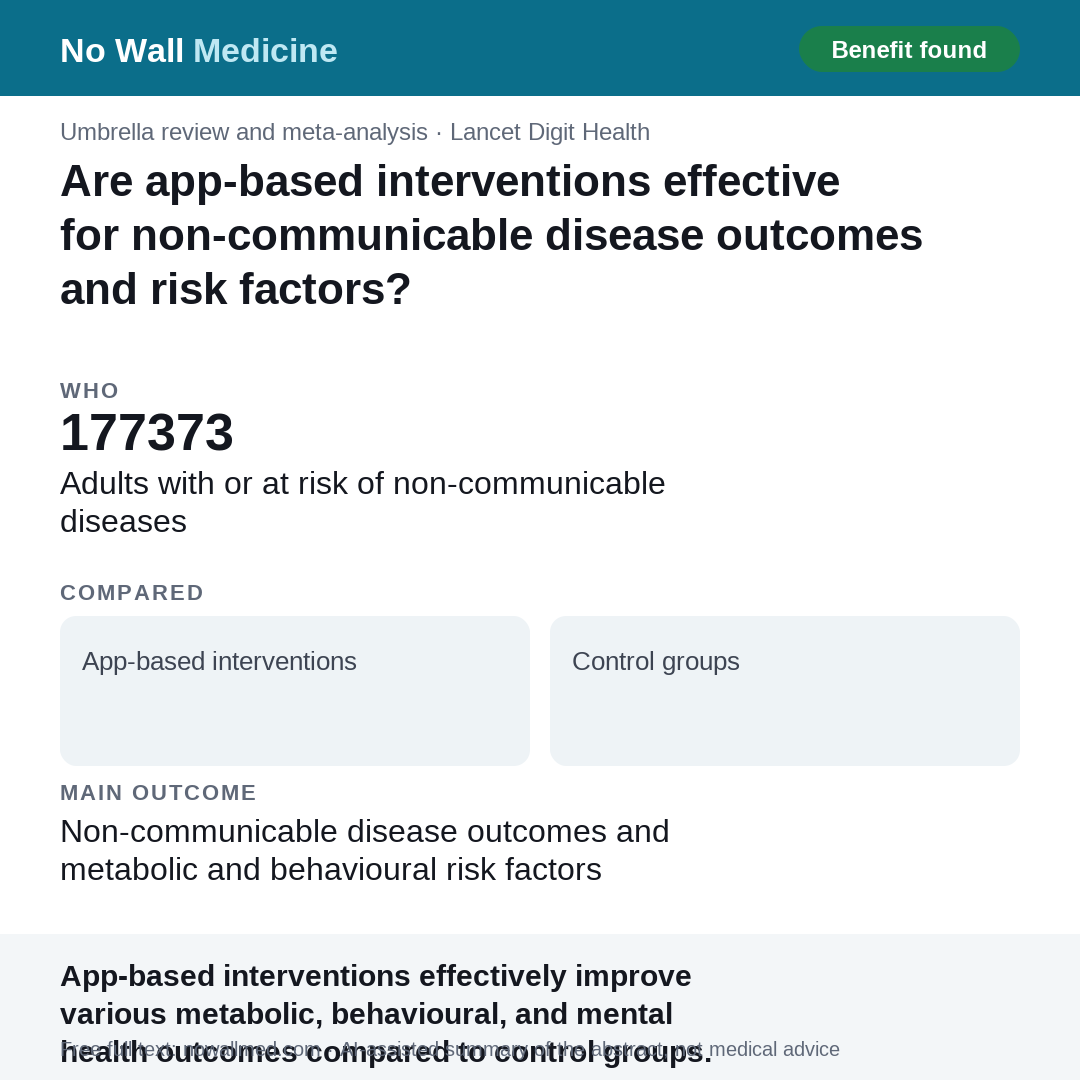
Clinical question: Are app-based interventions effective for non-communicable disease outcomes and risk factors?
Why it matters: Non-communicable diseases are the leading cause of death globally, and researchers sought to evaluate how smartphone apps might help manage these conditions and their risk factors.
Key points
Researchers analyzed 78 systematic reviews and meta-analyses involving 177,373 participants to evaluate app-based interventions for non-communicable diseases.
Apps significantly lowered systolic blood pressure (SMD -0·444), glycated haemoglobin (SMD -0·587), and fasting blood glucose (SMD -1·189) compared to control groups.
Interventions also improved anxiety, depression, stress, diet quality, and medication adherence, but showed no significant effect on cardiovascular mortality or cholesterol levels.
Headline and key points written with AI from the paper’s abstract, with every number checked against it. Read the paper before relying on them.
ClinicalAge, a framework for modelling ageing trajectories from longitudinal electronic health records in the UK: a model development and validation study
A prognostic model for use at labour onset to estimate the risk of severe fetal compromise at birth: a retrospective, model development and validation study