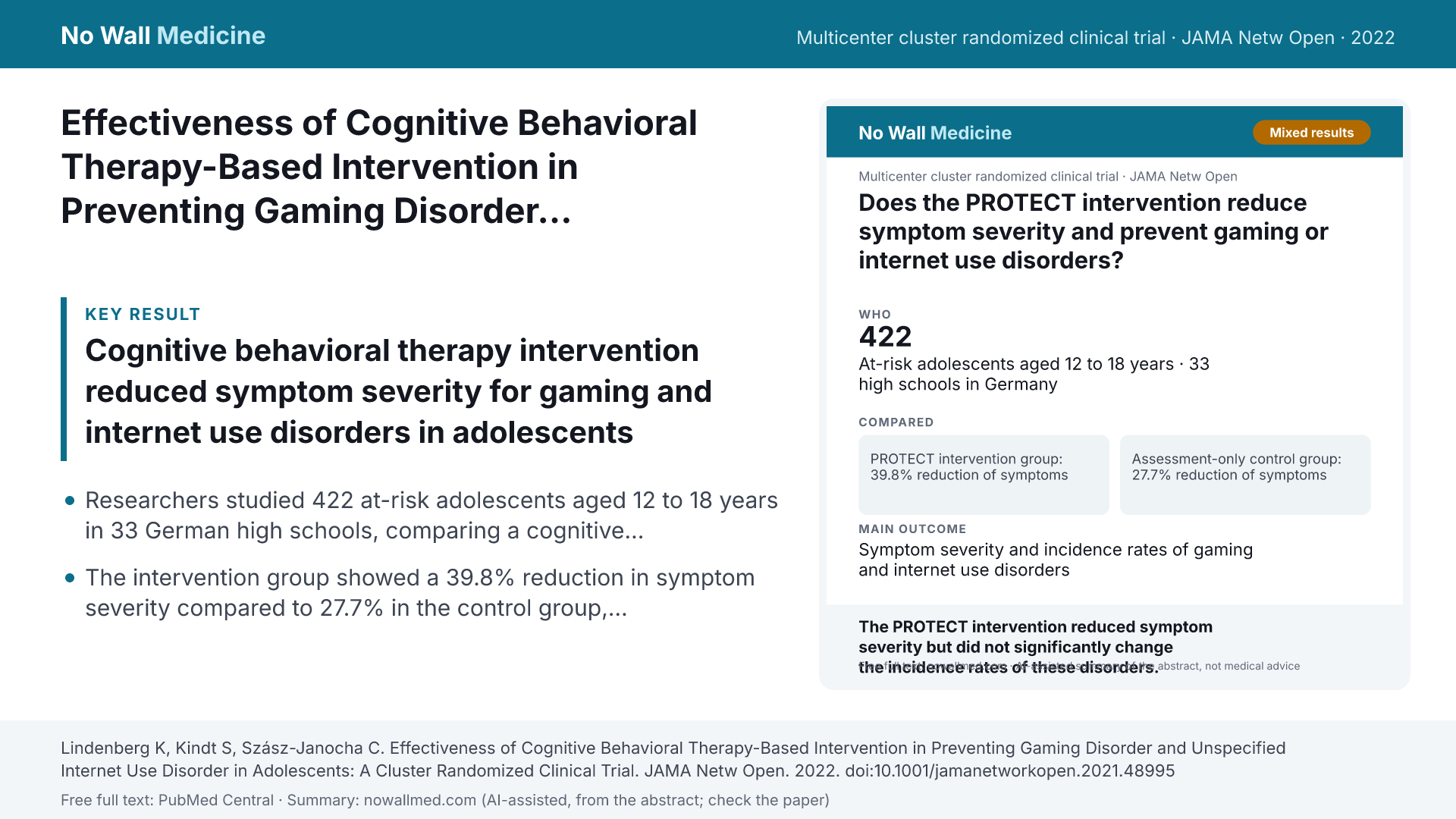
Effectiveness of Cognitive Behavioral Therapy-Based Intervention in Preventing Gaming Disorder and Unspecified Internet Use Disorder in Adolescents: A Cluster Randomized Clinical Trial
Key result: Cognitive behavioral therapy intervention reduced symptom severity for gaming and internet use disorders in adolescents
Key points
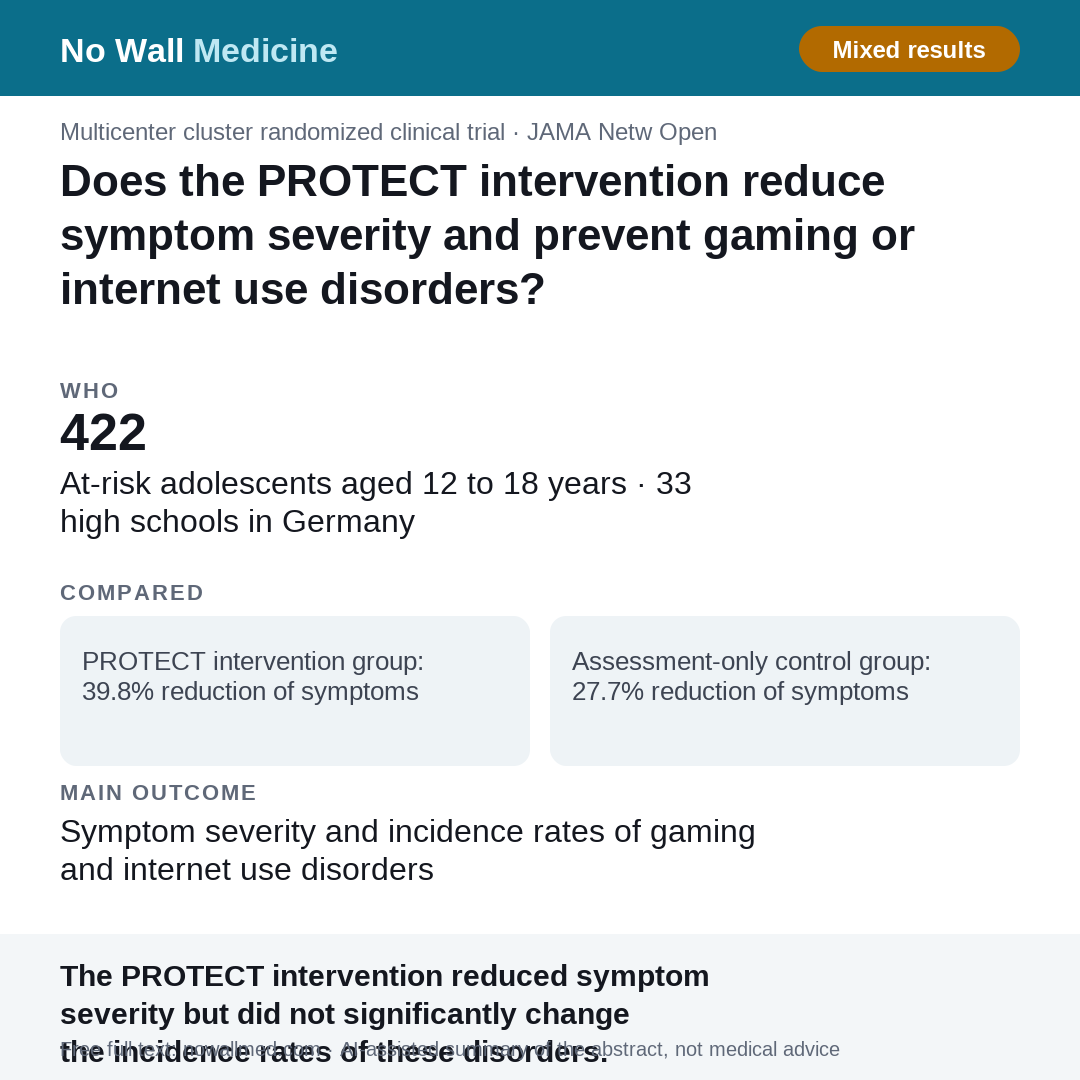
- Researchers studied 422 at-risk adolescents aged 12 to 18 years in 33 German high schools, comparing a cognitive behavioral therapy group to an assessment-only control group.
- The intervention group showed a 39.8% reduction in symptom severity compared to 27.7% in the control group, though differences in incidence rates were not statistically significant.
- The PROTECT intervention was associated with a significantly greater decrease in procrastination over 12 months, but no significant differences were found for other secondary outcomes.
Why it matters: Previous studies on preventing gaming disorder and unspecified internet use disorder lacked randomization, follow-up measurements, and diagnostic interviews to assess incidence rates.
Discussion prompts
- Would these patients look like yours? Who was left out?
- Is the main outcome one that matters to patients?
- Is the difference large enough to change what you do?
Cite: Lindenberg K, Kindt S, Szász-Janocha C. Effectiveness of Cognitive Behavioral Therapy-Based Intervention in Preventing Gaming Disorder and Unspecified Internet Use Disorder in Adolescents: A Cluster Randomized Clinical Trial. JAMA Netw Open. 2022. doi:10.1001/jamanetworkopen.2021.48995
Free full text: PubMed Central · Summary and visual abstract: nowallmed.com/a/effectiveness-of-cognitive-behavioral-therapy-based-intervention-in-115a43y/ (AI-assisted from the abstract; check the paper before relying on it).