Impedance threshold device and active compression-decompression CPR improved neurologically favourable survival
Effectiveness of combinations of active compression-decompression cardiopulmonary resuscitation, impedance threshold devices and head-up cardiopulmonary resuscitation in adult out-of-hospital cardiac arrest: A systematic review
Systematic review of randomized and observational studiesMixed results
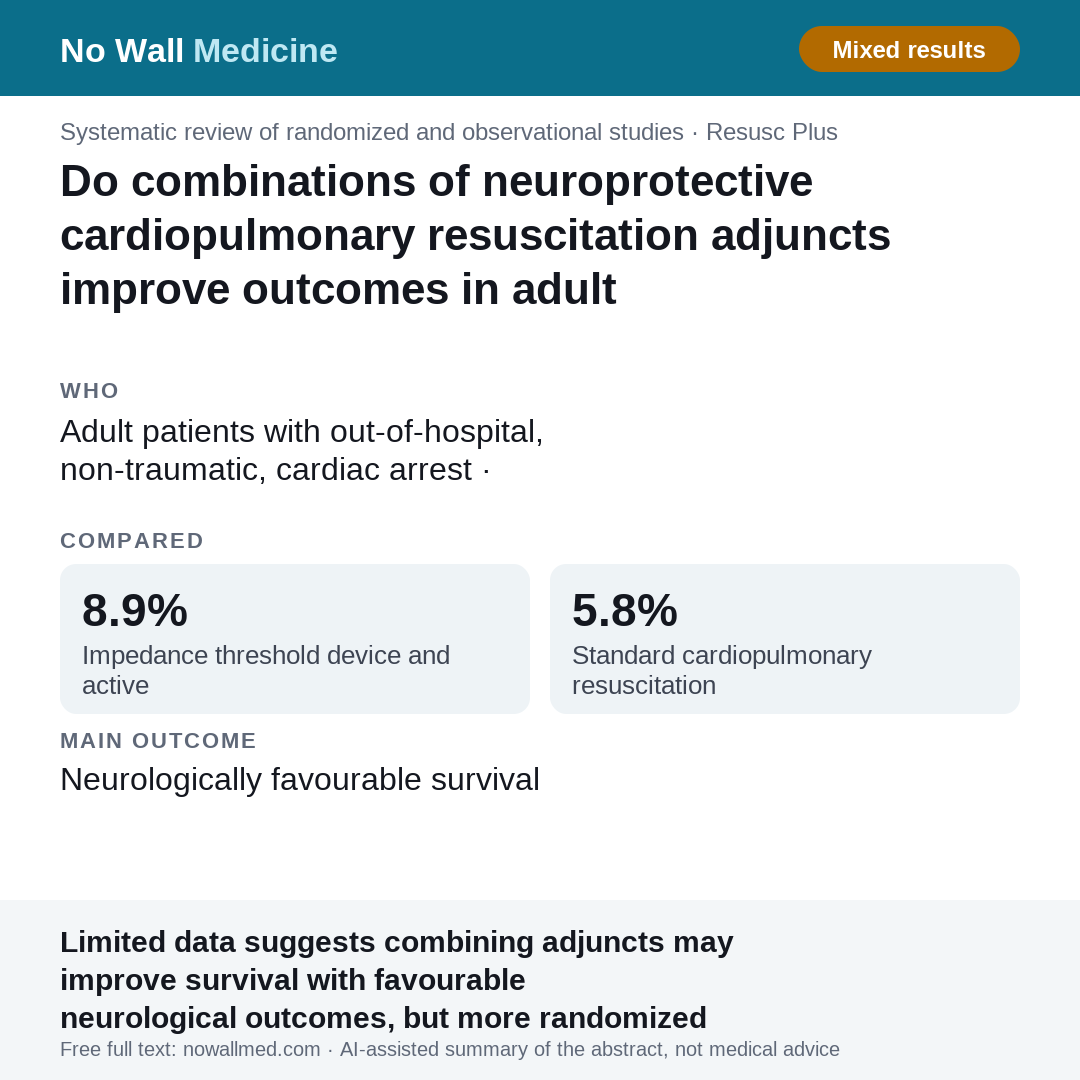
Do combinations of neuroprotective cardiopulmonary resuscitation adjuncts improve outcomes in adult out-of-hospital cardiac arrest?
Who
Adult patients with out-of-hospital, non-traumatic, cardiac arrest · Out-of-hospital
Compared
8.9%Impedance threshold device and active compression-decompression CPR
5.8%Standard cardiopulmonary resuscitation
Main outcome
Neurologically favourable survival
Bottom line: Limited data suggests combining adjuncts may improve survival with favourable neurological outcomes, but more randomized trials are needed.
Limitation: Small study numbers, overlapping samples, and all randomized trials were at intermediate or high risk of bias.
Resusc Plus · 2024-09-09Download image
Clinical question: Do combinations of neuroprotective cardiopulmonary resuscitation adjuncts improve outcomes in adult out-of-hospital cardiac arrest?
Why it matters: It is unknown whether combining active compression-decompression CPR, impedance threshold devices, and head-up positioning improves out-of-hospital cardiac arrest outcomes
Key points
- Eight studies with 1172 unique articles were analyzed, including five randomized controlled trials.
- Neurologically favourable survival was 8.9% with impedance threshold device and active compression-decompression CPR, vs 5.8% with standard CPR.
- No randomized trial investigated all three interventions together.
Limitation the authors note: The review was limited by small study numbers and overlapping samples, which precluded a meta-analysis
Headline and key points written with AI from the paper’s abstract, with every number checked against it. Read the paper before relying on them.
Cite this article
Main SE, Sidebottom DB, Deakin CD, Raitt J, Pocock H, Hannah J. Effectiveness of combinations of active compression-decompression cardiopulmonary resuscitation, impedance threshold devices and head-up cardiopulmonary resuscitation in adult out-of-hospital cardiac arrest: A systematic review. Resusc Plus. 2024. doi:10.1016/j.resplu.2024.100760
Spotted a mistake? Suggest a correction
Top studies every Monday
The week’s key trials and guidelines in your specialties, by email. Free.
Get the weekly digest