Digital health interventions improved quality of life and self-efficacy in people with COPD
Effectiveness of Digital Health Interventions for Chronic Obstructive Pulmonary Disease: Systematic Review and Meta-Analysis
Systematic review and meta-analysis of 17 randomized trialsMixed results
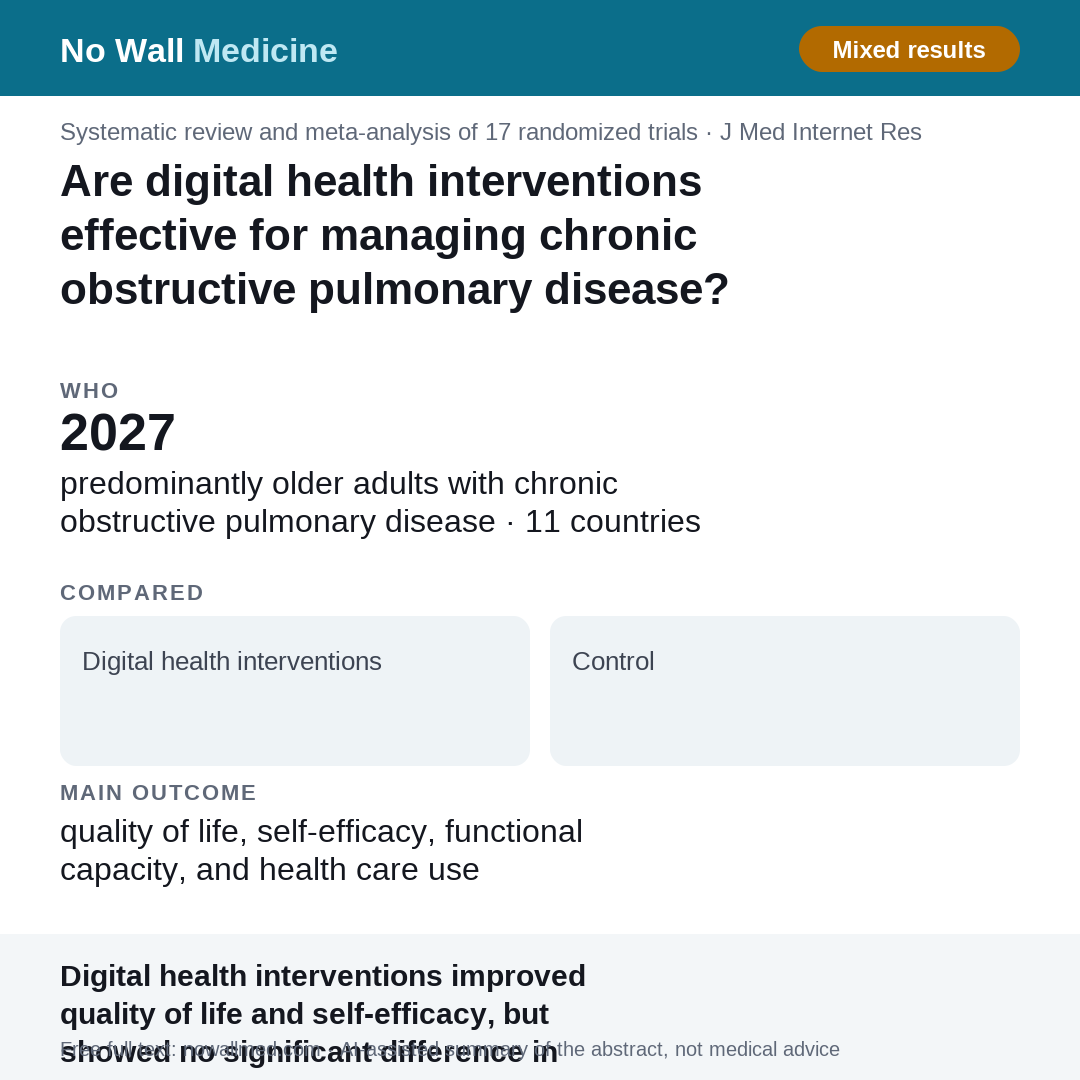
Are digital health interventions effective for managing chronic obstructive pulmonary disease?
Who
2027
predominantly older adults with chronic obstructive pulmonary disease · 11 countries
Compared
Digital health interventions
Control
Main outcome
quality of life, self-efficacy, functional capacity, and health care use
Result: not reported as a single pooled effect
Bottom line: Digital health interventions improved quality of life and self-efficacy, but showed no significant difference in functional capacity or health care use.
Limitation: Further robust studies are needed, particularly involving larger numbers of older adults with chronic obstructive pulmonary disease.
J Med Internet Res · 2025-05-26Download image
Clinical question: Are digital health interventions effective for managing chronic obstructive pulmonary disease?
Why it matters: It is unclear how effective digital health tools like mobile apps and wearable sensors are for managing chronic obstructive pulmonary disease outcomes.
Key points
- Researchers analyzed 17 randomized trials involving 2027 participants to evaluate digital tools like smartphone apps and wearable monitors for chronic obstructive pulmonary disease.
- Digital interventions were associated with improved quality of life scores on the COPD Assessment Test at 3, 6, and 12 months and higher self-efficacy at 3 and 6 months.
- The tools showed no significant difference in 6-minute walk test results, emergency department admissions, or hospital admissions.
Headline and key points written with AI from the paper’s abstract, with every number checked against it. Read the paper before relying on them.
Was this summary helpful?
Subject terms
Cite this article
Zhuang M, Hassan II, W Ahmad WMA, Abdul Kadir A, Liu X, Li F. Effectiveness of Digital Health Interventions for Chronic Obstructive Pulmonary Disease: Systematic Review and Meta-Analysis. J Med Internet Res. 2025. doi:10.2196/76323
Spotted a mistake? Suggest a correction
Top studies every Monday
The week’s key trials and guidelines in your specialties, plus any topics you follow. By email, free.
Get the weekly digest