Dyadic interventions may reduce hospital visits and caregiver burden for older adults with multiple conditions
Effectiveness of dyadic interventions in improving outcomes for adults with multiple long-term conditions or frailty and their informal carers: a systematic review
Systematic review of eight randomized controlled trialsMixed results
Are dyadic interventions effective for adults with multiple long-term conditions and their carers?
Who
3630
Adults aged 55 years or older with multiple long-term conditions or frailty · Community
Compared
Dyadic interventions
Control
Main outcome
Psychosocial, functional, and healthcare utilization outcomes
Bottom line: Dyadic interventions may reduce emergency visits and caregiving burden but have little effect on quality of life.
Limitation: Low or very low certainty of evidence for most outcomes.
Lancet Healthy Longev · 2026-08-06Download image
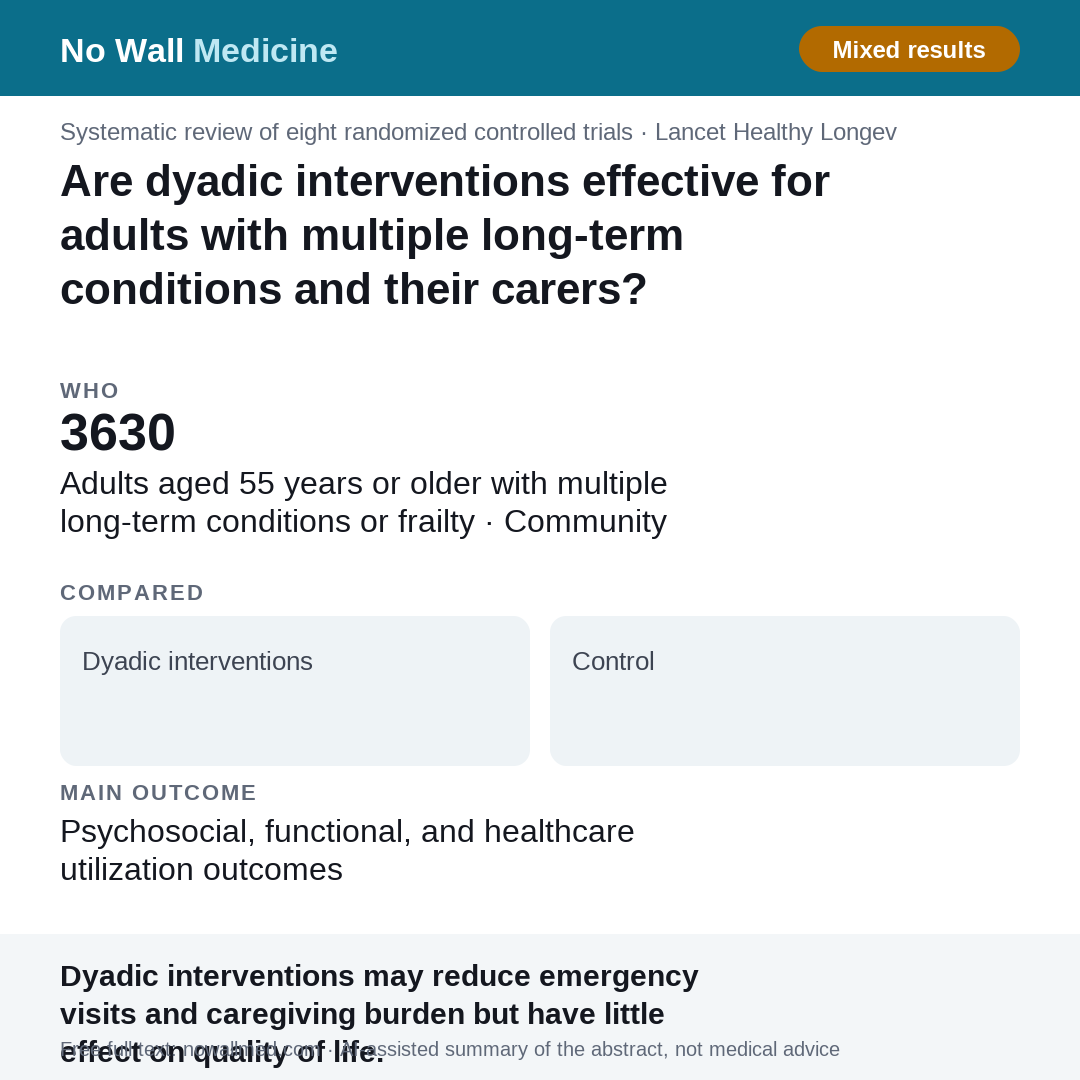
Clinical question: Are dyadic interventions effective for adults with multiple long-term conditions and their carers?
Why it matters: It was unclear if interventions targeting both a patient and their caregiver are beneficial for people managing multiple long-term conditions or frailty.
Key points
- Researchers reviewed eight randomized controlled trials involving 3630 pairs of older adults with multiple long-term conditions or frailty and their informal caregivers.
- Interventions showed some benefit in reducing emergency care visits, hospital readmissions, and functional decline for care recipients, and reducing caregiver burden.
- The studies showed little or no effect on quality of life or mental health outcomes for either the care recipients or the caregivers.
Limitation the authors note: The evidence for many outcomes was characterized by low or very low certainty.
Headline and key points written with AI from the paper’s abstract, with every number checked against it. Read the paper before relying on them.
Topics
Spotted a mistake? Suggest a correction