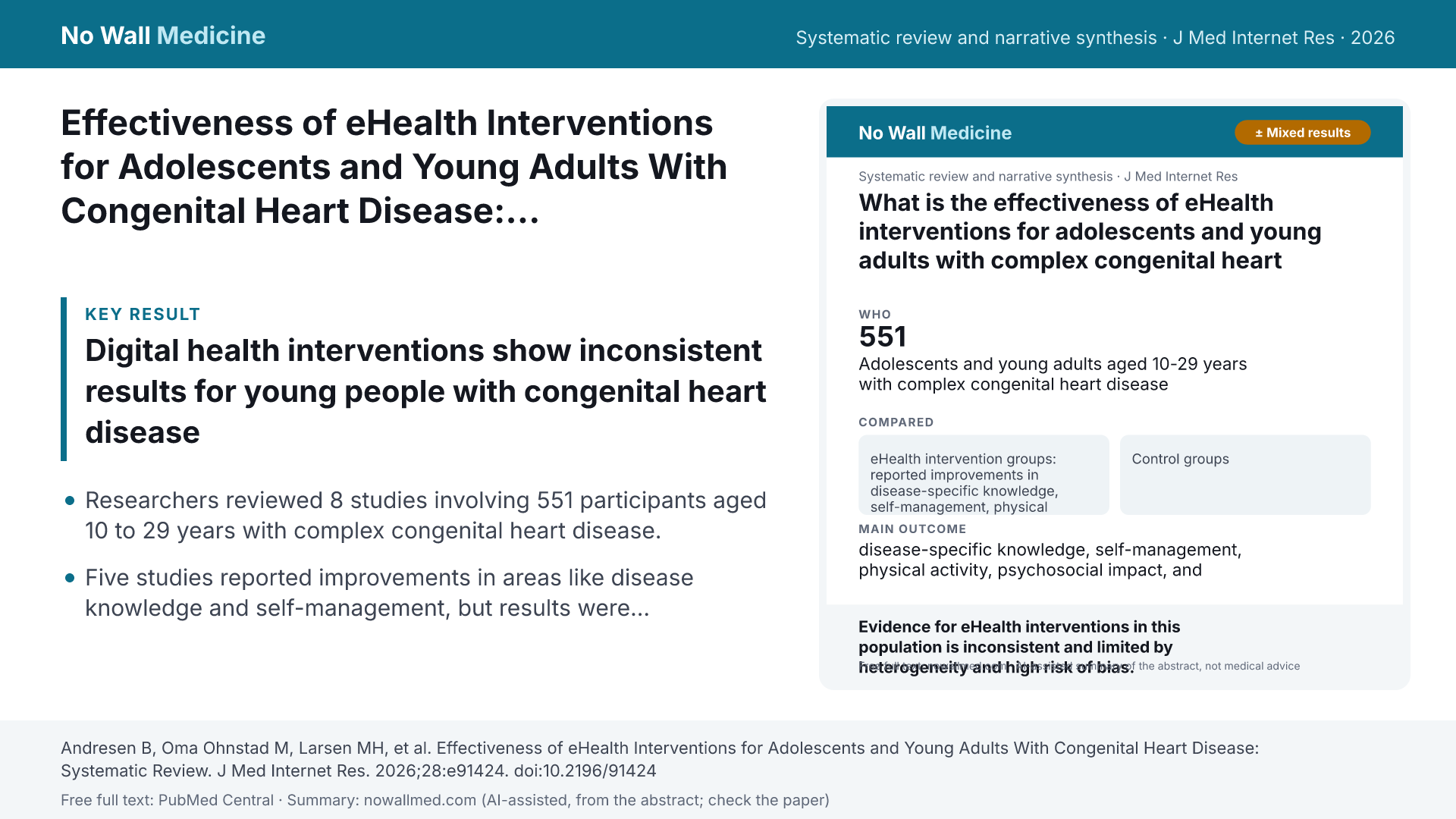
Effectiveness of eHealth Interventions for Adolescents and Young Adults With Congenital Heart Disease: Systematic Review
Key result: Digital health interventions show inconsistent results for young people with congenital heart disease
Key points
- Researchers reviewed 8 studies involving 551 participants aged 10 to 29 years with complex congenital heart disease.
- Five studies reported improvements in areas like disease knowledge and self-management, but results were inconsistent due to varying formats and delivery methods.
- The overall risk of bias across the included studies was high and seven studies lacked a theoretical foundation.
Why it matters: Systematic reviews examining digital health tools for adolescents and young adults with complex congenital heart disease have remained limited and inconsistent.
Limitation the authors note: The evidence is limited by heterogeneity, an absence of theoretical foundations, high risk of bias, and high dropout rates.
Discussion prompts
- Would these patients look like yours? Who was left out?
- Is the main outcome one that matters to patients?
- Is the difference large enough to change what you do?
Cite: Andresen B, Oma Ohnstad M, Larsen MH, et al. Effectiveness of eHealth Interventions for Adolescents and Young Adults With Congenital Heart Disease: Systematic Review. J Med Internet Res. 2026;28:e91424. doi:10.2196/91424
Free full text: PubMed Central · Summary and visual abstract: nowallmed.com/a/effectiveness-of-ehealth-interventions-for-adolescents-and-young-iifd3n/ (AI-assisted from the abstract; check the paper before relying on it).