No evidence that modifying antiretroviral therapy improves cognitive outcomes for people living with HIV
Effectiveness of interventions on cognitive decline risk for people living with HIV on antiretroviral therapy: a systematic review
Systematic reviewNo clear difference
Do additional interventions reduce cognitive decline risk for people living with HIV on antiretroviral therapy?
Who
Adults aged 18 years and older living with HIV on antiretroviral therapy
Compared
Pharmacological interventions
Non-pharmacological interventions
Main outcome
Incident dementia, incident mild cognitive impairment, or change in cognitive function
Bottom line: No evidence that antiretroviral therapy modification or intensification improves cognitive outcomes or prevents cognitive decline or dementia.
Limitation: Clinical and methodological heterogeneity, incomplete reporting, and uniformly very low certainty evidence.
Lancet Healthy Longev · 2026-05-15Download image
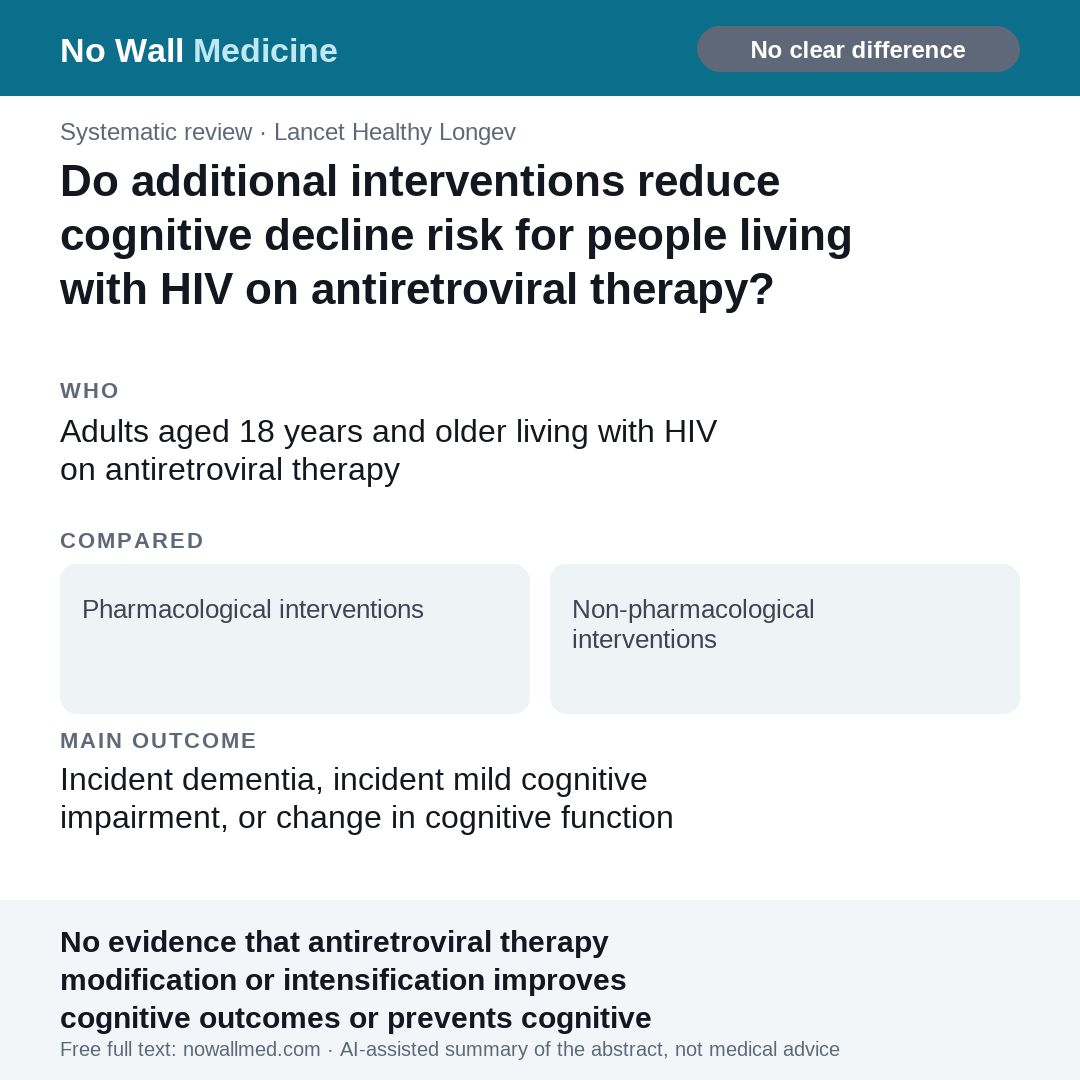
Clinical question: Do additional interventions reduce cognitive decline risk for people living with HIV on antiretroviral therapy?
Why it matters: The effectiveness of additional pharmacological or non-pharmacological interventions to reduce the risk of cognitive decline or dementia in people living with HIV is unclear.
Key points
- Researchers reviewed five studies, including three randomized controlled trials and two observational cohort studies, involving adults living with HIV on antiretroviral therapy.
- The review found no evidence that changing or intensifying antiretroviral therapy improves cognitive function or prevents dementia or mild cognitive impairment.
- The effects of various drug modifications on cognitive outcomes were small, inconsistent, and based on very low certainty evidence.
Limitation the authors note: The authors state that the review was limited by clinical and methodological heterogeneity, incomplete reporting, small sample sizes, and an absence of long-term outcomes.
Headline and key points written with AI from the paper’s abstract, with every number checked against it. Read the paper before relying on them.
Topics
Spotted a mistake? Suggest a correction