Neurofeedback-assisted mindfulness training showed greater short-term benefits for mental health in Chinese nursing students
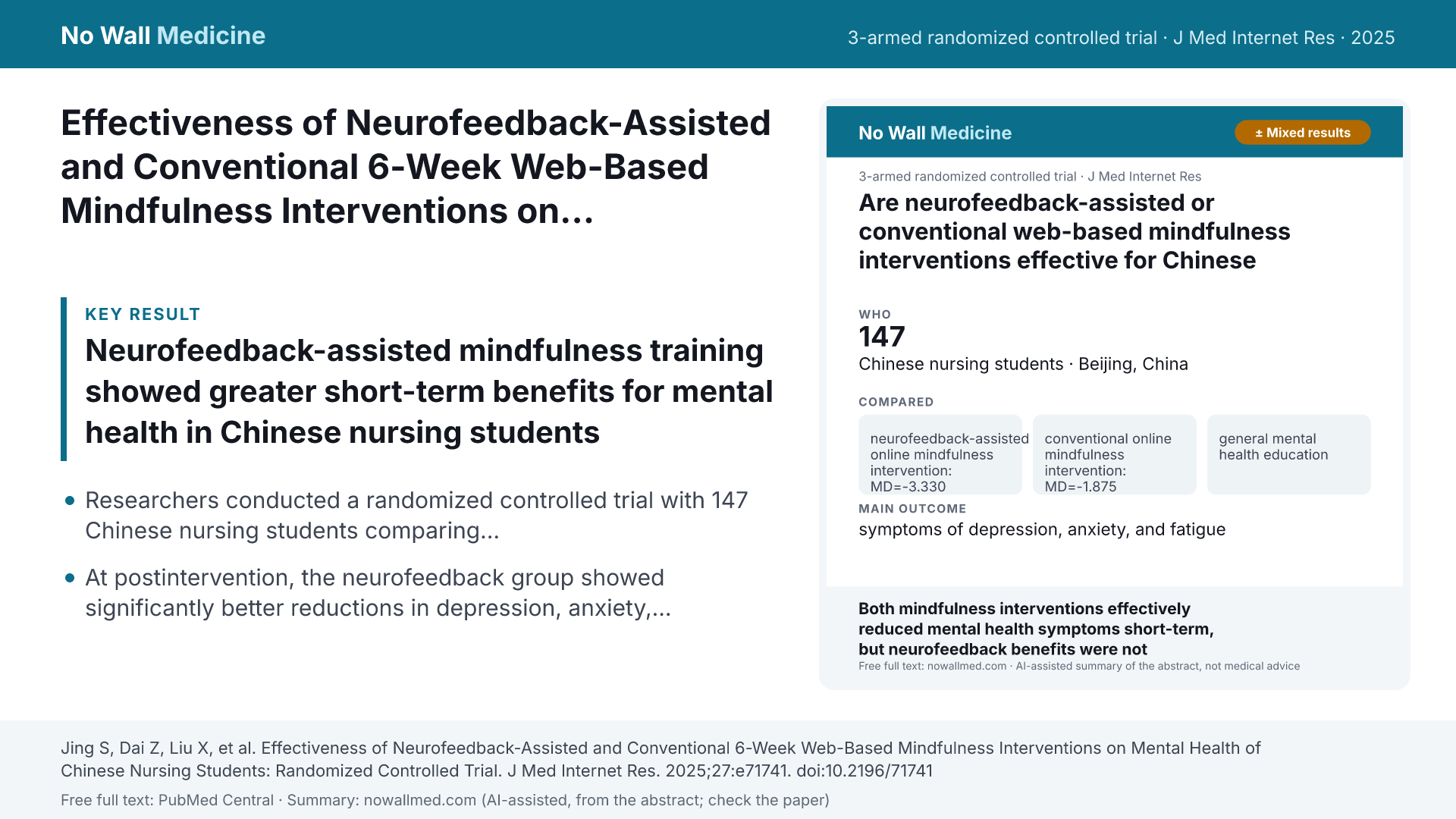
Effectiveness of Neurofeedback-Assisted and Conventional 6-Week Web-Based Mindfulness Interventions on Mental Health of Chinese Nursing Students: Randomized Controlled Trial
3-armed randomized controlled trialMixed results
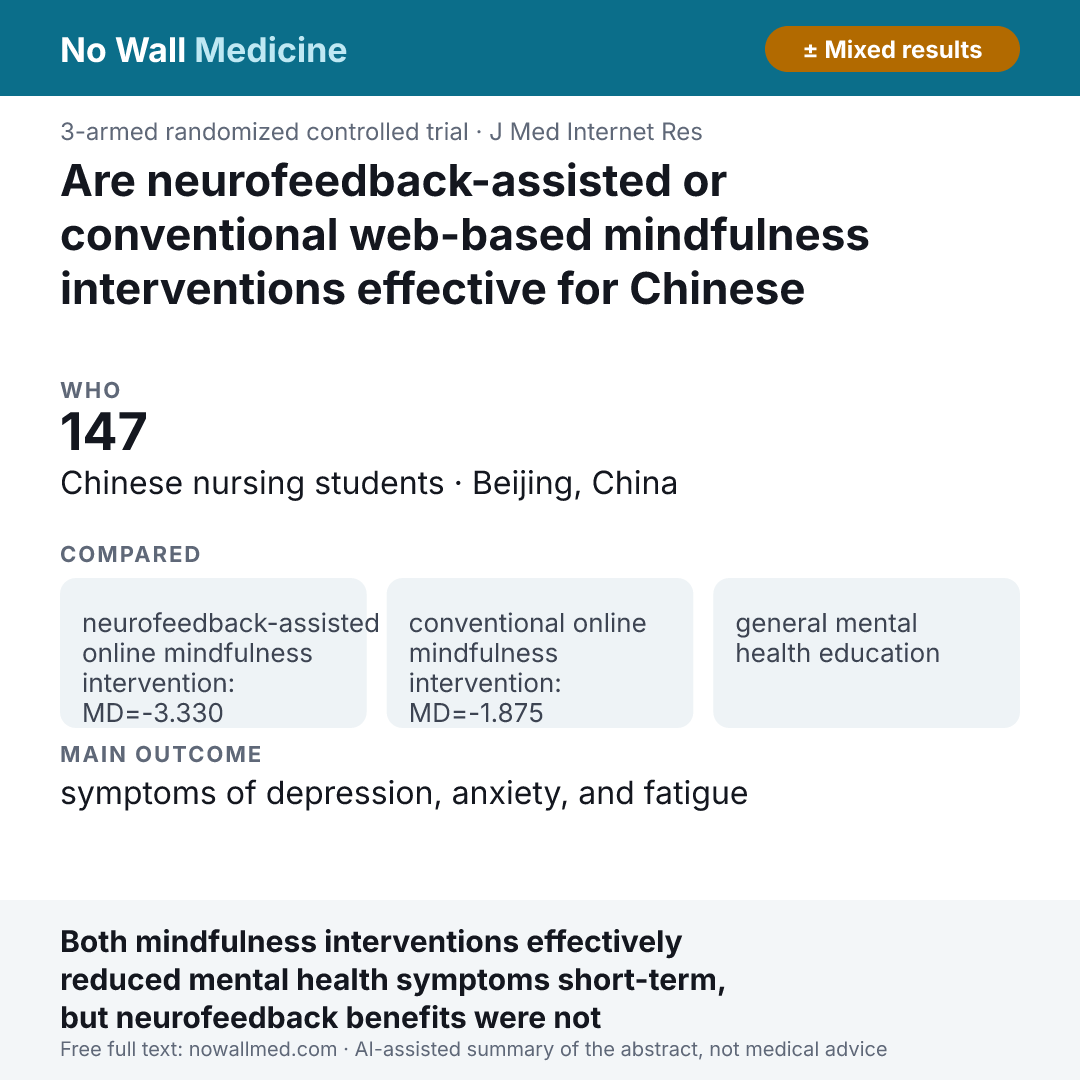
Are neurofeedback-assisted or conventional web-based mindfulness interventions effective for Chinese nursing students?
Who
147
Chinese nursing students · Beijing, China
Compared
neurofeedback-assisted online mindfulness intervention: MD=-3.330 (depression), MD=-3.468 (anxiety), MD=-2.620 (fatigue)
conventional online mindfulness intervention: MD=-1.875 (depression), MD=-1.750 (anxiety), MD=-2.229 (fatigue)
general mental health education
Main outcome
symptoms of depression, anxiety, and fatigue
Bottom line: Both mindfulness interventions effectively reduced mental health symptoms short-term, but neurofeedback benefits were not sustained long-term.
Limitation: effects were not sustained over the long term
J Med Internet Res · 2025-05-23 · Save PNG
Clinical question: Are neurofeedback-assisted or conventional web-based mindfulness interventions effective for Chinese nursing students?
Why it matters: Nursing students face high rates of mental health challenges, necessitating scalable interventions like web-based mindfulness programs.
Key points
- Researchers conducted a randomized controlled trial with 147 Chinese nursing students comparing neurofeedback-assisted mindfulness, conventional mindfulness, and mental health education.
- At postintervention, the neurofeedback group showed significantly better reductions in depression, anxiety, and mindfulness levels compared to the conventional mindfulness group.
- The benefits for depression and mindfulness were not significantly different between the three groups at the 1-month and 3-month follow-up assessments.
Headline and key points written with AI from the paper’s abstract, with every number checked against it. Read the paper before relying on them.
Was this summary helpful?
Subject terms
Headline, design, result, key points, caveat and citation as plain text.
Cite this article
Jing S, Dai Z, Liu X, et al. Effectiveness of Neurofeedback-Assisted and Conventional 6-Week Web-Based Mindfulness Interventions on Mental Health of Chinese Nursing Students: Randomized Controlled Trial. J Med Internet Res. 2025;27:e71741. doi:10.2196/71741
Spotted a mistake? Suggest a correction