Preventive treatment effectiveness for tuberculosis varies by infection status and local disease burden
Effectiveness of preventive treatment among different age groups and Mycobacterium tuberculosis infection status: a systematic review and individual-participant data meta-analysis of contact tracing studies
Systematic review and individual-participant data meta-analysisBenefit found
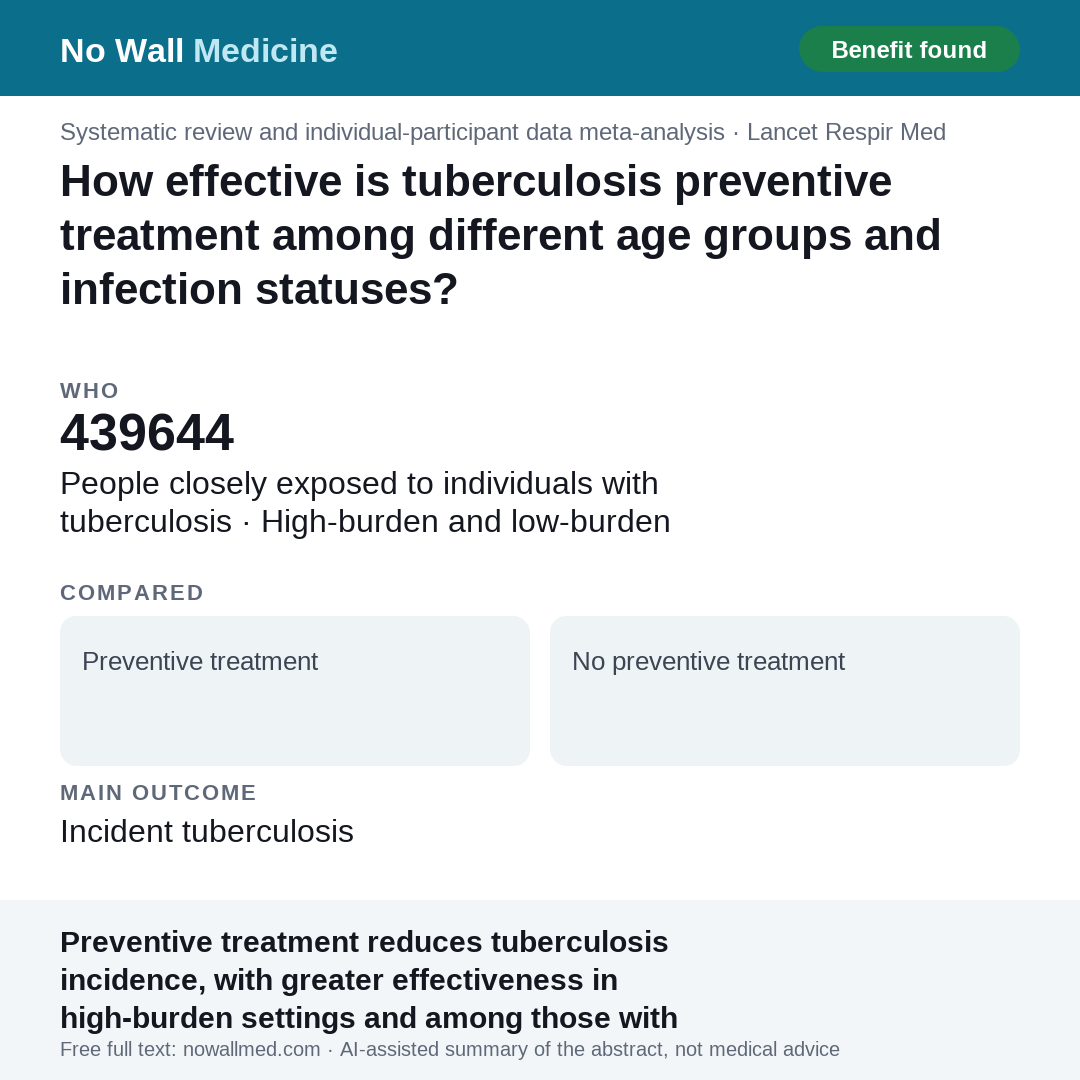
How effective is tuberculosis preventive treatment among different age groups and infection statuses?
Who
439644
People closely exposed to individuals with tuberculosis · High-burden and low-burden tuberculosis settings
Compared
Preventive treatment
No preventive treatment
Main outcome
Incident tuberculosis
Result: adjusted hazard ratio 0.51 (95% CI 0.44 to 0.60)
Bottom line: Preventive treatment reduces tuberculosis incidence, with greater effectiveness in high-burden settings and among those with positive infection tests.
Limitation: Contacts exposed to a drug-resistant tuberculosis index patient were excluded
Lancet Respir Med · 2024-05-08Download image
Clinical question: How effective is tuberculosis preventive treatment among different age groups and infection statuses?
Why it matters: It is debated which individuals benefit most from preventive treatment and whether these benefits change based on age, infection status, or local tuberculosis prevalence.
Key points
- Researchers analyzed 439,644 participants from 32 cohort studies to measure the effectiveness of tuberculosis preventive treatment in people exposed to the disease.
- Overall, preventive treatment was 49% effective, with greater protection seen in those with positive skin or blood tests for infection across all age groups.
- Treatment effectiveness was higher in high-burden settings (0.31) compared to low-burden settings (0.58), and the number needed to treat ranged from 9 to 455.
Headline and key points written with AI from the paper’s abstract, with every number checked against it. Read the paper before relying on them.
Topics
Cite this article
Martinez L, Seddon JA, Horsburgh CR, Lange C, Mandalakas AM, TB Contact Studies Consortium. Effectiveness of preventive treatment among different age groups and Mycobacterium tuberculosis infection status: a systematic review and individual-participant data meta-analysis of contact tracing studies. Lancet Respir Med. 2024. doi:10.1016/S2213-2600(24)00083-3
Spotted a mistake? Suggest a correction
Top studies every Monday
The week’s key trials and guidelines in your specialties, plus any topics you follow. By email, free.
Get the weekly digest