Quinolone prophylaxis reduces bloodstream infections in pediatric leukemia but not in stem cell transplant recipients
Effectiveness of Quinolone Prophylaxis in Pediatric Acute Leukemia and Hematopoietic Stem Cell Transplantation: A Systematic Review and Meta-analysis
Systematic review and meta-analysisMixed results
Is quinolone prophylaxis effective in pediatric acute leukemia and hematopoietic stem cell transplantation?
Who
Children and young adults with acute leukemia or hematopoietic stem cell transplantation
Compared
Quinolone prophylaxis
No prophylaxis
Main outcome
Bloodstream infections and neutropenic fever
Bottom line: Quinolone prophylaxis reduces bloodstream infections and neutropenic fever in acute leukemia but not in hematopoietic stem cell transplantation.
Open Forum Infect Dis · 2022-11-03 · Save PNG
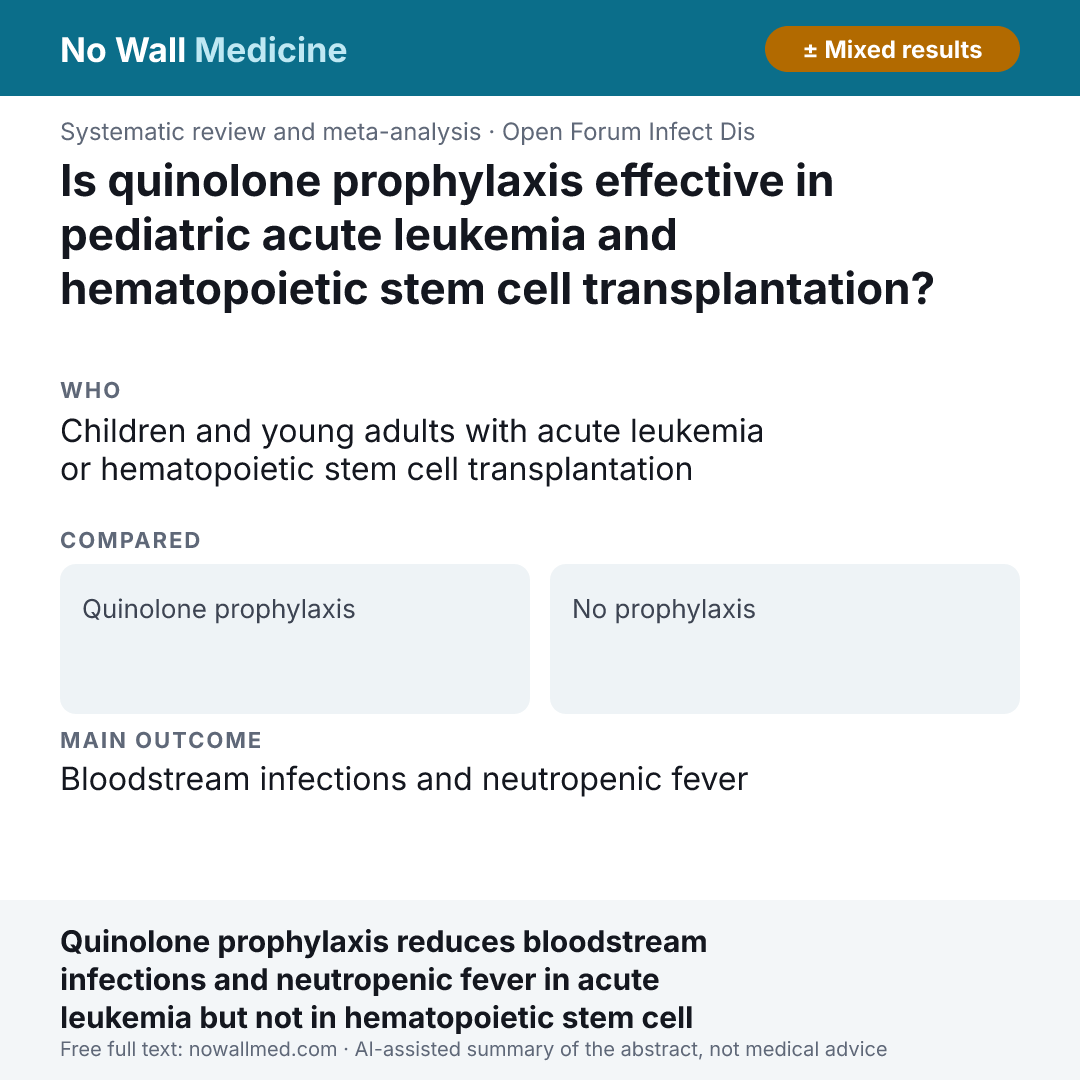
Clinical question: Is quinolone prophylaxis effective in pediatric acute leukemia and hematopoietic stem cell transplantation?
Why it matters: The effectiveness of using quinolones to prevent infections in high-risk pediatric hematological patients remains controversial.
Key points
- Researchers analyzed 16 studies involving children and young adults undergoing chemotherapy for acute leukemia or hematopoietic stem cell transplantation (HSCT).
- Quinolone prophylaxis was effective in reducing bloodstream infections and neutropenic fever in pediatric acute leukemia patients, but showed no significant effect in HSCT recipients.
- The use of prophylaxis was associated with higher antibiotic exposure and a higher rate of bacterial resistance to fluoroquinolones.
Headline and key points written with AI from the paper’s abstract, with every number checked against it. Read the paper before relying on them.
Was this summary helpful?
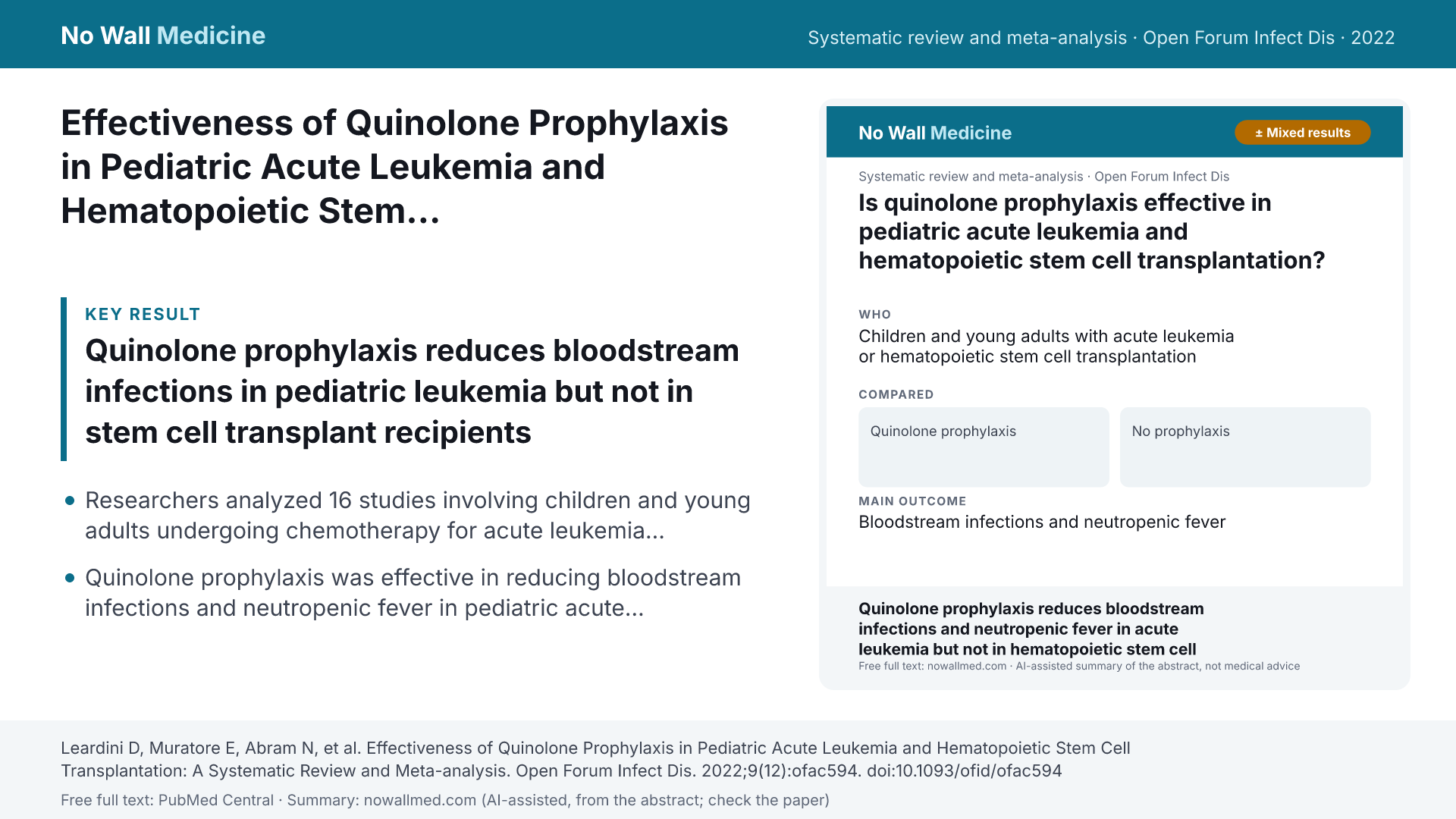
Headline, design, result, key points, caveat and citation as plain text.
Cite this article
Leardini D, Muratore E, Abram N, et al. Effectiveness of Quinolone Prophylaxis in Pediatric Acute Leukemia and Hematopoietic Stem Cell Transplantation: A Systematic Review and Meta-analysis. Open Forum Infect Dis. 2022;9(12):ofac594. doi:10.1093/ofid/ofac594
Spotted a mistake? Suggest a correction