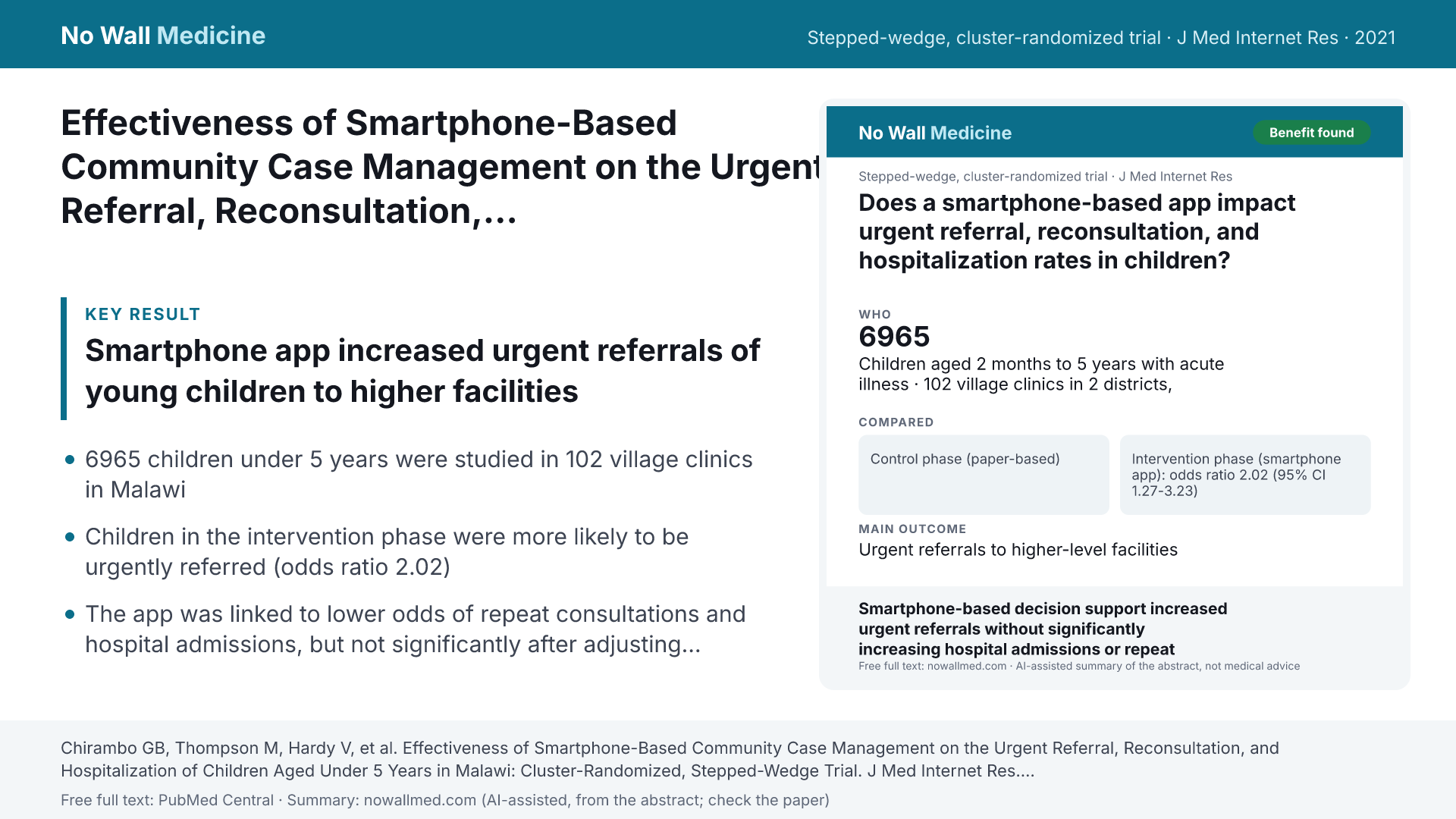
Effectiveness of Smartphone-Based Community Case Management on the Urgent Referral, Reconsultation, and Hospitalization of Children Aged Under 5 Years in Malawi: Cluster-Randomized, Stepped-Wedge Trial
Key result: Smartphone app increased urgent referrals of young children to higher facilities
Key points
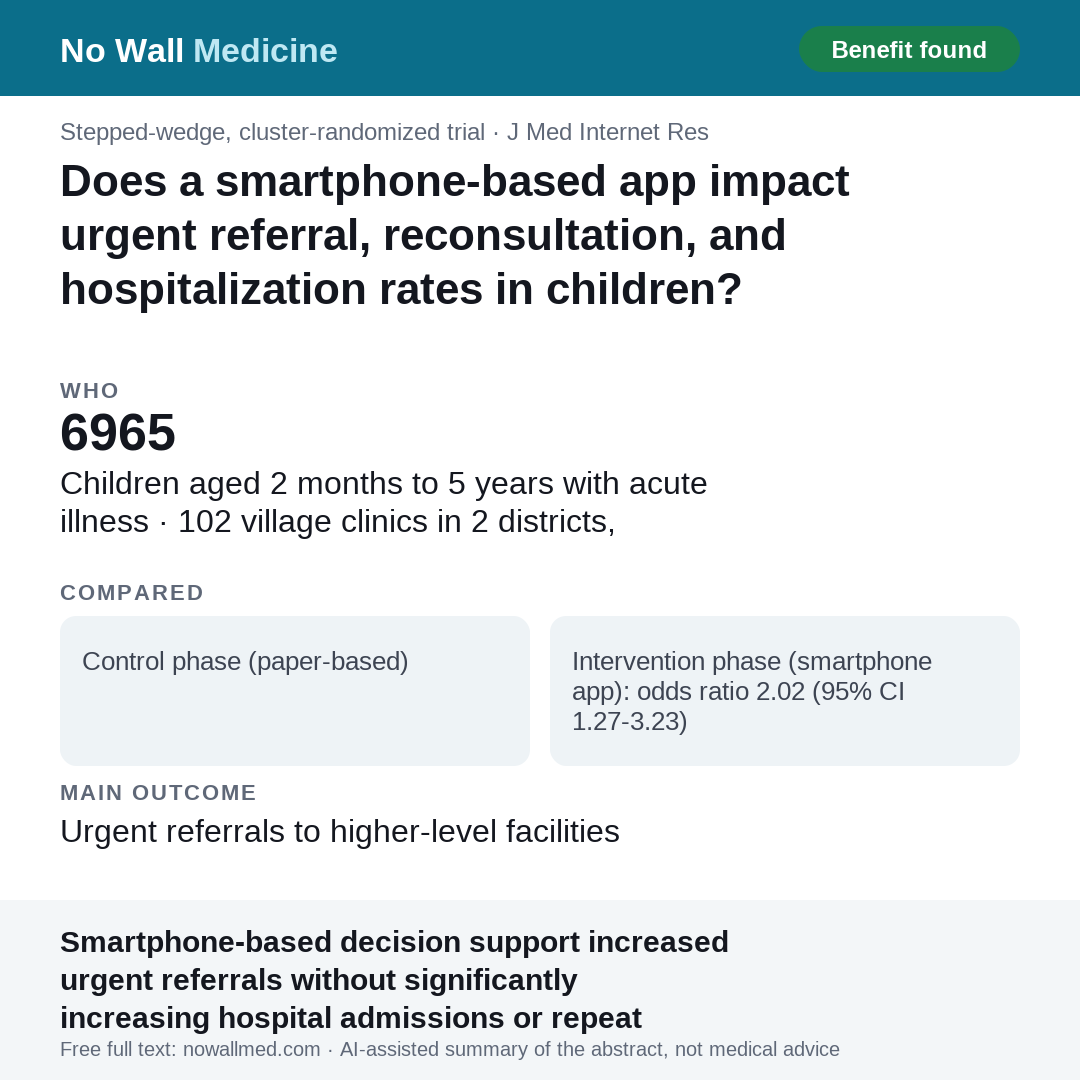
- 6965 children under 5 years were studied in 102 village clinics in Malawi.
- Children in the intervention phase were more likely to be urgently referred (odds ratio 2.02).
- The app was linked to lower odds of repeat consultations and hospital admissions, but not significantly after adjusting for time.
Why it matters: Guidelines adherence to community case management is often poor in Malawi
Limitation the authors note: The trial had a short duration from November 2016 to February 2017
Discussion prompts
- Would these patients look like yours? Who was left out?
- Is the main outcome one that matters to patients?
- Is the difference large enough to change what you do?
Cite: Chirambo GB, Thompson M, Hardy V, et al. Effectiveness of Smartphone-Based Community Case Management on the Urgent Referral, Reconsultation, and Hospitalization of Children Aged Under 5 Years in Malawi: Cluster-Randomized, Stepped-Wedge Trial. J Med Internet Res. 2021. doi:10.2196/25777
Free full text: PubMed Central · Summary and visual abstract: nowallmed.com/a/effectiveness-of-smartphone-based-community-case-management-on-the-y56owv/ (AI-assisted from the abstract; check the paper before relying on it).