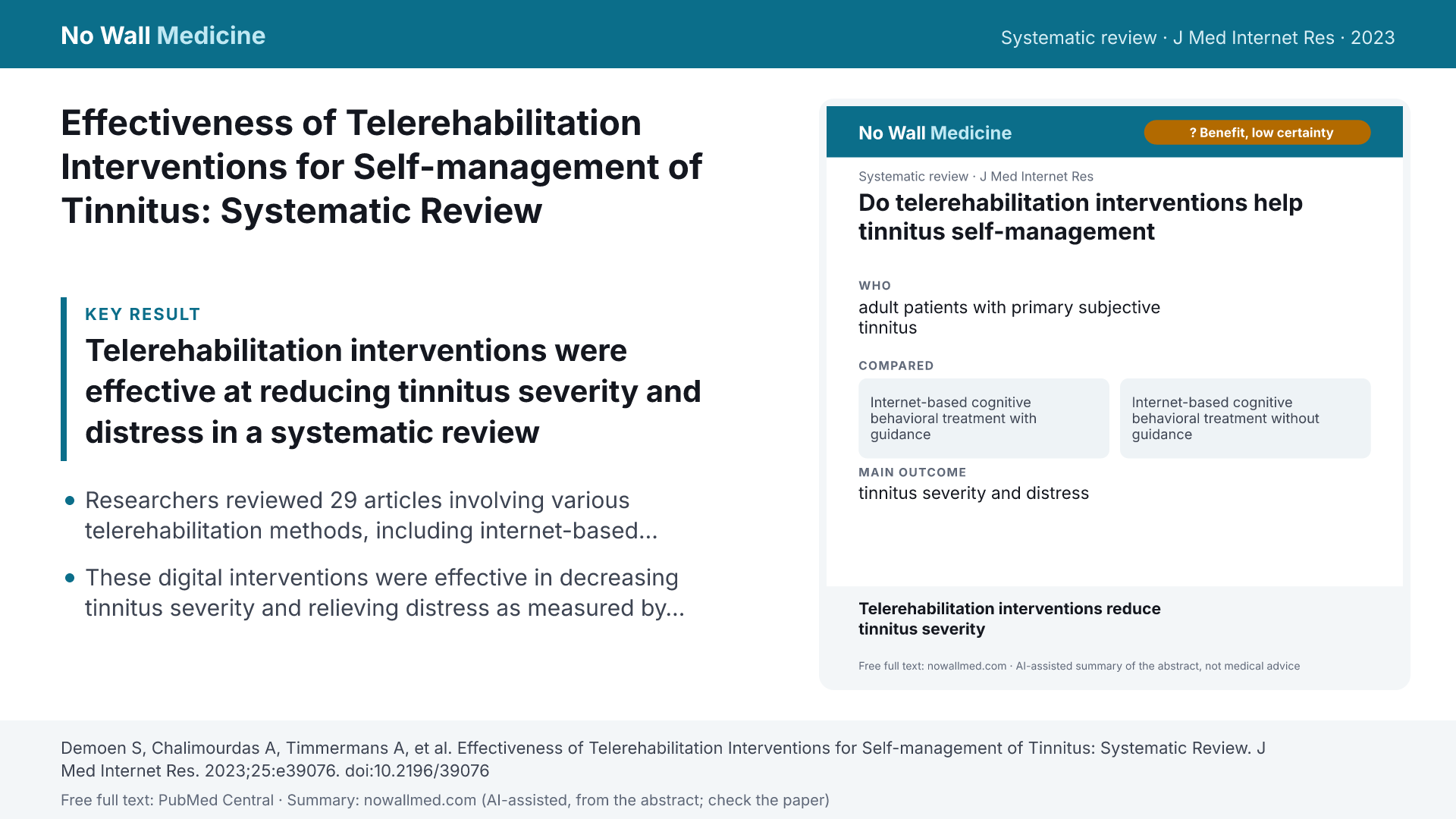
Effectiveness of Telerehabilitation Interventions for Self-management of Tinnitus: Systematic Review
Key result: Telerehabilitation interventions were effective at reducing tinnitus severity and distress in a systematic review
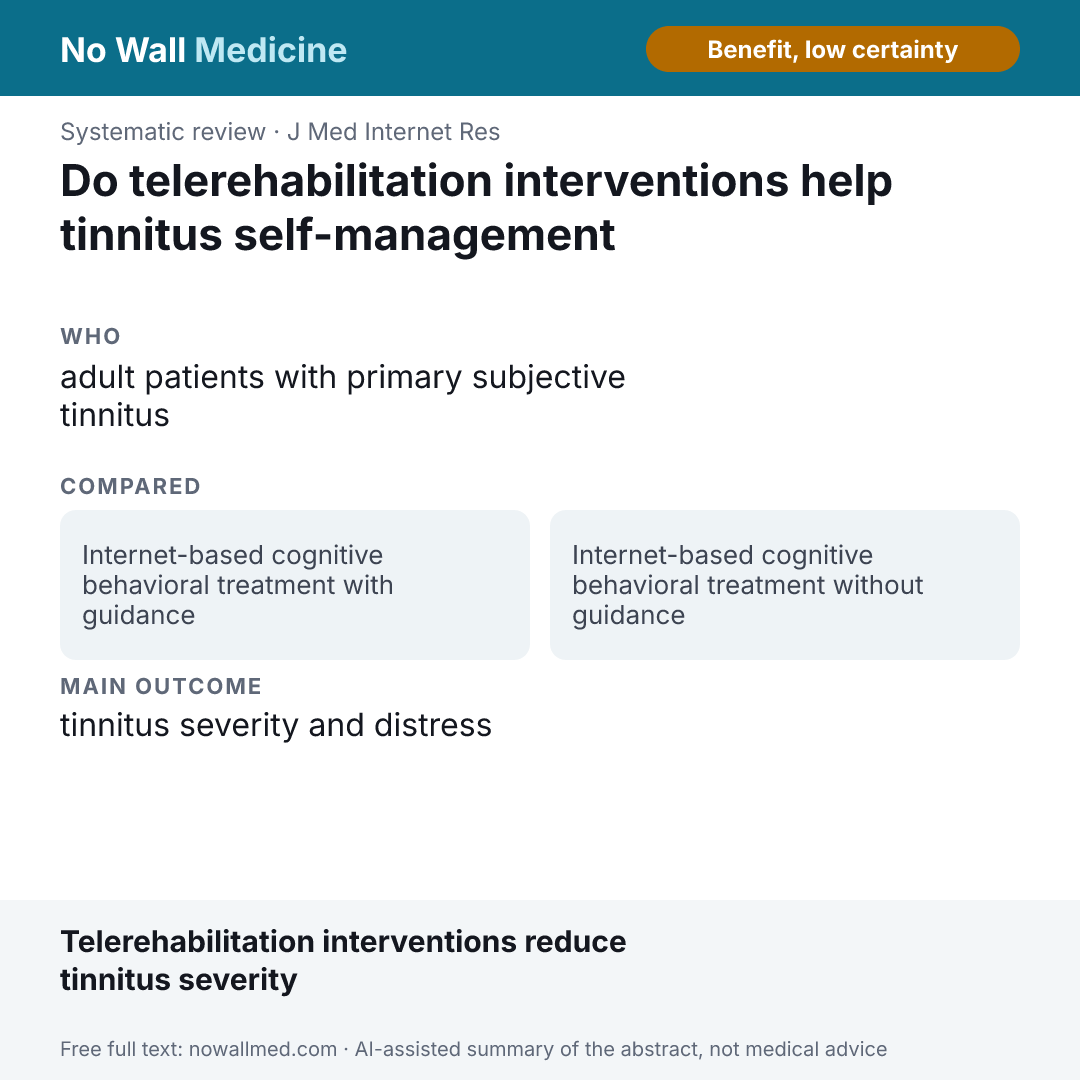
Systematic reviewBenefit, low certainty
Do telerehabilitation interventions help tinnitus self-management
Who
adult patients with primary subjective tinnitus
Compared
Internet-based cognitive behavioral treatment with guidance
Internet-based cognitive behavioral treatment without guidance
Main outcome
tinnitus severity and distress
Bottom line: Telerehabilitation interventions reduce tinnitus severity
Limitation: high dropout rates and risk of bias
J Med Internet Res · 2023-02-09 · Save PNG
Key points
- Researchers reviewed 29 articles involving various telerehabilitation methods, including internet-based cognitive behavioral therapy and smartphone apps, for adult patients with tinnitus.
- These digital interventions were effective in decreasing tinnitus severity and relieving distress as measured by various tinnitus questionnaires.
- The review noted that dropout rates for these programs were often high, ranging from 4% to 71.4%.
Limitation the authors note: All studies reported between some concerns and high concerns of risk of bias, resulting in low to moderate certainty levels.
Discussion prompts
- Would these patients look like yours? Who was left out?
- Is the main outcome one that matters to patients?
- Is the difference large enough to change what you do?
Cite: Demoen S, Chalimourdas A, Timmermans A, et al. Effectiveness of Telerehabilitation Interventions for Self-management of Tinnitus: Systematic Review. J Med Internet Res. 2023;25:e39076. doi:10.2196/39076
Free full text: PubMed Central · Summary and visual abstract: nowallmed.com/a/effectiveness-of-telerehabilitation-interventions-for-self-management-k2mah6/ (AI-assisted from the abstract; check the paper before relying on it).