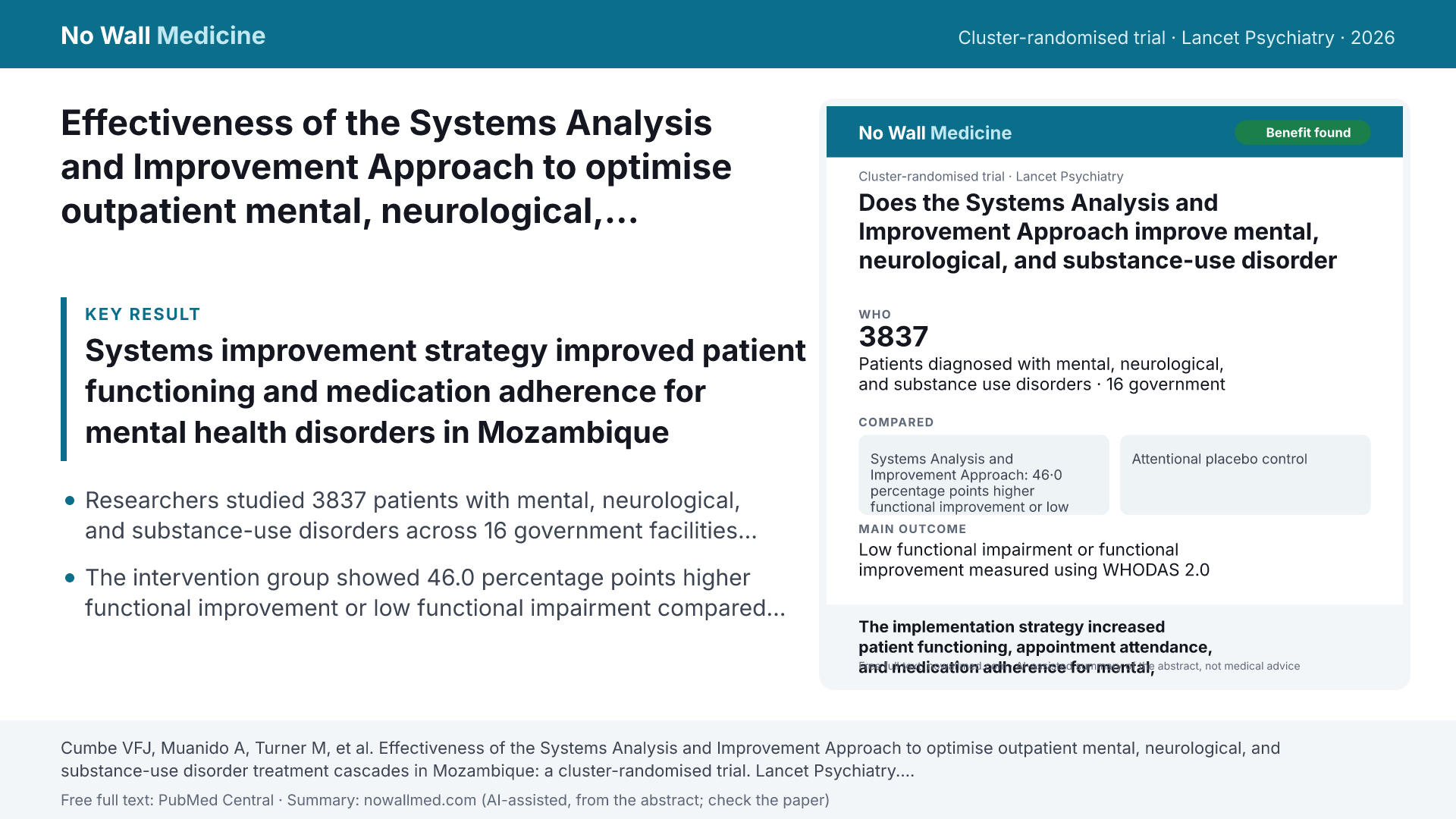
Effectiveness of the Systems Analysis and Improvement Approach to optimise outpatient mental, neurological, and substance-use disorder treatment cascades in Mozambique: a cluster-randomised trial
Key result: Systems improvement strategy improved patient functioning and medication adherence for mental health disorders in Mozambique
Key points
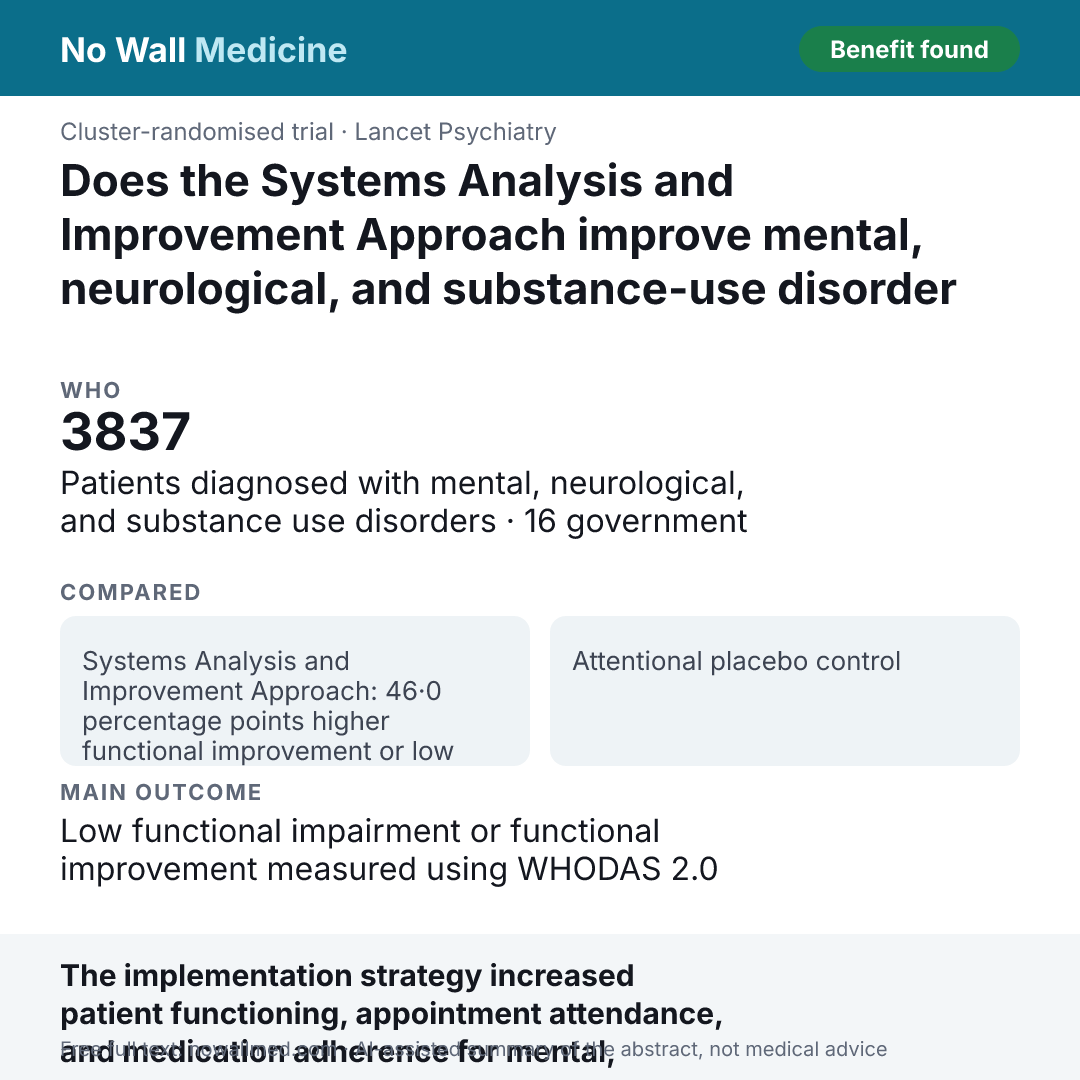
- Researchers studied 3837 patients with mental, neurological, and substance-use disorders across 16 government facilities in Mozambique.
- The intervention group showed 46.0 percentage points higher functional improvement or low functional impairment compared to the control group.
- The intervention group also had 18.1 percentage points higher medication adherence and 18.4 percentage points higher appointment attendance than the control group.
Why it matters: There are currently no evidence-based implementation strategies for optimizing the care cascade for mental, neurological, and substance-use disorders in low-income and middle-income countries.
Discussion prompts
- Would these patients look like yours? Who was left out?
- Is the main outcome one that matters to patients?
- Is the difference large enough to change what you do?
Cite: Cumbe VFJ, Muanido A, Turner M, et al. Effectiveness of the Systems Analysis and Improvement Approach to optimise outpatient mental, neurological, and substance-use disorder treatment cascades in Mozambique: a cluster-randomised trial. Lancet Psychiatry. 2026;13(4):316-326. doi:10.1016/S2215-0366(26)00034-9
Free full text: PubMed Central · Summary and visual abstract: nowallmed.com/a/effectiveness-of-the-systems-analysis-and-improvement-approach-to-y3lzka/ (AI-assisted from the abstract; check the paper before relying on it).