WeChat-based mini-program reduced alcohol cravings and consumption in people with hazardous drinking
Effectiveness of the WeChat-based mini-program ("Sober Time ACT") on individuals with hazardous drinking in China: a randomized controlled trial
Prospective two-arm randomized controlled trialBenefit found
Is the WeChat-based mini-program Sober Time ACT effective for hazardous drinking?
Who
186
Individuals with hazardous drinking in China · China via WeChat
Compared
Sober Time ACT intervention group: significantly greater reduction in cravings
Control group: alcohol abstinence brochures
Main outcome
change in craving before and after the intervention
Bottom line: The Sober Time ACT mini-program effectively reduces alcohol craving, consumption, and improves psychological indicators.
Limitation: high dropout rate
BMC Med · 2025-07-01Download image
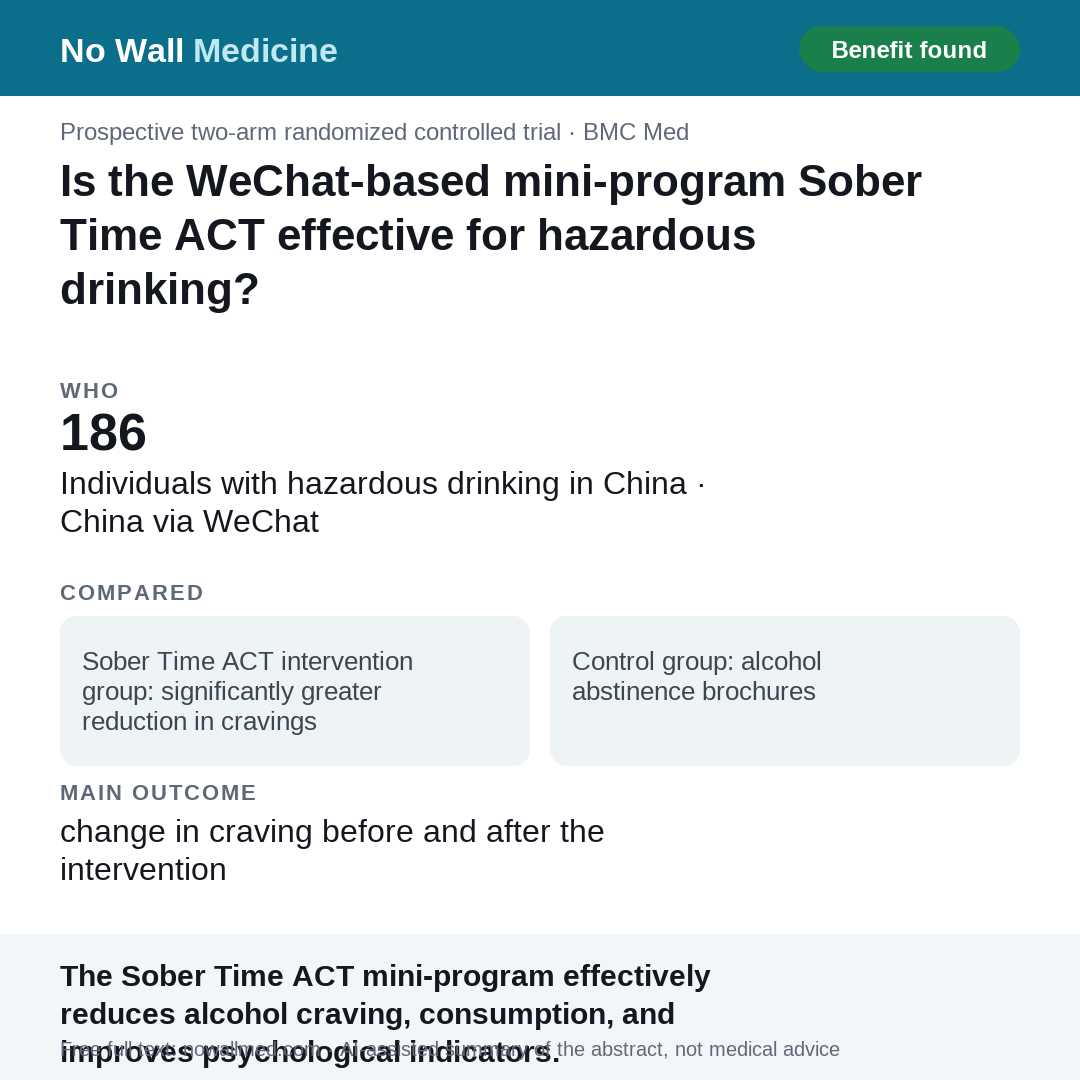
Clinical question: Is the WeChat-based mini-program Sober Time ACT effective for hazardous drinking?
Why it matters: There are currently no effective intervention measures to address the problem of hazardous drinking in China.
Key points
- Researchers conducted a randomized controlled trial with 186 participants with hazardous drinking, comparing a WeChat mini-program to alcohol abstinence brochures.
- The intervention group showed a significantly greater reduction in alcohol cravings compared to the control group (P = 0.02 for EM and P = 0.01 for MI).
- The program was also associated with changes in average weekly alcohol consumption (P = 0.03), anxiety levels (P = 0.03), and perceived stress (P < 0.05).
Limitation the authors note: The study was limited by a high dropout rate.
Headline and key points written with AI from the paper’s abstract, with every number checked against it. Read the paper before relying on them.
Topics
Cite this article
Wu C, Yang P, Tang Y, Chen T, Li S, Huang S. Effectiveness of the WeChat-based mini-program ("Sober Time ACT") on individuals with hazardous drinking in China: a randomized controlled trial. BMC Med. 2025. doi:10.1186/s12916-025-04217-5
Spotted a mistake? Suggest a correction