Virtual reality assisted limb exercises improved recovery outcomes compared to standard therapy in intensive care
Effectiveness of virtual reality assisted active limb movement exercises for patients in the respiratory intensive care unit: a randomized pilot study
Prospective randomized controlled trialBenefit found
Is virtual reality assisted active limb movement more effective than conventional exercise therapy?
Who
Patients in the Respiratory Intensive Care Unit · Respiratory Intensive Care Unit
Compared
Virtual reality group: significant improvements in muscle strength, grip strength, body mass index, and Barthel Index
Control group
Main outcome
compliance, safety, and rehabilitative outcomes
Bottom line: Virtual reality assisted exercises improve exercise duration, compliance, and health outcomes in respiratory intensive care patients.
J Rehabil Med · 2025-06-03Download image
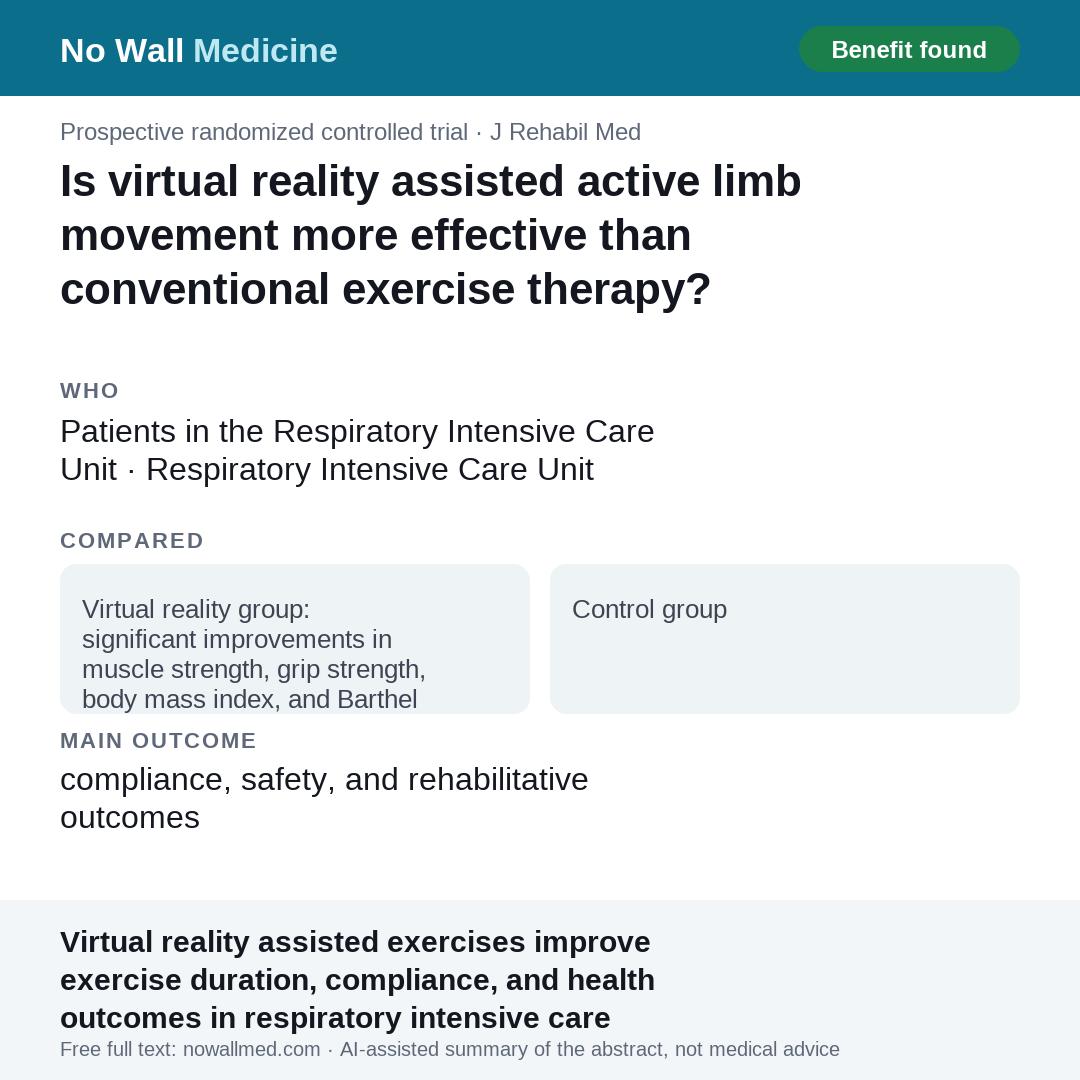
Clinical question: Is virtual reality assisted active limb movement more effective than conventional exercise therapy?
Why it matters: It is unclear if virtual reality technologies can enhance patient recovery and exercise compliance compared to conventional exercise therapy for those in the respiratory intensive care unit.
Key points
- Researchers conducted a randomized pilot study comparing virtual reality assisted active limb movement exercises to standard exercise therapy in patients in the respiratory intensive care unit.
- The virtual reality group showed significantly higher average daily exercise time, out-of-bed exercise time, and overall exercise compliance compared to the control group (p < 0.05).
- Within the first week, the virtual reality group showed significant improvements in muscle strength, grip strength, body mass index, and the Barthel Index (a measure of daily living activities) (all p < 0.05).
Headline and key points written with AI from the paper’s abstract, with every number checked against it. Read the paper before relying on them.
Topics
Cite this article
Wang J, Shi C, Jia Y, Xiao Q. Effectiveness of virtual reality assisted active limb movement exercises for patients in the respiratory intensive care unit: a randomized pilot study. J Rehabil Med. 2025. doi:10.2340/jrm.v57.28399
Spotted a mistake? Suggest a correction