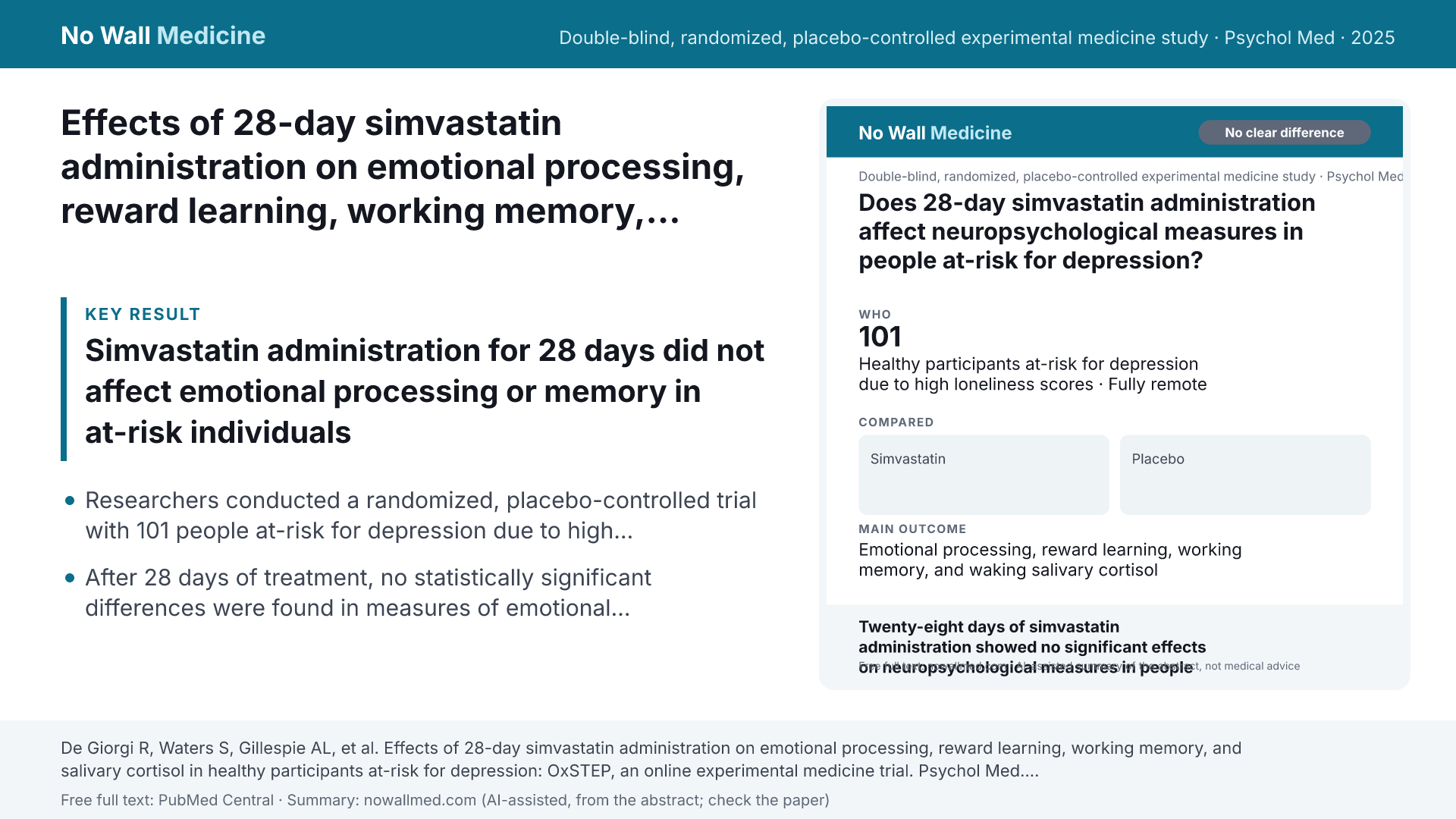
Simvastatin administration for 28 days did not affect emotional processing or memory in at-risk individuals
Effects of 28-day simvastatin administration on emotional processing, reward learning, working memory, and salivary cortisol in healthy participants at-risk for depression: OxSTEP, an online experimental medicine trial
Double-blind, randomized, placebo-controlled experimental medicine studyNo clear difference
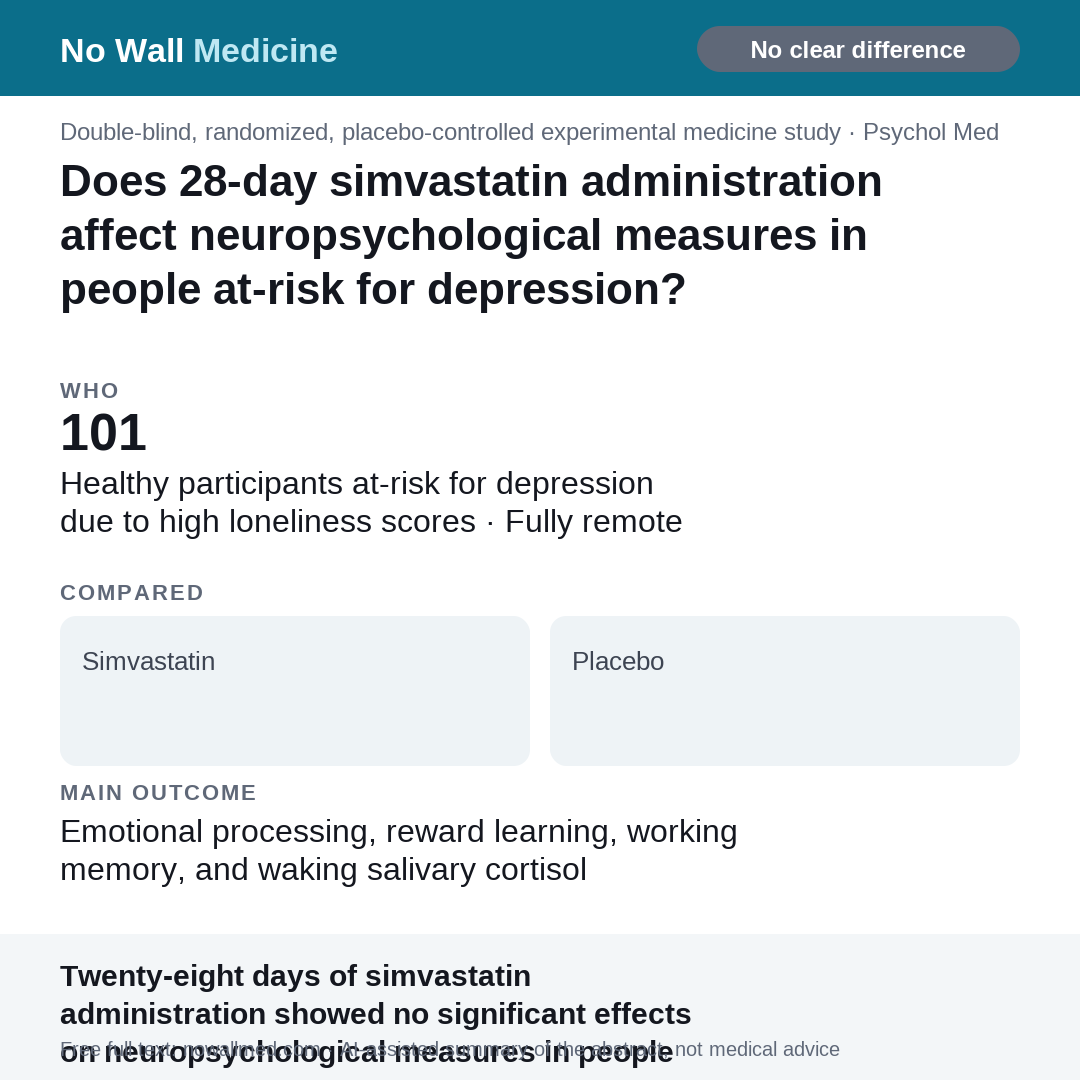
Does 28-day simvastatin administration affect neuropsychological measures in people at-risk for depression?
Who
101
Healthy participants at-risk for depression due to high loneliness scores · Fully remote design within a United Kingdom-wide sample
Compared
Simvastatin
Placebo
Main outcome
Emotional processing, reward learning, working memory, and waking salivary cortisol
Bottom line: Twenty-eight days of simvastatin administration showed no significant effects on neuropsychological measures in people at-risk for depression.
Limitation: Other unmeasured cognitive processes may be involved.
Psychol Med · 2025-05-22Download image
Clinical question: Does 28-day simvastatin administration affect neuropsychological measures in people at-risk for depression?
Why it matters: The neuropsychological mechanisms regarding whether statins have beneficial or adverse mental health effects are not established.
Key points
- Researchers conducted a randomized, placebo-controlled trial with 101 people at-risk for depression due to high loneliness scores.
- After 28 days of treatment, no statistically significant differences were found in measures of emotional processing, reward learning, working memory, or waking salivary cortisol.
- The study results did not substantiate concerns regarding adverse neuropsychiatric events due to statins in this population.
Headline and key points written with AI from the paper’s abstract, with every number checked against it. Read the paper before relying on them.
Was this summary helpful?
Subject terms
Cite this article
De Giorgi R, Waters S, Gillespie AL, Quinton AMG, Colwell MJ, Murphy SE. Effects of 28-day simvastatin administration on emotional processing, reward learning, working memory, and salivary cortisol in healthy participants at-risk for depression: OxSTEP, an online experimental medicine trial. Psychol Med. 2025. doi:10.1017/S0033291725001187
Spotted a mistake? Suggest a correction
Top studies every Monday
The week’s key trials and guidelines in your specialties, plus any topics you follow. By email, free.
Get the weekly digest