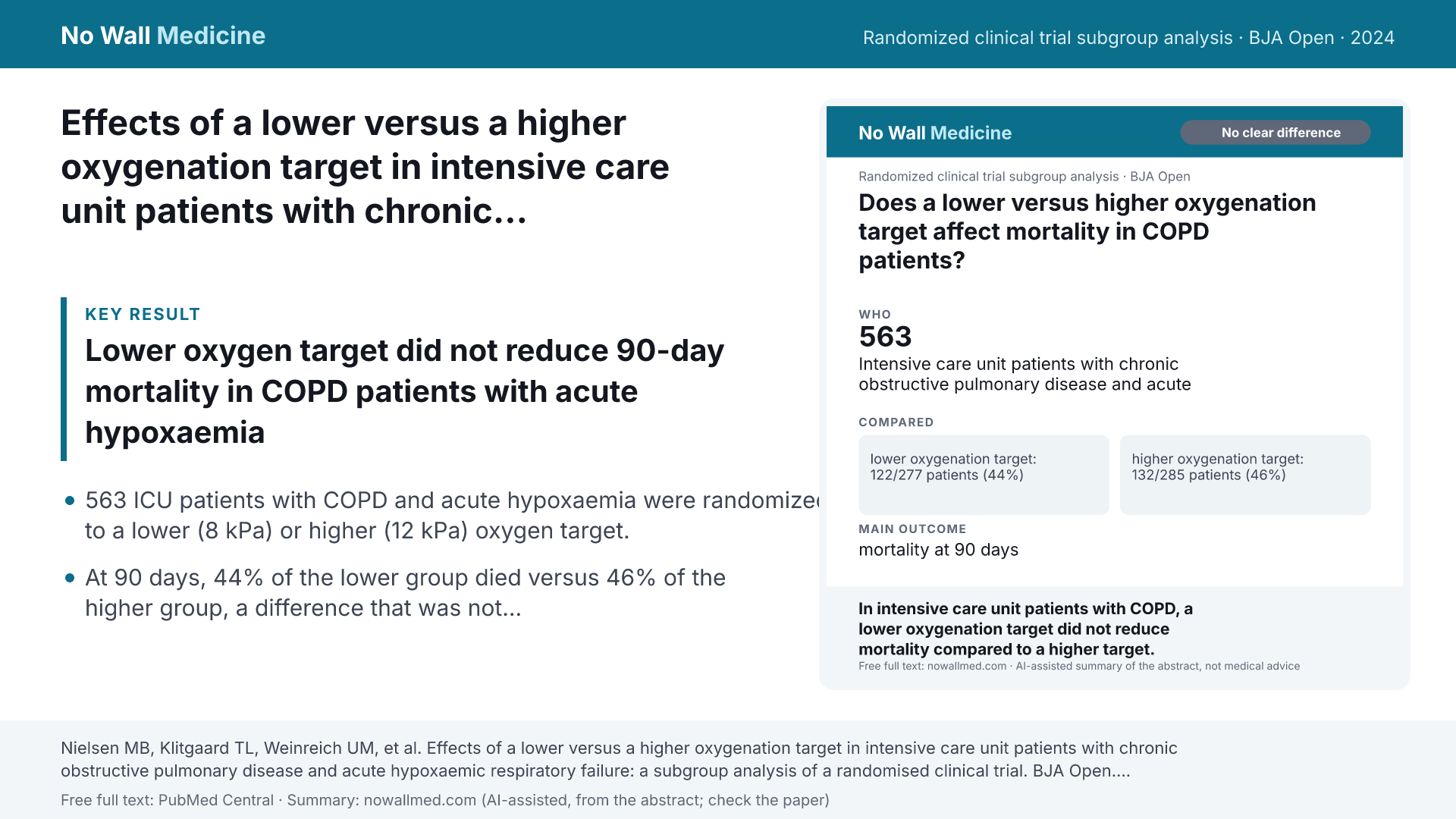
Effects of a lower versus a higher oxygenation target in intensive care unit patients with chronic obstructive pulmonary disease and acute hypoxaemic respiratory failure: a subgroup analysis of a randomised clinical trial
Key result: Lower oxygen target did not reduce 90-day mortality in COPD patients with acute hypoxaemia
Key points
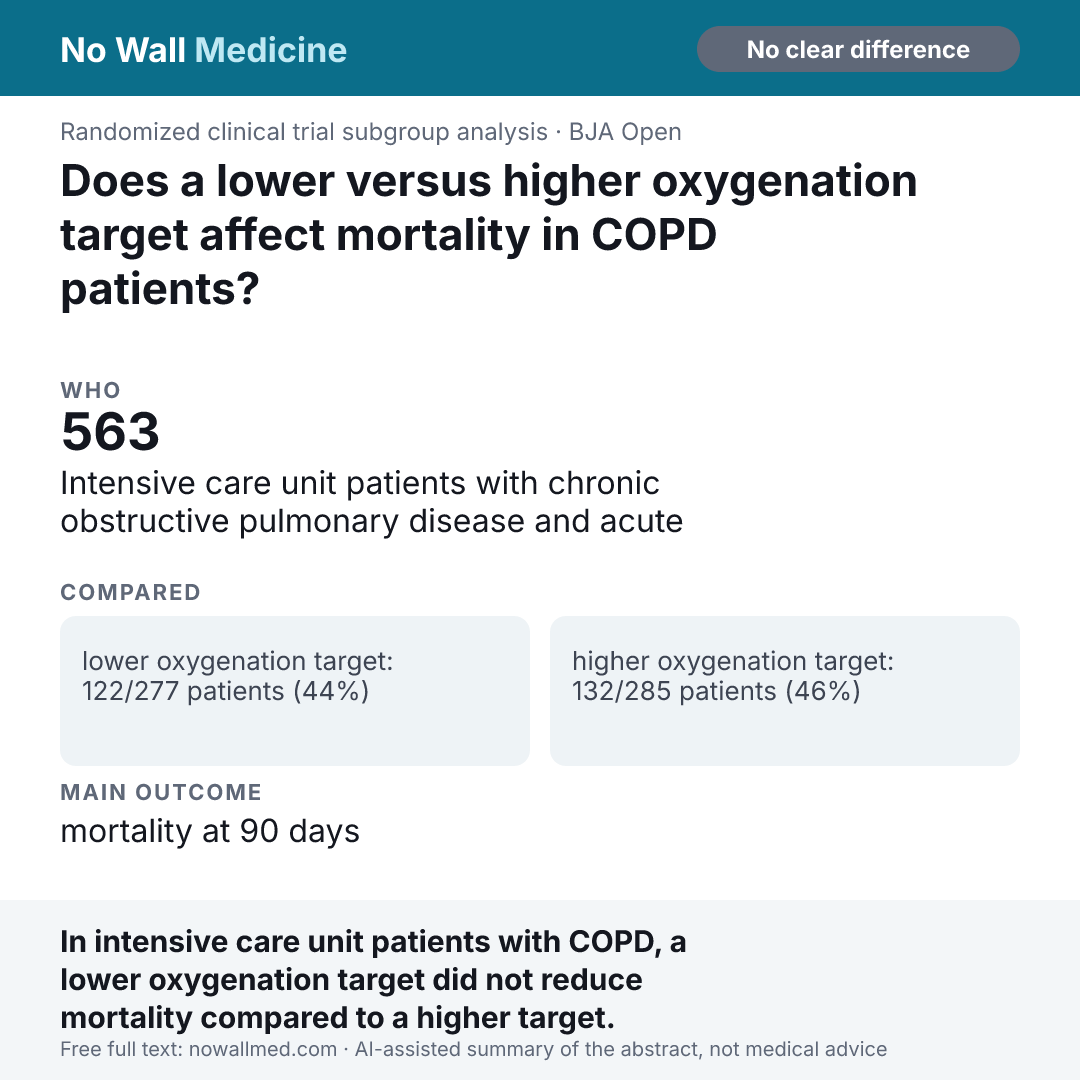
- 563 ICU patients with COPD and acute hypoxaemia were randomized to a lower (8 kPa) or higher (12 kPa) oxygen target.
- At 90 days, 44% of the lower group died versus 46% of the higher group, a difference that was not statistically significant.
- No statistically significant differences were found in arterial carbon dioxide levels or any other secondary outcomes.
Why it matters: The optimal oxygenation target for ICU patients with COPD and acute hypoxaemia has not been established.
Discussion prompts
- Would these patients look like yours? Who was left out?
- Is the main outcome one that matters to patients?
- Is the difference large enough to change what you do?
Cite: Nielsen MB, Klitgaard TL, Weinreich UM, et al. Effects of a lower versus a higher oxygenation target in intensive care unit patients with chronic obstructive pulmonary disease and acute hypoxaemic respiratory failure: a subgroup analysis of a randomised clinical trial. BJA Open. 2024;10:100281. doi:10.1016/j.bjao.2024.100281
Free full text: PubMed Central · Summary and visual abstract: nowallmed.com/a/effects-of-a-lower-versus-a-higher-oxygenation-target-in-intensive-1b07qjh/ (AI-assisted from the abstract; check the paper before relying on it).