Effects of a virtual iSupport Program on carers and people with dementia
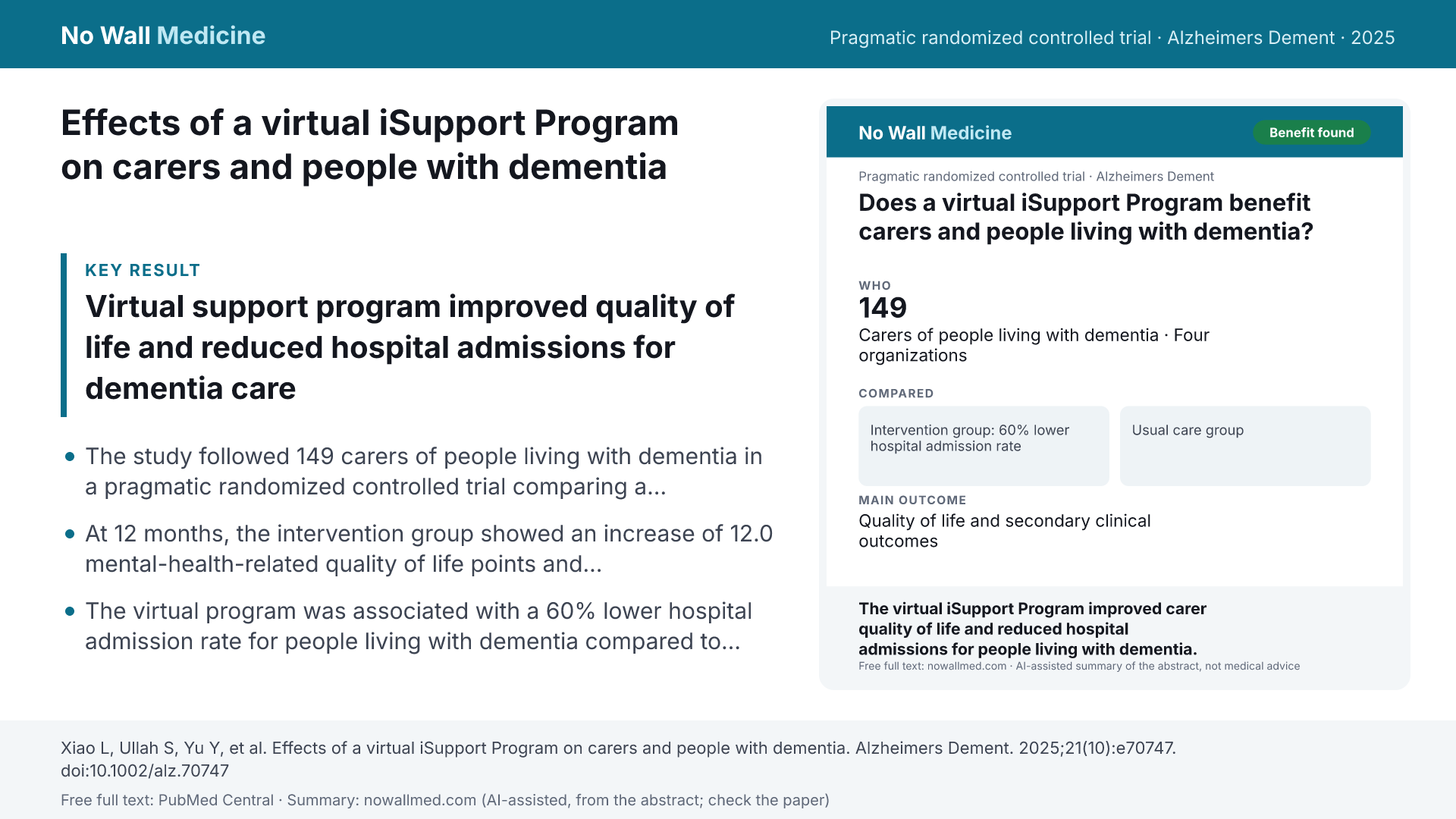
Key result: Virtual support program improved quality of life and reduced hospital admissions for dementia care
Pragmatic randomized controlled trialBenefit found
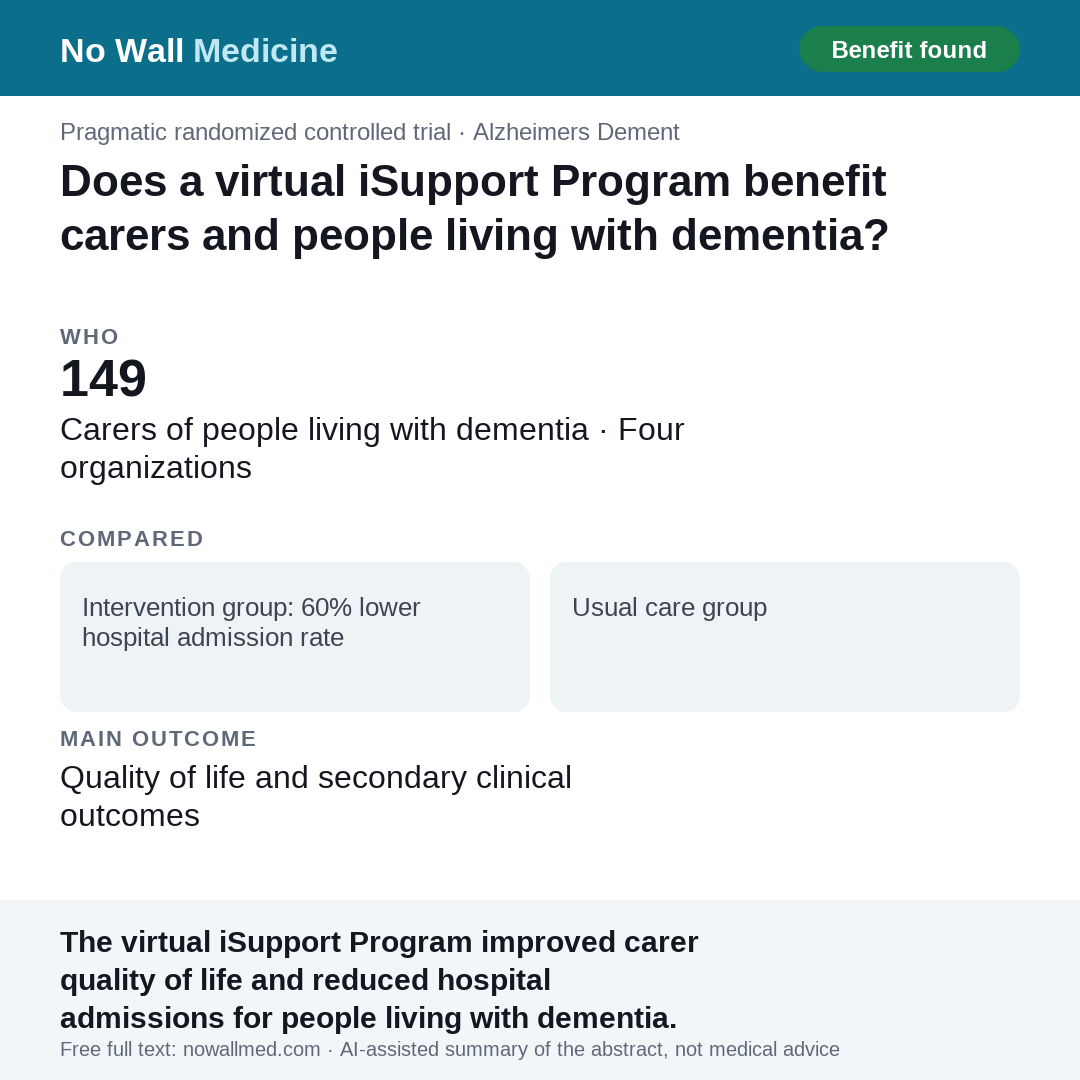
Does a virtual iSupport Program benefit carers and people living with dementia?
Who
149
Carers of people living with dementia · Four organizations
Compared
Intervention group: 60% lower hospital admission rate
Usual care group
Main outcome
Quality of life and secondary clinical outcomes
Bottom line: The virtual iSupport Program improved carer quality of life and reduced hospital admissions for people living with dementia.
Alzheimers Dement · 2025-09-30Download image
Key points
- The study followed 149 carers of people living with dementia in a pragmatic randomized controlled trial comparing a virtual program to usual care.
- At 12 months, the intervention group showed an increase of 12.0 mental-health-related quality of life points and self-efficacy points rose from 14.8 to 18.5.
- The virtual program was associated with a 60% lower hospital admission rate for people living with dementia compared to the usual care group.
Why it matters: It was unknown if a multicomponent virtual program could improve quality of life and clinical outcomes for both carers and people living with dementia.
Discussion prompts
- Would these patients look like yours? Who was left out?
- Is the main outcome one that matters to patients?
- Is the difference large enough to change what you do?
Cite: Xiao L, Ullah S, Yu Y, et al. Effects of a virtual iSupport Program on carers and people with dementia. Alzheimers Dement. 2025. doi:10.1002/alz.70747
Free full text: PubMed Central · Summary and visual abstract: nowallmed.com/a/effects-of-a-virtual-isupport-program-on-carers-and-people-with-15b0cn8/ (AI-assisted from the abstract; check the paper before relying on it).