Effects of anodal tDCS on resting state eeg power and motor function in acute stroke: a randomized controlled trial
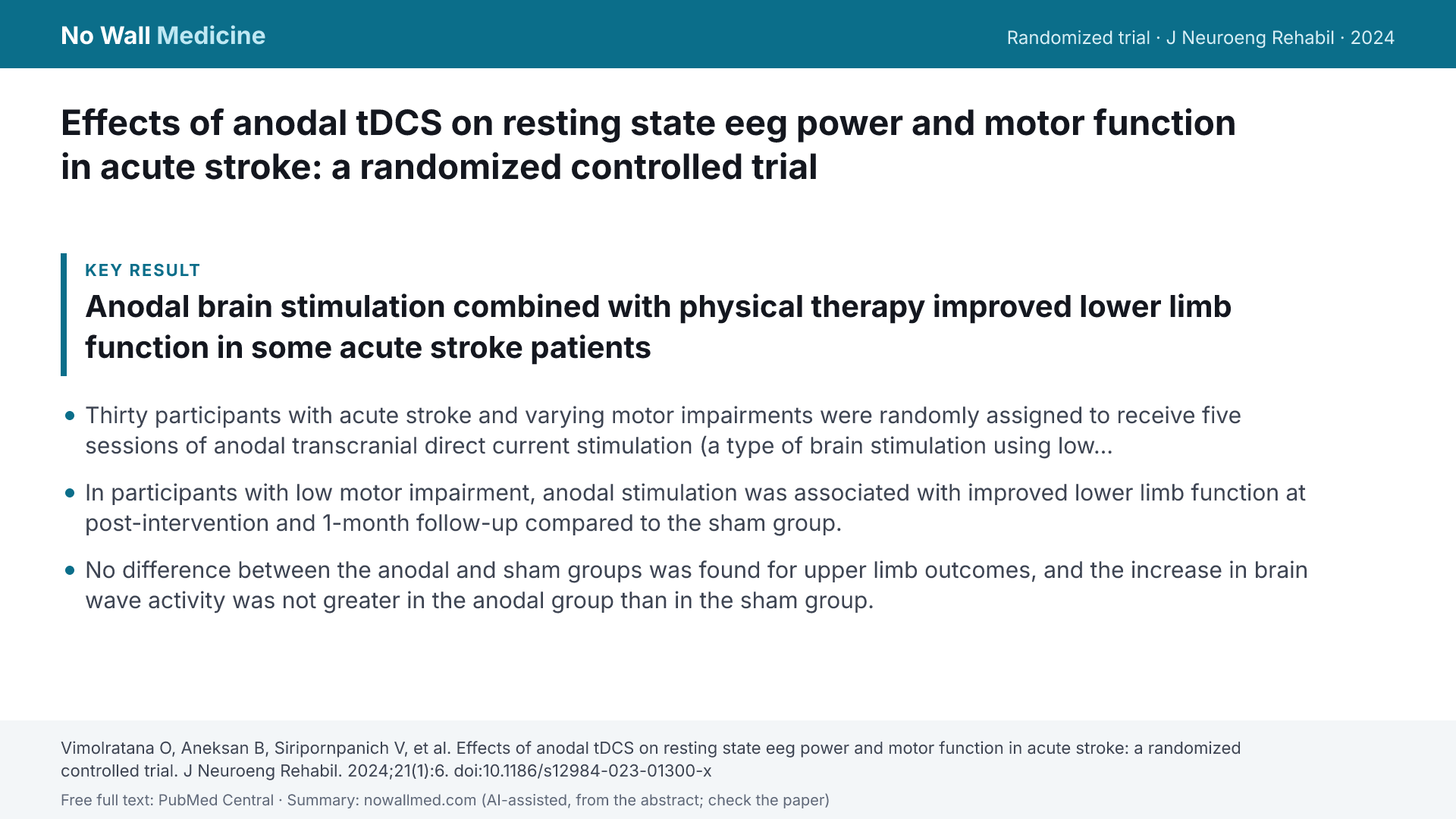
Key result: Anodal brain stimulation combined with physical therapy improved lower limb function in some acute stroke patients
Key points
- Thirty participants with acute stroke and varying motor impairments were randomly assigned to receive five sessions of anodal transcranial direct current stimulation (a type of brain stimulation using low electrical currents) or a sham treatment alongside physical therapy.
- In participants with low motor impairment, anodal stimulation was associated with improved lower limb function at post-intervention and 1-month follow-up compared to the sham group.
- No difference between the anodal and sham groups was found for upper limb outcomes, and the increase in brain wave activity was not greater in the anodal group than in the sham group.
Discussion prompts
- Would these patients look like yours? Who was left out?
- Is the main outcome one that matters to patients?
- Is the difference large enough to change what you do?
Cite: Vimolratana O, Aneksan B, Siripornpanich V, et al. Effects of anodal tDCS on resting state eeg power and motor function in acute stroke: a randomized controlled trial. J Neuroeng Rehabil. 2024. doi:10.1186/s12984-023-01300-x
Free full text: PubMed Central · Summary and visual abstract: nowallmed.com/a/effects-of-anodal-tdcs-on-resting-state-eeg-power-and-motor-function-1efo3ak/ (AI-assisted from the abstract; check the paper before relying on it).