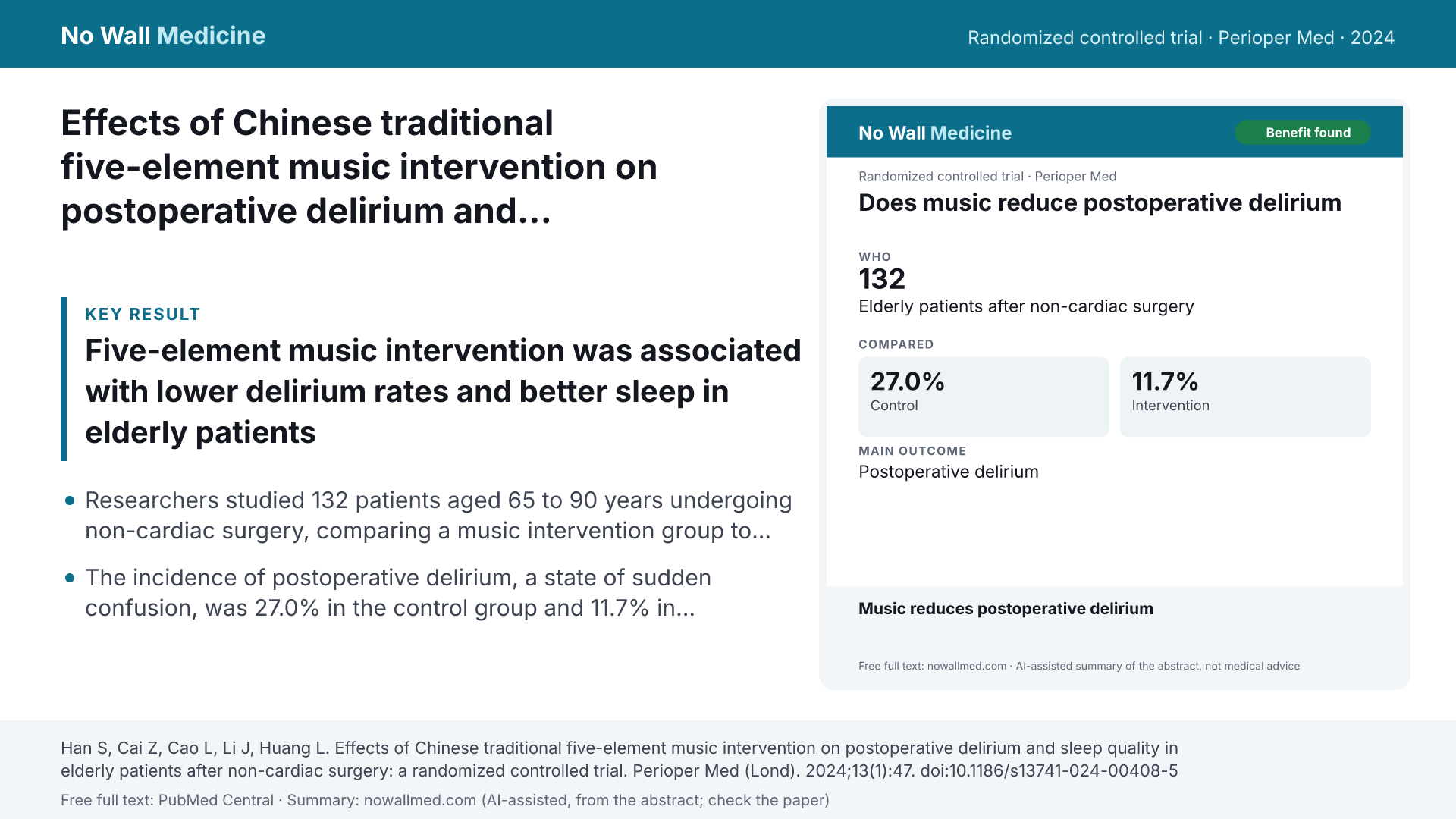
Five-element music intervention was associated with lower delirium rates and better sleep in elderly patients
Effects of Chinese traditional five-element music intervention on postoperative delirium and sleep quality in elderly patients after non-cardiac surgery: a randomized controlled trial
Randomized controlled trialBenefit found
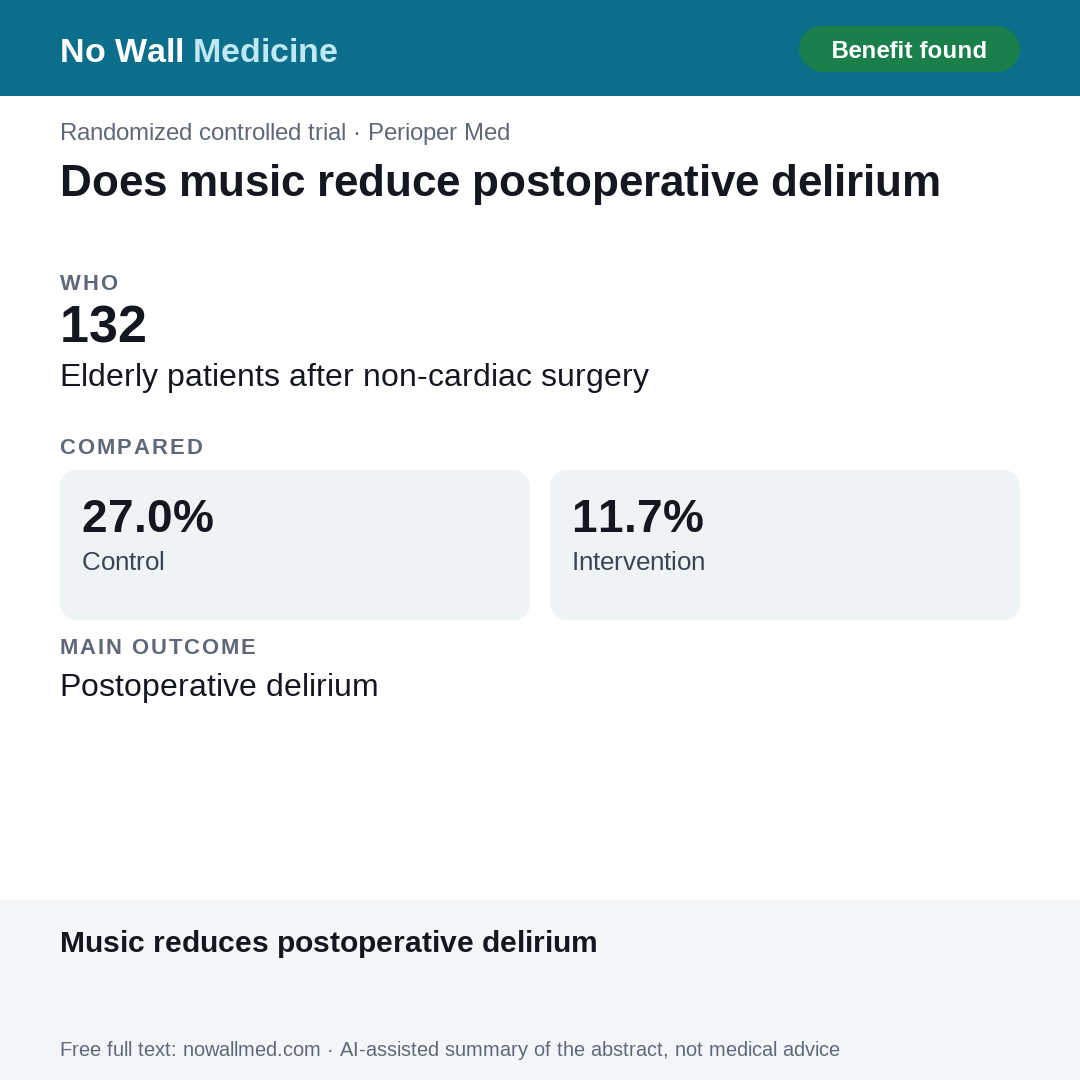
Does music reduce postoperative delirium
Who
132
Elderly patients after non-cardiac surgery
Compared
27.0%Control
11.7%Intervention
Main outcome
Postoperative delirium
Bottom line: Music reduces postoperative delirium
Perioper Med · 2024-05-28Download image
Why it matters: It is unknown if Chinese traditional five-element music can influence postoperative delirium and sleep quality in elderly patients following non-cardiac surgery.
In absolute numbers
Control: 27% · Intervention: 11.7% → a difference of 15.3 percentage points, so about 7 people would need the treatment for 1 more to benefit (number needed to treat) over the trial’s follow-up.
Worked out by us from the two group results above, not reported by the authors. Check the paper for the exact outcome and timing.
Key points
- Researchers studied 132 patients aged 65 to 90 years undergoing non-cardiac surgery, comparing a music intervention group to a control group.
- The incidence of postoperative delirium, a state of sudden confusion, was 27.0% in the control group and 11.7% in the intervention group.
- The music group showed higher saliva melatonin levels and better subjective sleep quality scores on the first postoperative day compared to the control group.
Headline and key points written with AI from the paper’s abstract, with every number checked against it. Read the paper before relying on them.
Was this summary helpful?
Cite this article
Han S, Cai Z, Cao L, Li J, Huang L. Effects of Chinese traditional five-element music intervention on postoperative delirium and sleep quality in elderly patients after non-cardiac surgery: a randomized controlled trial. Perioper Med. 2024. doi:10.1186/s13741-024-00408-5
Spotted a mistake? Suggest a correction