Digital cognitive behavioral therapy for diet improves glucose control and reduces large birth weight in gestational diabetes
Effects of Cognitive Behavioral Therapy for Diet on Postprandial Glucose and Pregnancy Outcomes in Gestational Diabetes Mellitus: Multicenter Randomized Controlled Trial
Multicenter randomized controlled trialBenefit found
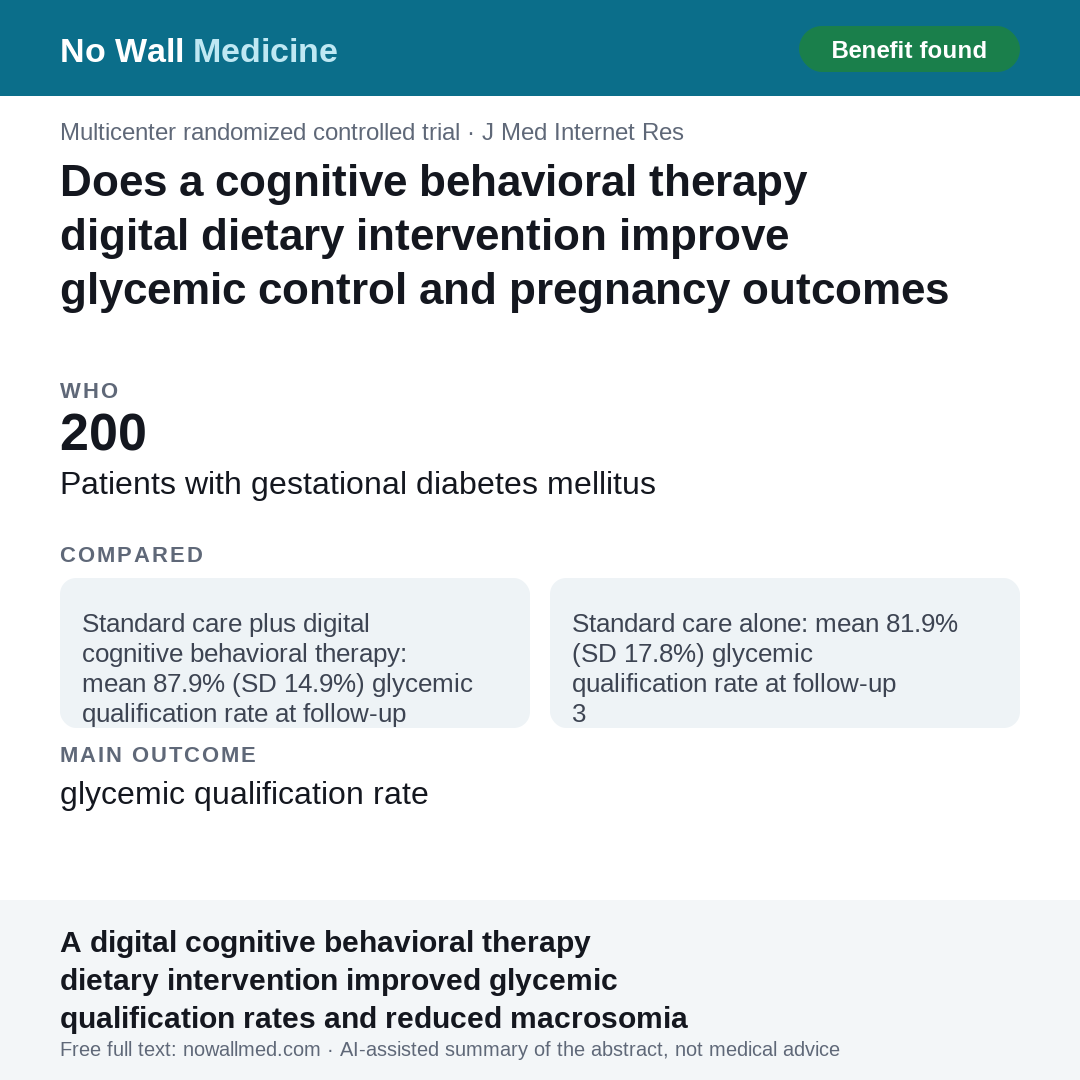
Does a cognitive behavioral therapy digital dietary intervention improve glycemic control and pregnancy outcomes in gestational diabetes?
Who
200
Patients with gestational diabetes mellitus
Compared
Standard care plus digital cognitive behavioral therapy: mean 87.9% (SD 14.9%) glycemic qualification rate at follow-up 3
Standard care alone: mean 81.9% (SD 17.8%) glycemic qualification rate at follow-up 3
Main outcome
glycemic qualification rate
Bottom line: A digital cognitive behavioral therapy dietary intervention improved glycemic qualification rates and reduced macrosomia incidence in women with gestational diabetes.
J Med Internet Res · 2025-07-29Download image
Clinical question: Does a cognitive behavioral therapy digital dietary intervention improve glycemic control and pregnancy outcomes in gestational diabetes?
Why it matters: Suboptimal adherence to dietary recommendations can diminish the benefits of managing blood sugar in patients with gestational diabetes mellitus.
Key points
- Researchers studied 200 participants with gestational diabetes mellitus, comparing standard care to standard care plus a digital cognitive behavioral therapy dietary intervention.
- The intervention group had higher glycemic qualification rates and lower postprandial blood glucose levels after lunch and dinner compared to the control group.
- The incidence of macrosomia, or birth weight significantly above average, was 5% in the intervention group compared to 15% in the control group.
Headline and key points written with AI from the paper’s abstract, with every number checked against it. Read the paper before relying on them.
Was this summary helpful?
Subject terms
Cite this article
Pan Y, Tang J, Lu B, Kuang M, Zhao M, Liu H. Effects of Cognitive Behavioral Therapy for Diet on Postprandial Glucose and Pregnancy Outcomes in Gestational Diabetes Mellitus: Multicenter Randomized Controlled Trial. J Med Internet Res. 2025. doi:10.2196/71075
Spotted a mistake? Suggest a correction
Top studies every Monday
The week’s key trials and guidelines in your specialties, plus any topics you follow. By email, free.
Get the weekly digest