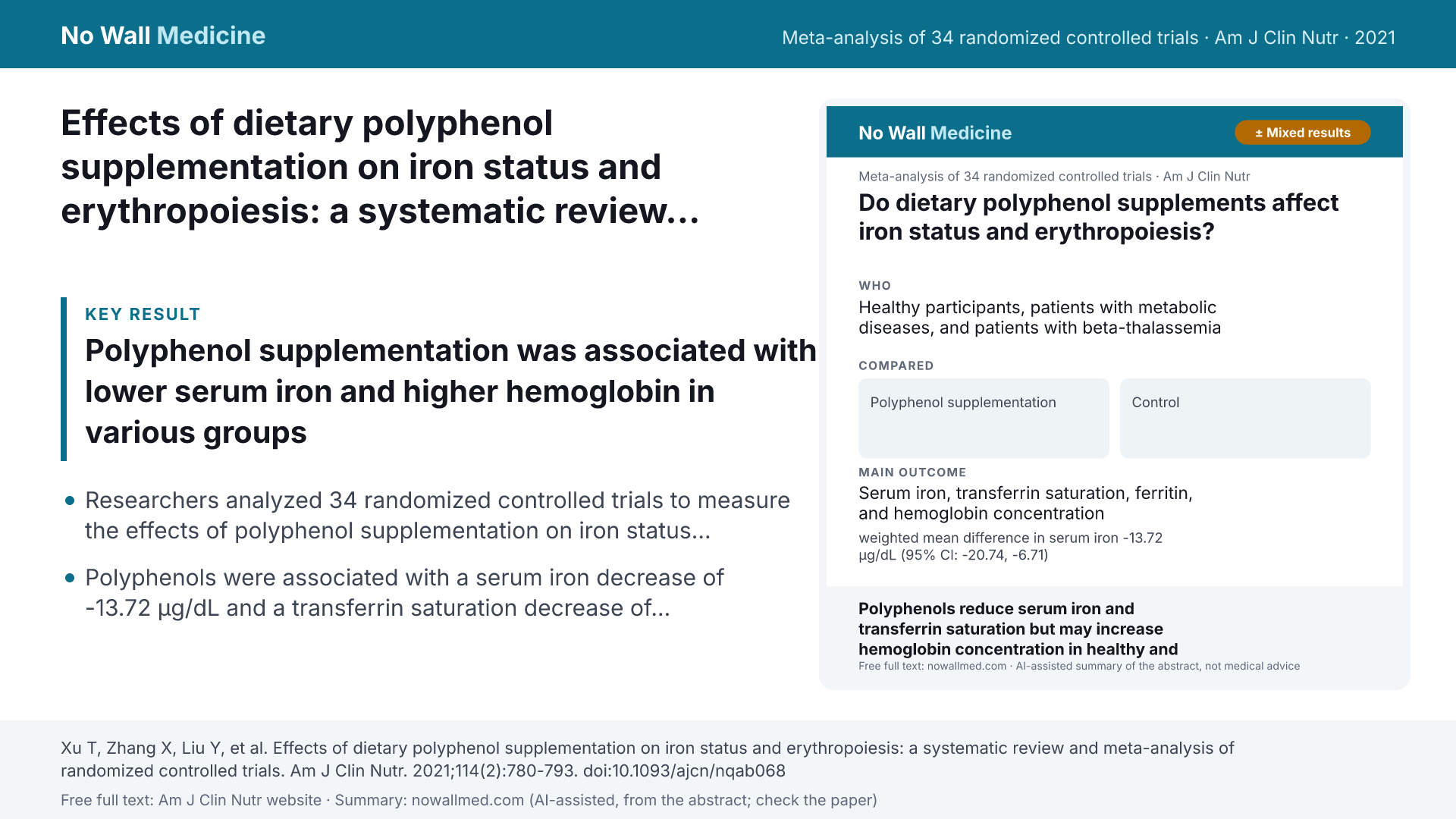
Polyphenol supplementation was associated with lower serum iron and higher hemoglobin in various groups
Effects of dietary polyphenol supplementation on iron status and erythropoiesis: a systematic review and meta-analysis of randomized controlled trials
Meta-analysis of 34 randomized controlled trialsMixed results
Do dietary polyphenol supplements affect iron status and erythropoiesis?
Who
Healthy participants, patients with metabolic diseases, and patients with beta-thalassemia
Compared
Polyphenol supplementation
Control
Main outcome
Serum iron, transferrin saturation, ferritin, and hemoglobin concentration
Result: weighted mean difference in serum iron -13.72 μg/dL (95% CI: -20.74, -6.71)
Bottom line: Polyphenols reduce serum iron and transferrin saturation but may increase hemoglobin concentration in healthy and metabolic disease patients.
Am J Clin Nutr · 2021-04-20 · Save PNG
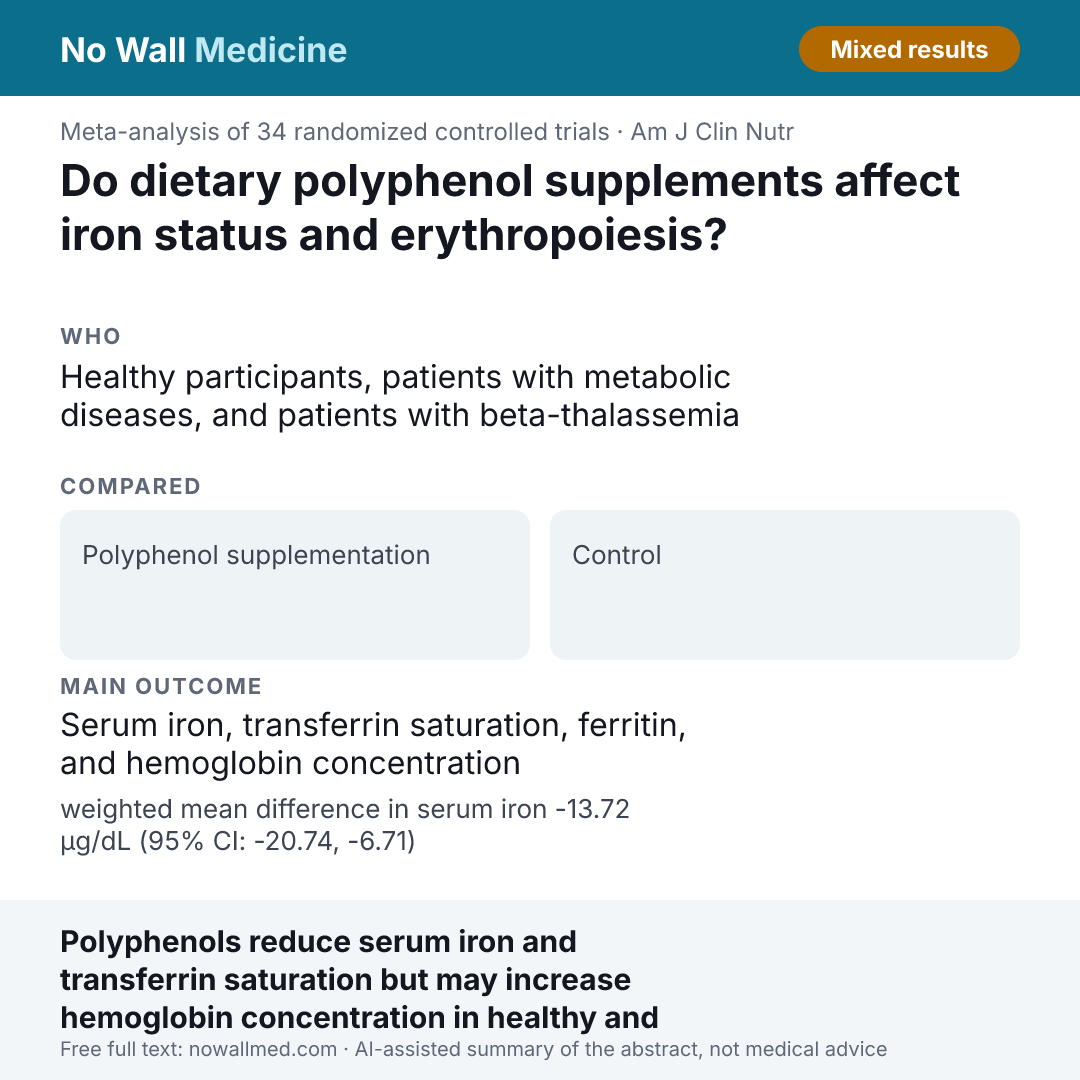
Clinical question: Do dietary polyphenol supplements affect iron status and erythropoiesis?
Why it matters: Clinical trial results regarding whether polyphenol supplementation poses a risk for iron deficiency or anemia are currently inconclusive.
Key points
- Researchers analyzed 34 randomized controlled trials to measure the effects of polyphenol supplementation on iron status and red blood cell production.
- Polyphenols were associated with a serum iron decrease of -13.72 μg/dL and a transferrin saturation decrease of -3.10%, but had no effect on ferritin.
- In patients with β-thalassemia, polyphenol supplementation was associated with a serum iron decrease of -23.19 μg/dL and a ferritin decrease of -223.62 ng/mL.
Headline and key points written with AI from the paper’s abstract, with every number checked against it. Read the paper before relying on them.
Was this summary helpful?
Subject terms
Headline, design, result, key points, caveat and citation as plain text.
Cite this article
Xu T, Zhang X, Liu Y, et al. Effects of dietary polyphenol supplementation on iron status and erythropoiesis: a systematic review and meta-analysis of randomized controlled trials. Am J Clin Nutr. 2021;114(2):780-793. doi:10.1093/ajcn/nqab068
Spotted a mistake? Suggest a correction