Seven days of ebselen treatment changed brain neurochemistry but not emotional bias in depressed patients
Effects of ebselen addition on emotional processing and brain neurochemistry in depressed patients unresponsive to antidepressant medication
Double-blind, placebo-controlled experimental medicine studyMixed results
Does ebselen addition affect emotional processing and brain neurochemistry in treatment-resistant depressed patients?
Who
51
Patients with major depressive disorder with inadequate response to antidepressants
Compared
ebselen 600 mg twice daily: increased the response bias towards fear emotion
placebo
Main outcome
emotional processing and brain neurochemistry
Bottom line: Ebselen increased fear emotion response bias and reduced inositol and glutamate+glutamine concentrations in the anterior cingulate cortex.
Transl Psychiatry · 2024-05-07Download image
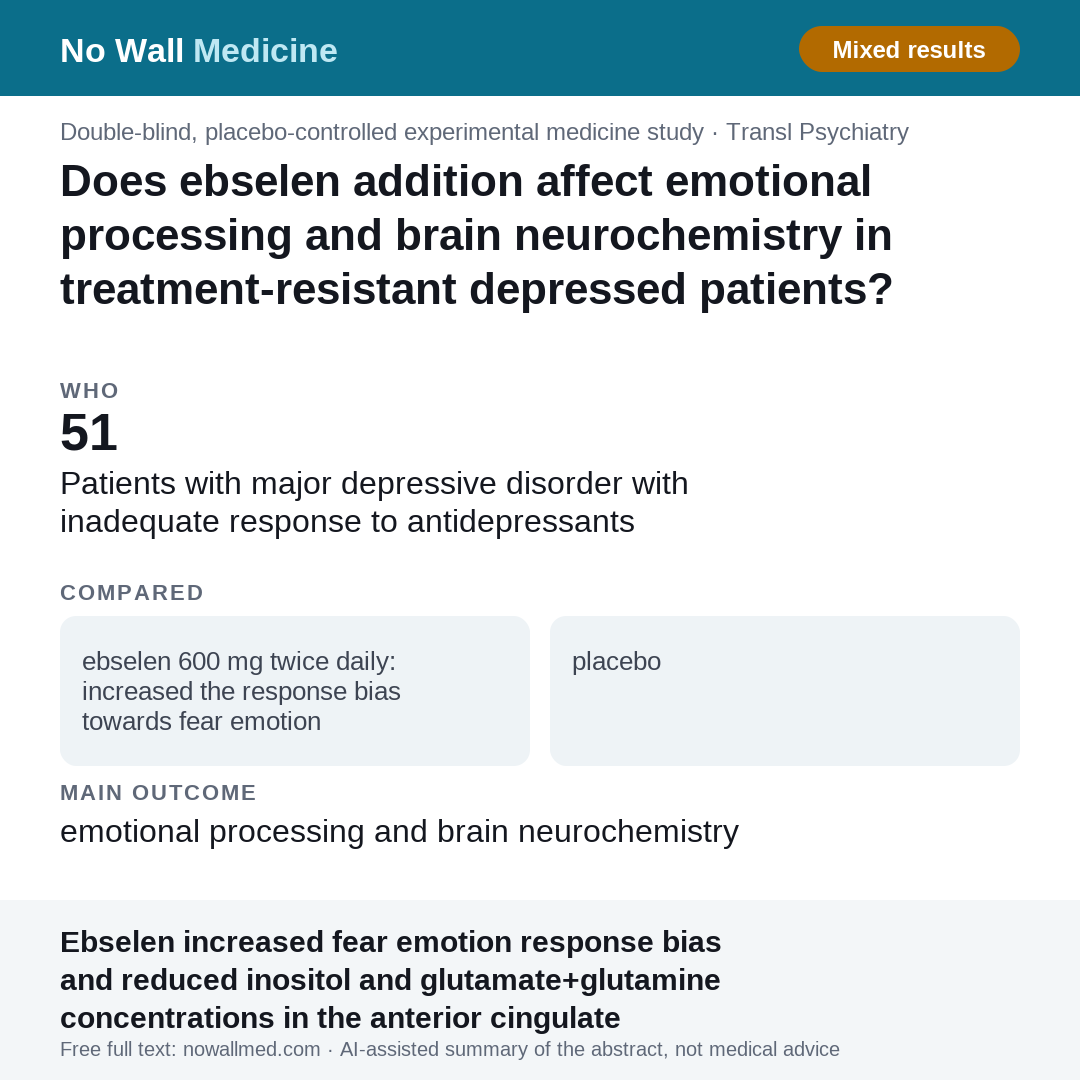
Clinical question: Does ebselen addition affect emotional processing and brain neurochemistry in treatment-resistant depressed patients?
Why it matters: It is unknown if ebselen, a lithium-mimetic agent, can influence emotional processing and brain neurochemistry in patients who do not respond well to standard antidepressants.
Key points
- Researchers conducted a double-blind, placebo-controlled study of 51 patients with major depressive disorder who had an inadequate response to standard antidepressants.
- Ebselen treatment for 7 days significantly reduced concentrations of inositol and Glx (glutamate plus glutamine) in the anterior cingulate cortex.
- The treatment did not increase the recognition of positive facial expressions or show significant differences in depression and anxiety rating scales.
Headline and key points written with AI from the paper’s abstract, with every number checked against it. Read the paper before relying on them.
Topics
Cite this article
Ramli FF, Singh N, Emir UE, Villa LM, Waters S, Harmer CJ. Effects of ebselen addition on emotional processing and brain neurochemistry in depressed patients unresponsive to antidepressant medication. Transl Psychiatry. 2024. doi:10.1038/s41398-024-02899-8
Spotted a mistake? Suggest a correction
Top studies every Monday
The week’s key trials and guidelines in your specialties, by email. Free.
Get the weekly digest