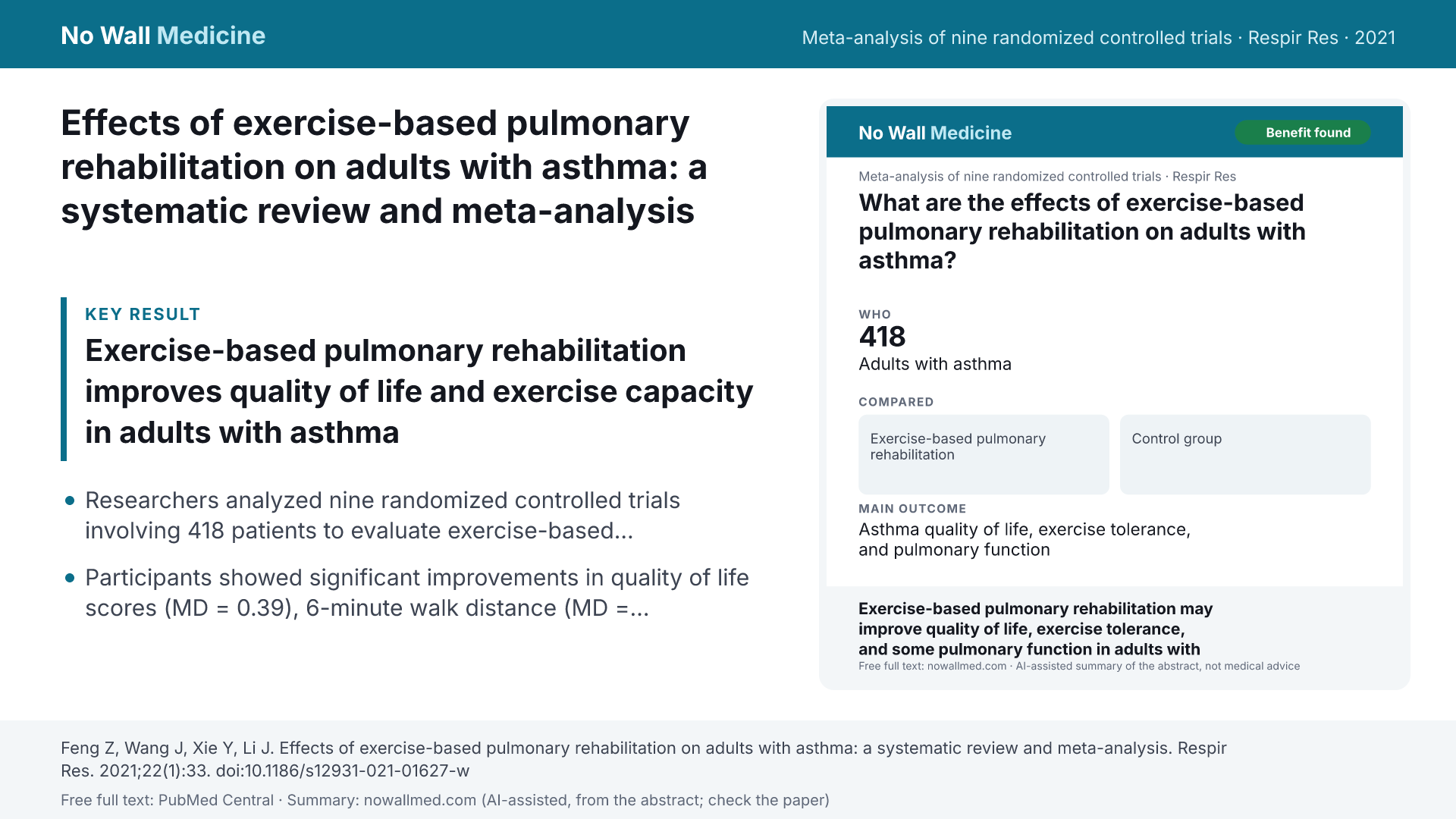
Exercise-based pulmonary rehabilitation improves quality of life and exercise capacity in adults with asthma
Effects of exercise-based pulmonary rehabilitation on adults with asthma: a systematic review and meta-analysis
Meta-analysis of nine randomized controlled trialsBenefit found
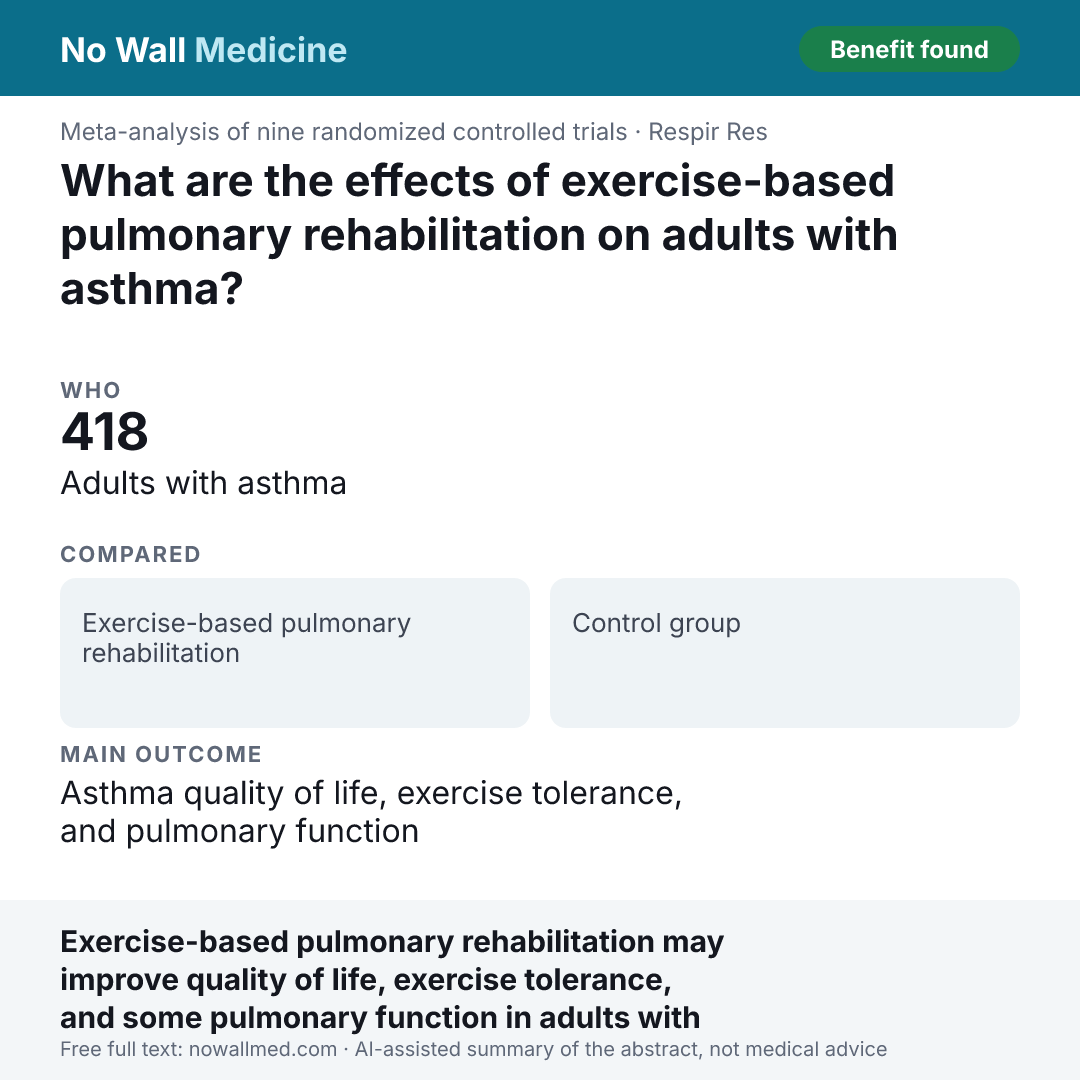
What are the effects of exercise-based pulmonary rehabilitation on adults with asthma?
Who
418
Adults with asthma
Compared
Exercise-based pulmonary rehabilitation
Control group
Main outcome
Asthma quality of life, exercise tolerance, and pulmonary function
Result: MD = 0.39, 95% CI: 0.02 to 0.76 for quality of life
Bottom line: Exercise-based pulmonary rehabilitation may improve quality of life, exercise tolerance, and some pulmonary function in adults with asthma.
Limitation: High quality and large sample size randomized controlled trials are required.
Respir Res · 2021-01-30 · Save PNG
Clinical question: What are the effects of exercise-based pulmonary rehabilitation on adults with asthma?
Why it matters: The effects of exercise-based pulmonary rehabilitation on adults with asthma are currently inconclusive.
Key points
- Researchers analyzed nine randomized controlled trials involving 418 patients to evaluate exercise-based pulmonary rehabilitation, which is a program of physical training for respiratory health.
- Participants showed significant improvements in quality of life scores (MD = 0.39), 6-minute walk distance (MD = 34.09), maximum oxygen uptake (MD = 4.45), forced vital capacity (MD = 0.23), and peak expiratory flow (MD = 0.39).
- No significant changes were found for asthma control questionnaire scores (MD = -0.25), asthma symptom-free days (MD = 3.35), or forced expiratory volume in 1 second (MD = 0.10).
Limitation the authors note: High quality randomized controlled trials with large sample sizes are required.
Headline and key points written with AI from the paper’s abstract, with every number checked against it. Read the paper before relying on them.
Was this summary helpful?
Subject terms
Headline, design, result, key points, caveat and citation as plain text.
Cite this article
Feng Z, Wang J, Xie Y, Li J. Effects of exercise-based pulmonary rehabilitation on adults with asthma: a systematic review and meta-analysis. Respir Res. 2021;22(1):33. doi:10.1186/s12931-021-01627-w
Spotted a mistake? Suggest a correction