Evening fasted exercise increased acute and 24-hour energy intake compared to morning fasted exercise
Effects of exercise timing and metabolic state on post-exercise energy intake and appetite-a randomized crossover trial
Randomized crossover trialHarm found
How do exercise timing and metabolic state affect post-exercise energy intake and appetite?
Who
35
35 healthy young adults
Compared
morning fasted exercise
evening fasted exercise: increased acute intake by 400 kcal [95% confidence interval (CI): 286, 515 kcal]
Main outcome
acute energy intake, 24-hour intake, and appetite
Result: increased 24-h intake by 547 kcal (95% CI: 335, 759 kcal)
Bottom line: Evening fasted exercise increases acute and 24-hour energy intake compared to morning fasted exercise.
Am J Clin Nutr · 2026-07-18Download image
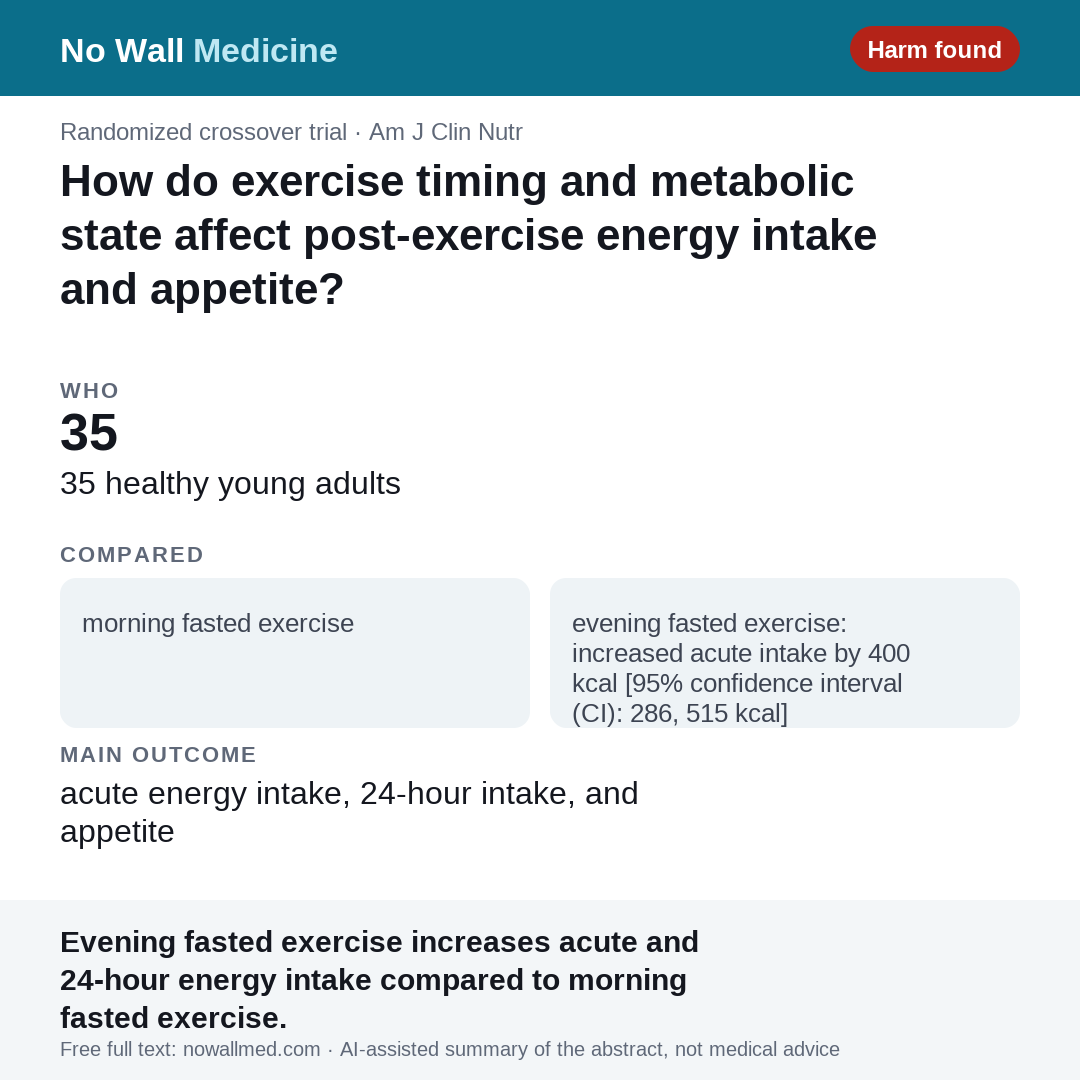
Clinical question: How do exercise timing and metabolic state affect post-exercise energy intake and appetite?
Why it matters: The combined effects of the time of day and nutritional state on post-exercise energy balance and appetite were not completely understood.
Key points
- Researchers studied 35 healthy young adults to compare how morning and evening exercise in fasted or fed states affected appetite and food intake.
- Compared to morning fasted exercise, evening fasted exercise increased acute food intake by 400 kcal [95% confidence interval (CI): 286, 515 kcal] and 24-hour intake by 547 kcal (95% CI: 335, 759 kcal).
- Pre-exercise feeding changed how the body used fuel but did not reduce the amount of food consumed after exercise.
Headline and key points written with AI from the paper’s abstract, with every number checked against it. Read the paper before relying on them.
Topics
Spotted a mistake? Suggest a correction