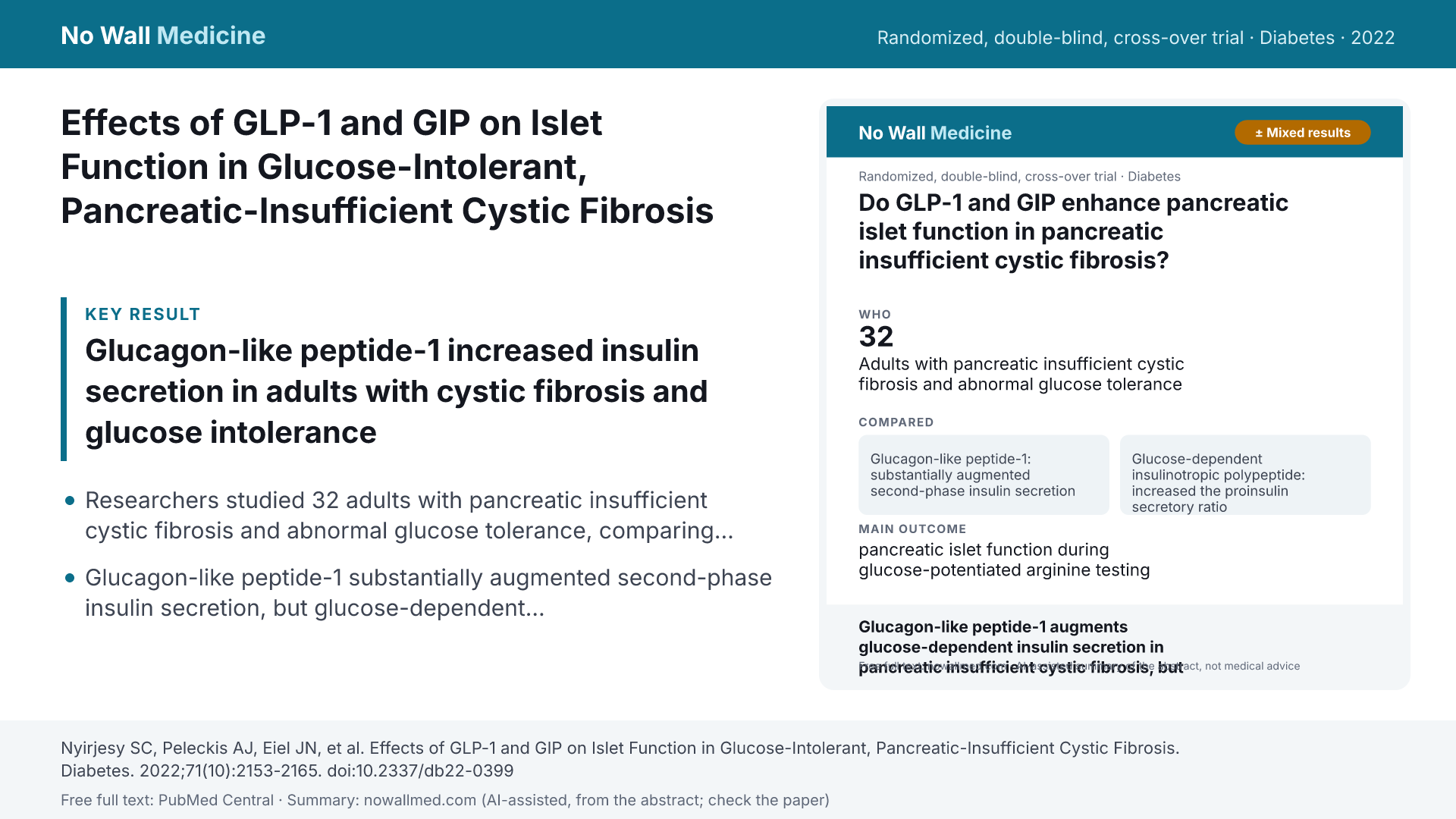
Glucagon-like peptide-1 increased insulin secretion in adults with cystic fibrosis and glucose intolerance
Effects of GLP-1 and GIP on Islet Function in Glucose-Intolerant, Pancreatic-Insufficient Cystic Fibrosis
Randomized, double-blind, cross-over trialMixed results
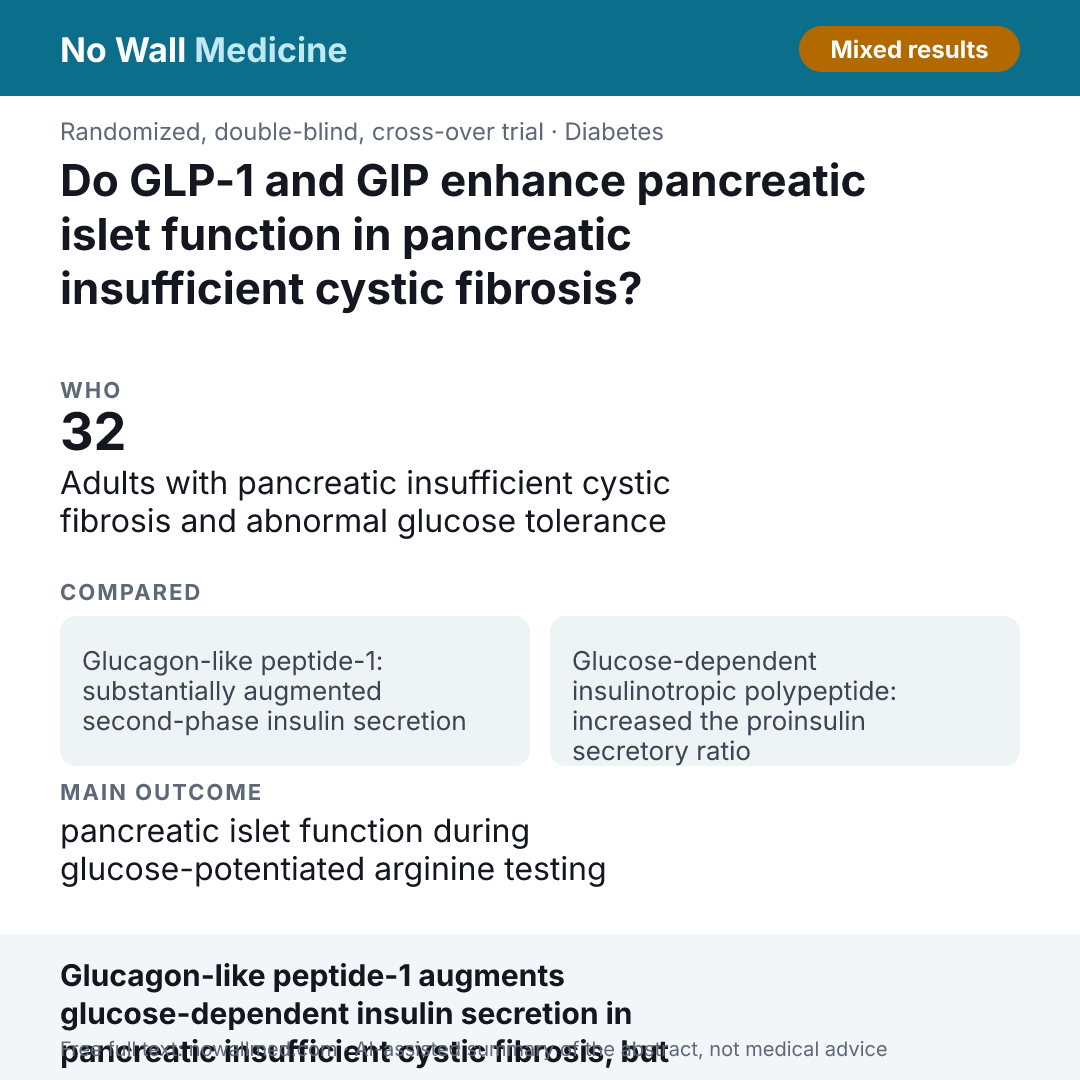
Do GLP-1 and GIP enhance pancreatic islet function in pancreatic insufficient cystic fibrosis?
Who
32
Adults with pancreatic insufficient cystic fibrosis and abnormal glucose tolerance
Compared
Glucagon-like peptide-1: substantially augmented second-phase insulin secretion
Glucose-dependent insulinotropic polypeptide: increased the proinsulin secretory ratio
Main outcome
pancreatic islet function during glucose-potentiated arginine testing
Bottom line: Glucagon-like peptide-1 augments glucose-dependent insulin secretion in pancreatic insufficient cystic fibrosis, but glucose-dependent insulinotropic polypeptide does not.
Diabetes · 2022-07-08 · Save PNG
Clinical question: Do GLP-1 and GIP enhance pancreatic islet function in pancreatic insufficient cystic fibrosis?
Key points
- Researchers studied 32 adults with pancreatic insufficient cystic fibrosis and abnormal glucose tolerance, comparing the effects of glucagon-like peptide-1 and glucose-dependent insulinotropic polypeptide.
- Glucagon-like peptide-1 substantially augmented second-phase insulin secretion, but glucose-dependent insulinotropic polypeptide did not enhance second-phase or arginine-induced insulin secretion in this group.
- In participants without cystic fibrosis, glucose-dependent insulinotropic polypeptide markedly increased second-phase insulin secretion.
Headline and key points written with AI from the paper’s abstract, with every number checked against it. Read the paper before relying on them.
Was this summary helpful?
Subject terms
Headline, design, result, key points, caveat and citation as plain text.
Cite this article
Nyirjesy SC, Peleckis AJ, Eiel JN, et al. Effects of GLP-1 and GIP on Islet Function in Glucose-Intolerant, Pancreatic-Insufficient Cystic Fibrosis. Diabetes. 2022;71(10):2153-2165. doi:10.2337/db22-0399
Spotted a mistake? Suggest a correction