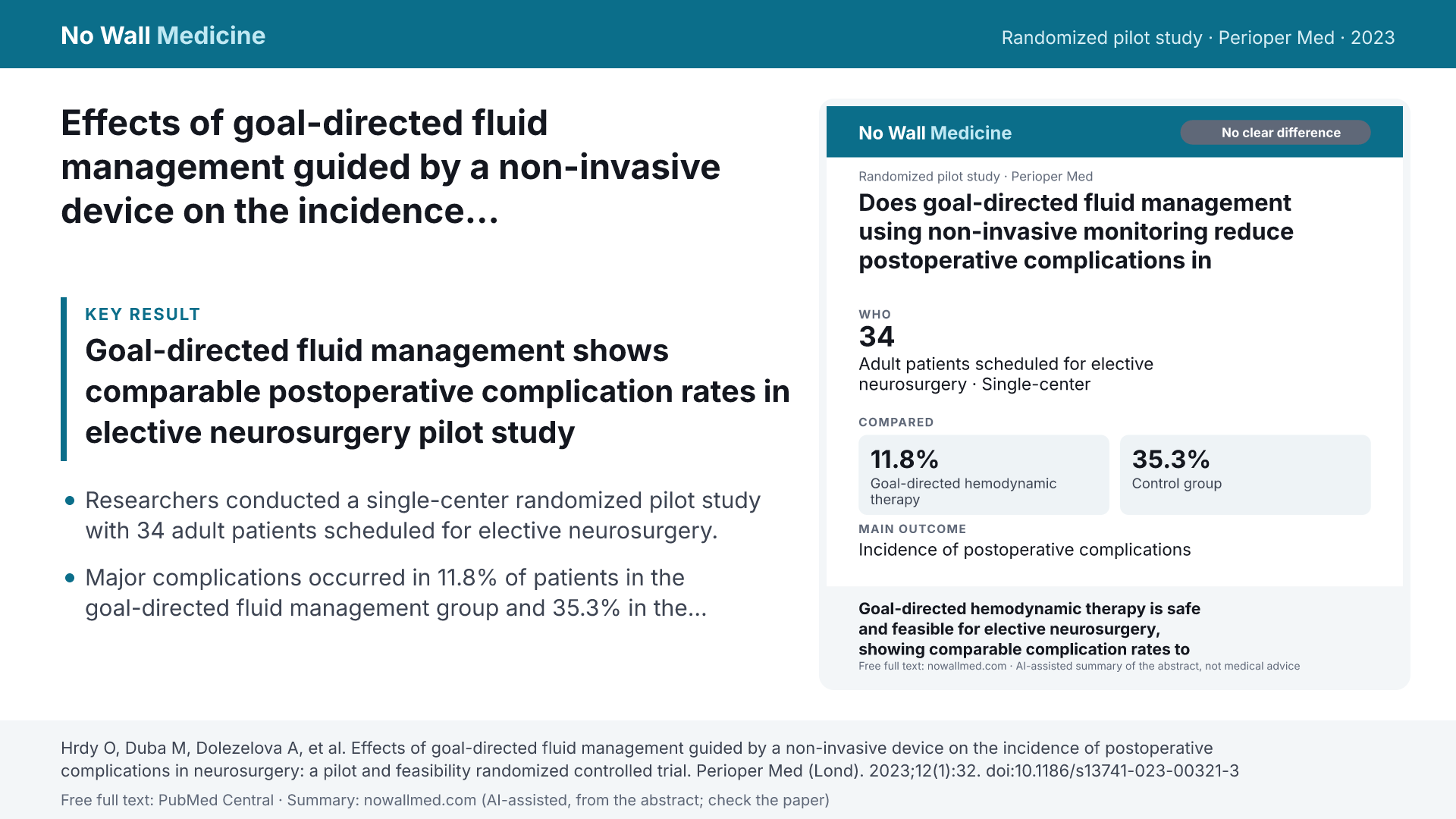
Goal-directed fluid management shows comparable postoperative complication rates in elective neurosurgery pilot study
Effects of goal-directed fluid management guided by a non-invasive device on the incidence of postoperative complications in neurosurgery: a pilot and feasibility randomized controlled trial
Randomized pilot studyNo clear difference
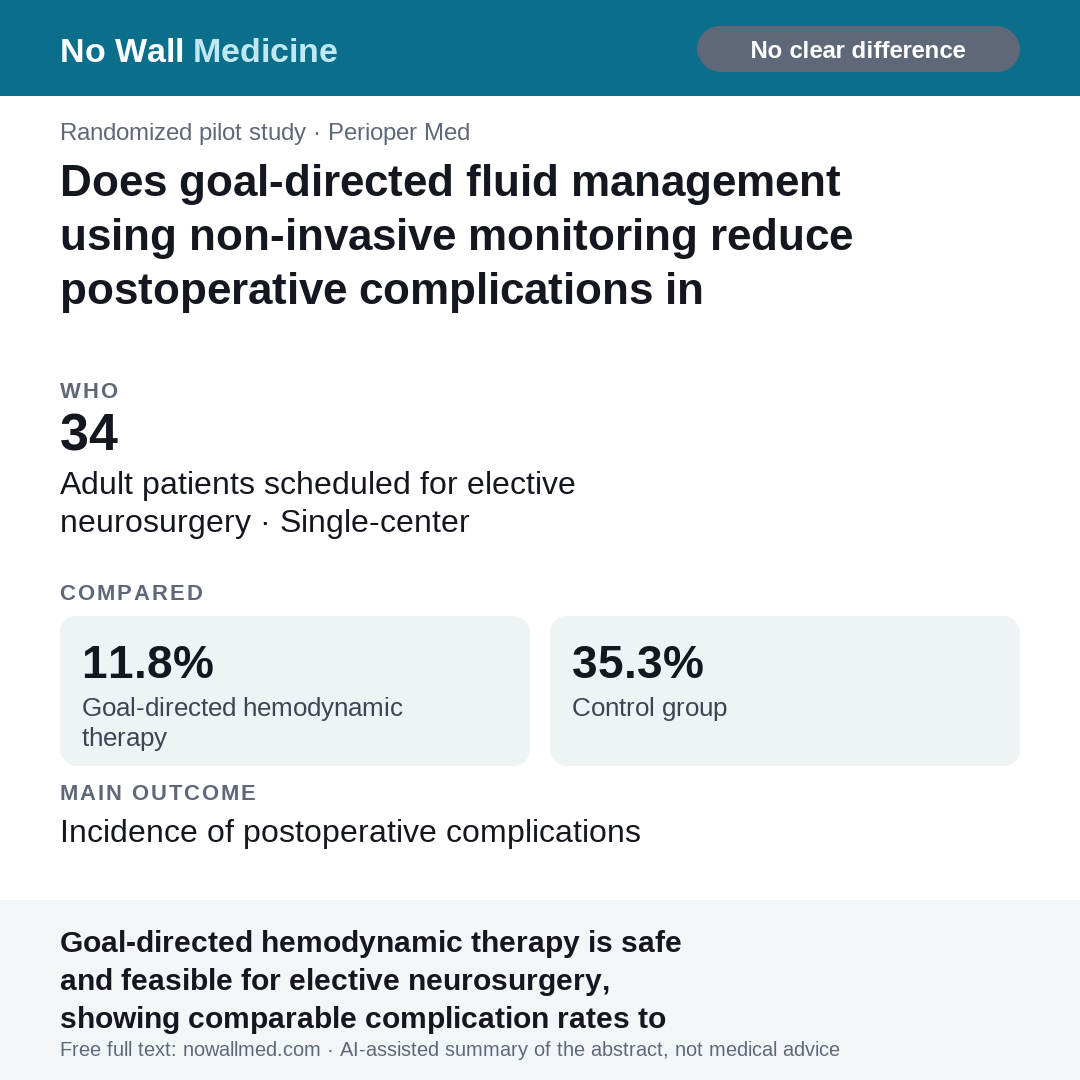
Does goal-directed fluid management using non-invasive monitoring reduce postoperative complications in neurosurgery?
Who
34
Adult patients scheduled for elective neurosurgery · Single-center
Compared
11.8%Goal-directed hemodynamic therapy
35.3%Control group
Main outcome
Incidence of postoperative complications
Result: p = 0.105
Bottom line: Goal-directed hemodynamic therapy is safe and feasible for elective neurosurgery, showing comparable complication rates to standard therapy.
Limitation: This was a pilot and feasibility study with a small sample size.
Perioper Med · 2023-07-05Download image
Clinical question: Does goal-directed fluid management using non-invasive monitoring reduce postoperative complications in neurosurgery?
Why it matters: The effects of goal-directed hemodynamic therapy, which uses monitoring to guide fluid and drug administration, on patient outcomes in neurosurgery remain unclear.
Key points
- Researchers conducted a single-center randomized pilot study with 34 adult patients scheduled for elective neurosurgery.
- Major complications occurred in 11.8% of patients in the goal-directed fluid management group and 35.3% in the control group, which was not a statistically significant difference.
- No patients in either group experienced unsatisfactory brain tissue relaxation or brain swelling requiring treatment during or 24 h after surgery.
Limitation the authors note: The study was a single-center randomized pilot study.
Headline and key points written with AI from the paper’s abstract, with every number checked against it. Read the paper before relying on them.
Was this summary helpful?
Cite this article
Hrdy O, Duba M, Dolezelova A, et al. Effects of goal-directed fluid management guided by a non-invasive device on the incidence of postoperative complications in neurosurgery: a pilot and feasibility randomized controlled trial. Perioper Med. 2023. doi:10.1186/s13741-023-00321-3
Spotted a mistake? Suggest a correction