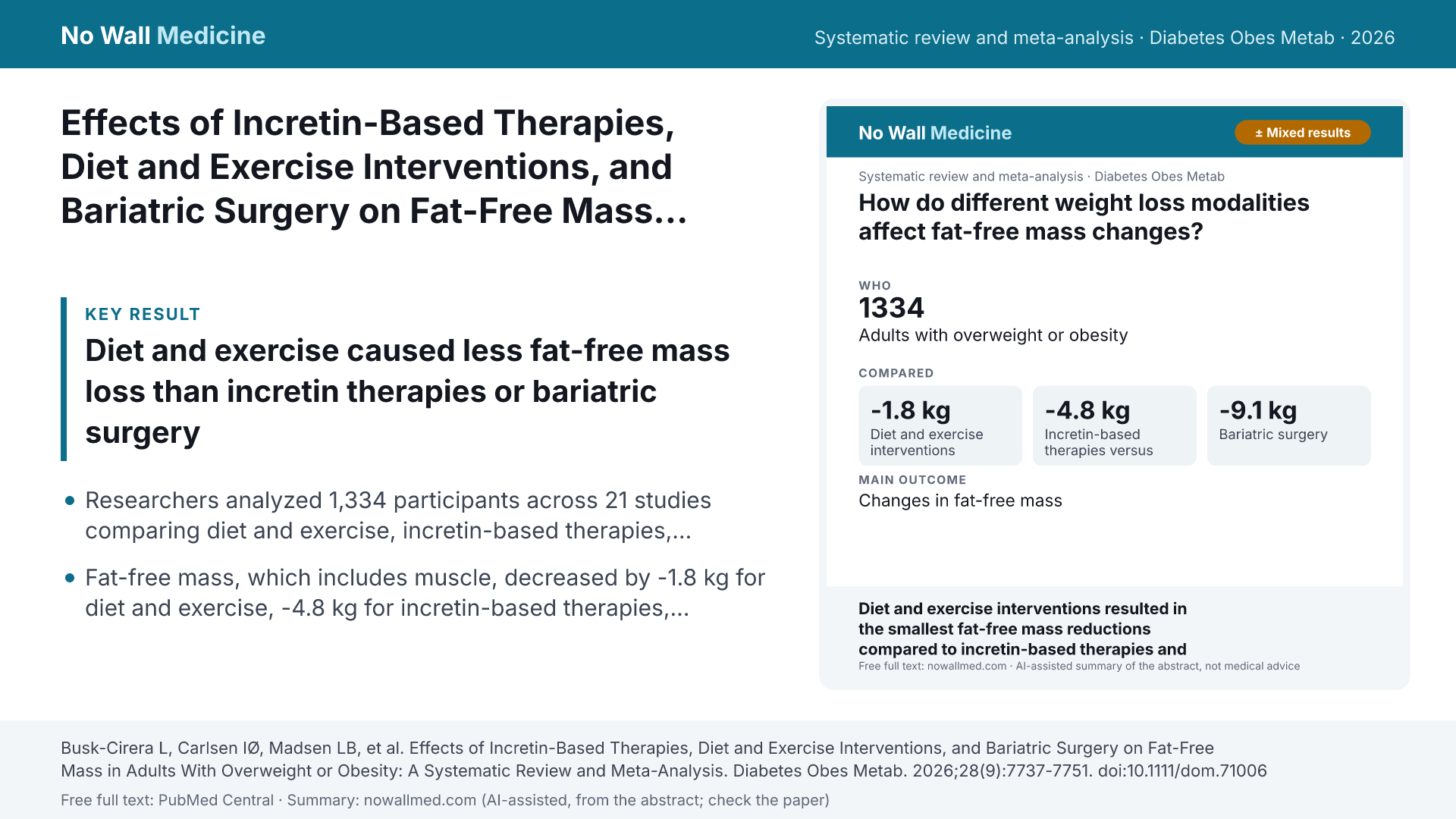
Diet and exercise caused less fat-free mass loss than incretin therapies or bariatric surgery
Effects of Incretin-Based Therapies, Diet and Exercise Interventions, and Bariatric Surgery on Fat-Free Mass in Adults With Overweight or Obesity: A Systematic Review and Meta-Analysis
Systematic review and meta-analysisMixed results
How do different weight loss modalities affect fat-free mass changes?
Who
1334
Adults with overweight or obesity
Compared
-1.8 kgDiet and exercise interventions (95% CI: -2.6, -1.0)
-4.8 kgIncretin-based therapies versus placebo (95% CI: -5.6, -3.9)
-9.1 kgBariatric surgery (95% CI: -12.3, -6.0)
Main outcome
Changes in fat-free mass
Bottom line: Diet and exercise interventions resulted in the smallest fat-free mass reductions compared to incretin-based therapies and bariatric surgery.
Diabetes Obes Metab · 2026-06-21Download image
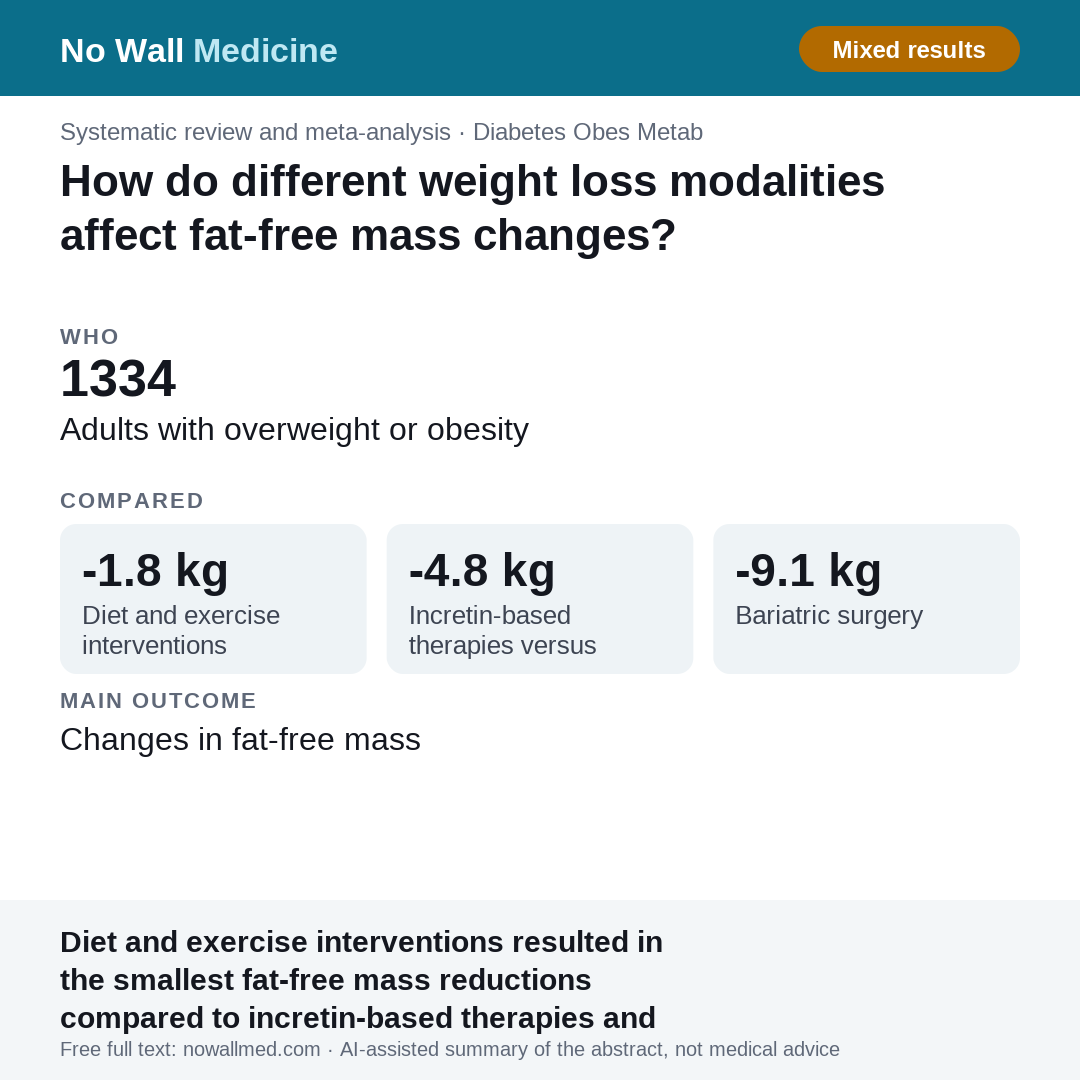
Clinical question: How do different weight loss modalities affect fat-free mass changes?
Why it matters: It is important to maintain fat-free mass during weight loss to preserve healthy body composition.
Key points
- Researchers analyzed 1,334 participants across 21 studies comparing diet and exercise, incretin-based therapies, and bariatric surgery for weight loss.
- Fat-free mass, which includes muscle, decreased by -1.8 kg for diet and exercise, -4.8 kg for incretin-based therapies, and -9.1 kg for bariatric surgery.
- The proportion of total weight loss coming from fat-free mass was 14.9% for diet and exercise, 33.3% for incretin-based therapies, and 34.2% for surgery.
Headline and key points written with AI from the paper’s abstract, with every number checked against it. Read the paper before relying on them.
Was this summary helpful?
Subject terms
Headline, design, result, key points, caveat and citation as plain text.
Cite this article
Busk-Cirera L, Carlsen IØ, Madsen LB, et al. Effects of Incretin-Based Therapies, Diet and Exercise Interventions, and Bariatric Surgery on Fat-Free Mass in Adults With Overweight or Obesity: A Systematic Review and Meta-Analysis. Diabetes Obes Metab. 2026;28(9):7737-7751. doi:10.1111/dom.71006
Spotted a mistake? Suggest a correction