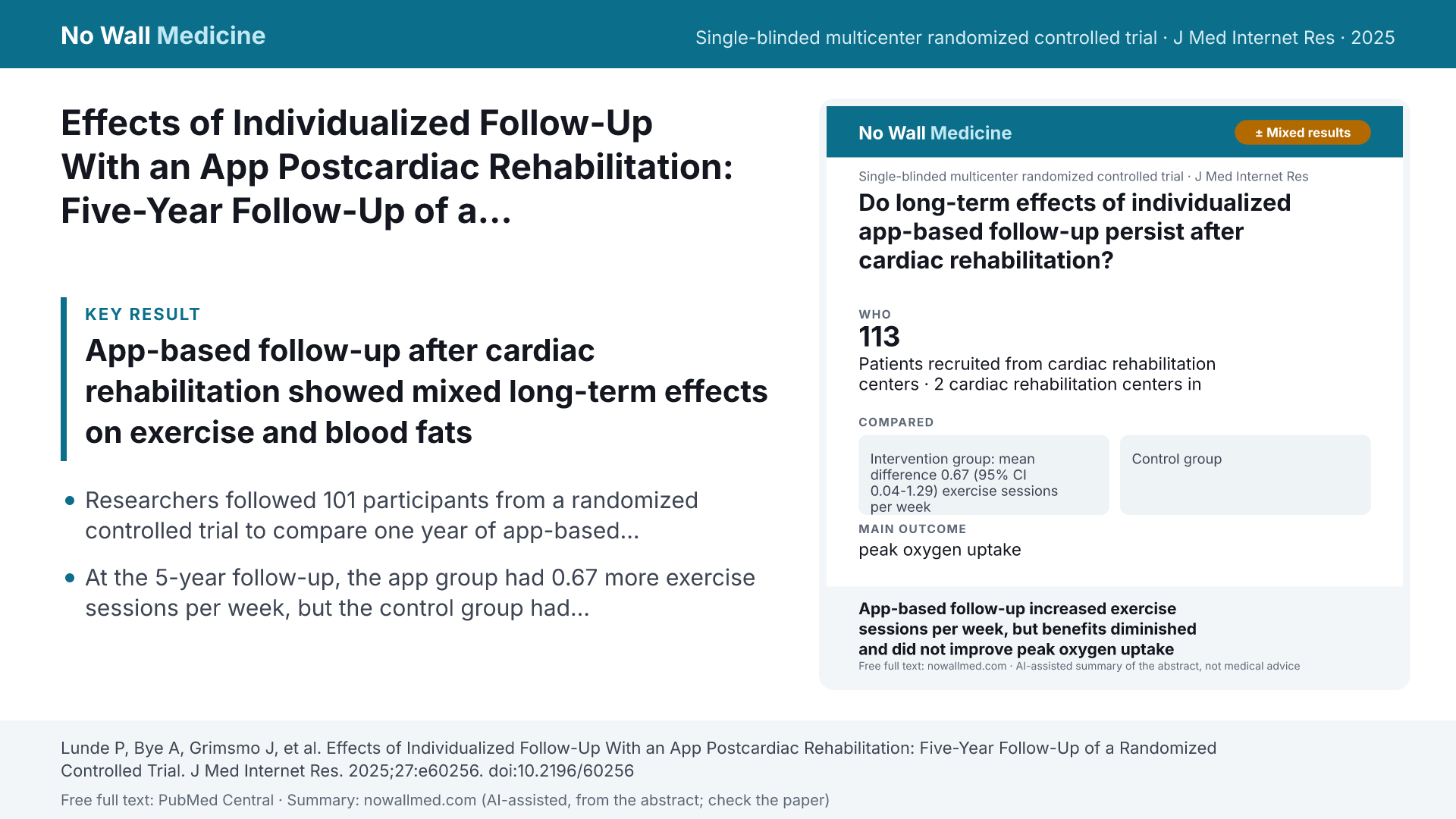
App-based follow-up after cardiac rehabilitation showed mixed long-term effects on exercise and blood fats
Effects of Individualized Follow-Up With an App Postcardiac Rehabilitation: Five-Year Follow-Up of a Randomized Controlled Trial
Single-blinded multicenter randomized controlled trialMixed results
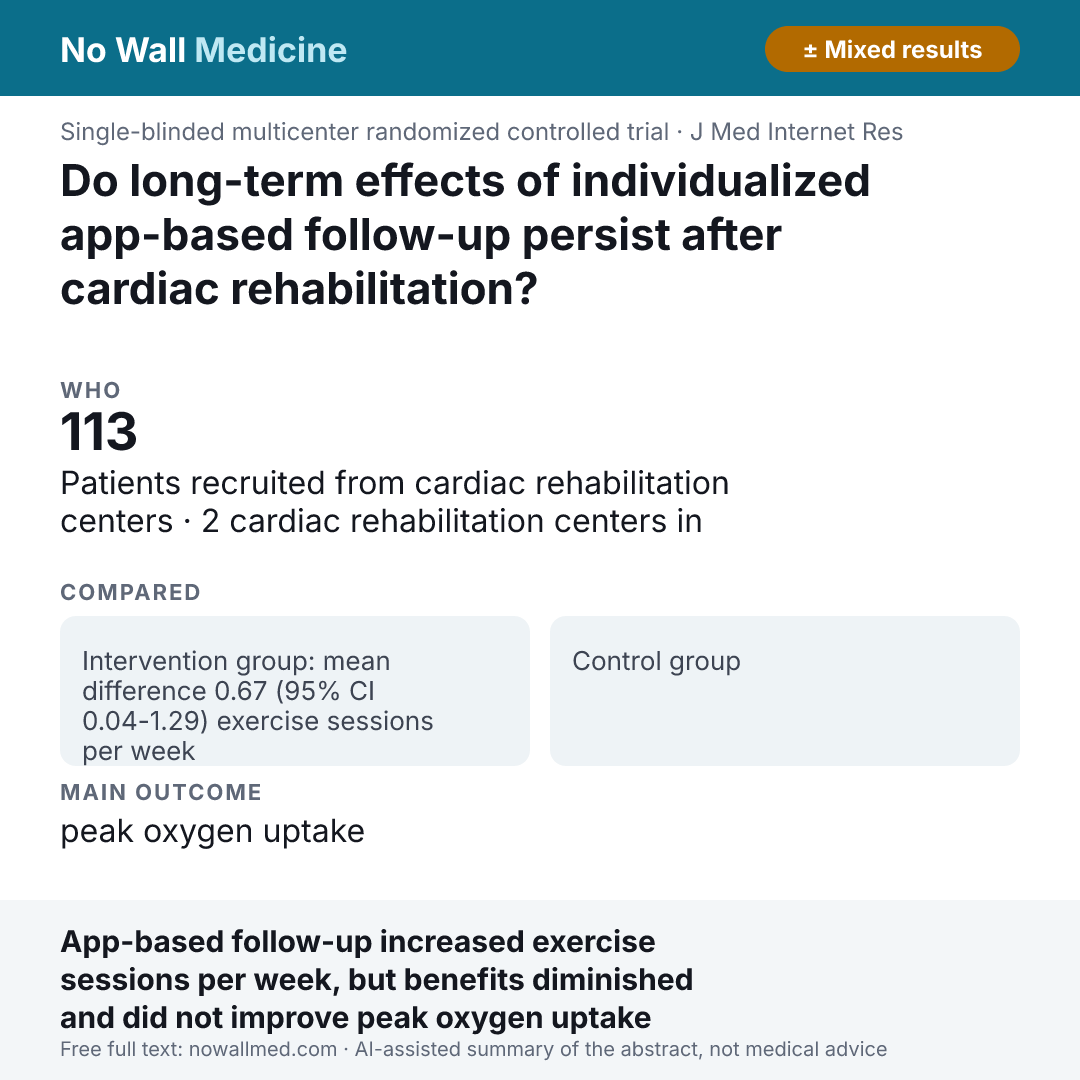
Do long-term effects of individualized app-based follow-up persist after cardiac rehabilitation?
Who
113
Patients recruited from cardiac rehabilitation centers · 2 cardiac rehabilitation centers in eastern Norway
Compared
Intervention group: mean difference 0.67 (95% CI 0.04-1.29) exercise sessions per week
Control group
Main outcome
peak oxygen uptake
Result: mean difference 0.67 (95% CI 0.04-1.29) exercise sessions per week
Bottom line: App-based follow-up increased exercise sessions per week, but benefits diminished and did not improve peak oxygen uptake long-term.
J Med Internet Res · 2025-02-13 · Save PNG
Clinical question: Do long-term effects of individualized app-based follow-up persist after cardiac rehabilitation?
Key points
- Researchers followed 101 participants from a randomized controlled trial to compare one year of app-based follow-up against usual care.
- At the 5-year follow-up, the app group had 0.67 more exercise sessions per week, but the control group had higher triglycerides and walking levels.
- No significant differences were found between the groups for peak oxygen uptake, exercise performance, body weight, blood pressure, or cardiac events.
Headline and key points written with AI from the paper’s abstract, with every number checked against it. Read the paper before relying on them.
Was this summary helpful?
Subject terms
Headline, design, result, key points, caveat and citation as plain text.
Cite this article
Lunde P, Bye A, Grimsmo J, et al. Effects of Individualized Follow-Up With an App Postcardiac Rehabilitation: Five-Year Follow-Up of a Randomized Controlled Trial. J Med Internet Res. 2025;27:e60256. doi:10.2196/60256
Spotted a mistake? Suggest a correction