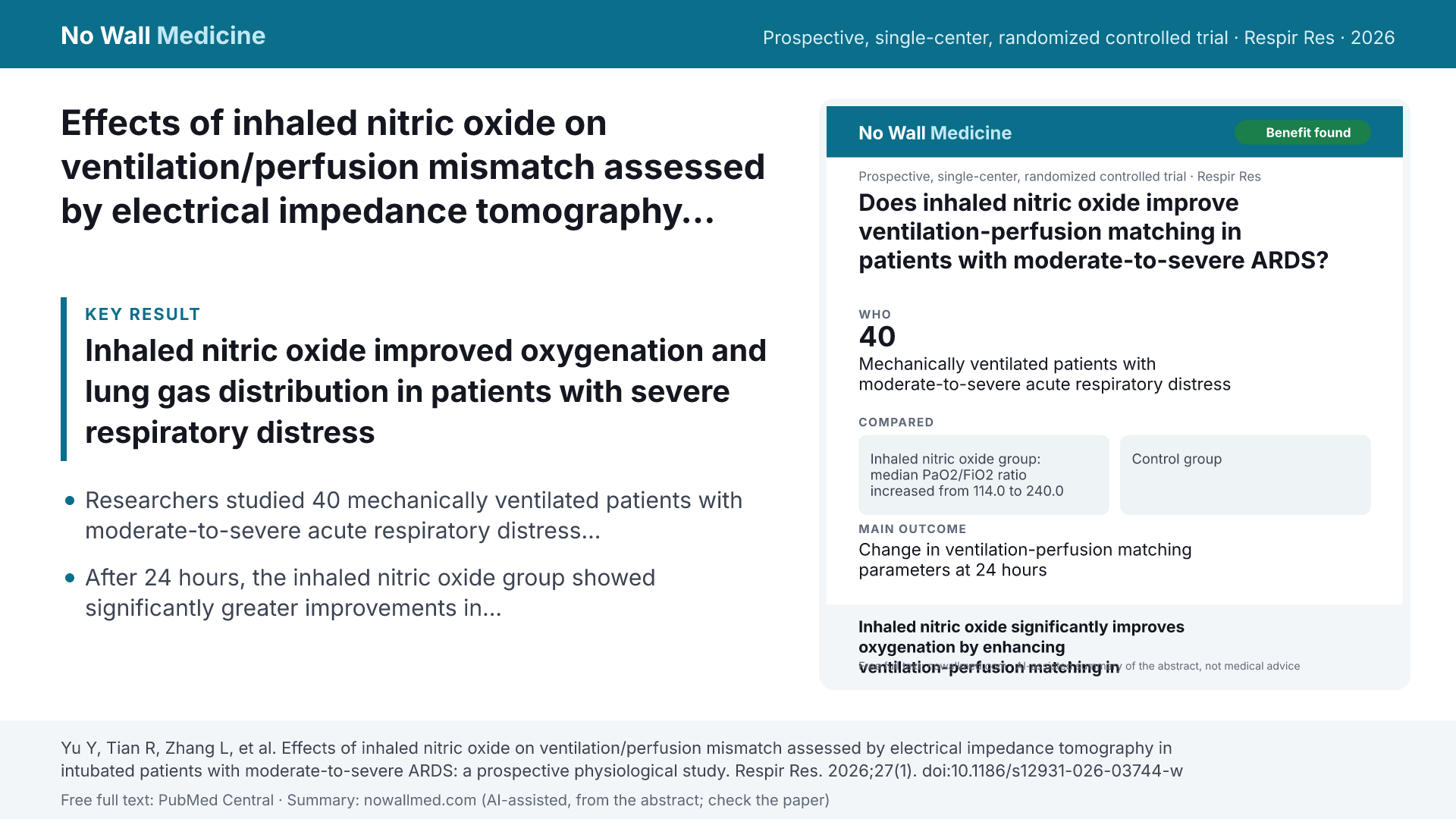
Inhaled nitric oxide improved oxygenation and lung gas distribution in patients with severe respiratory distress
Effects of inhaled nitric oxide on ventilation/perfusion mismatch assessed by electrical impedance tomography in intubated patients with moderate-to-severe ARDS: a prospective physiological study
Prospective, single-center, randomized controlled trialBenefit found
Does inhaled nitric oxide improve ventilation-perfusion matching in patients with moderate-to-severe ARDS?
Who
40
Mechanically ventilated patients with moderate-to-severe acute respiratory distress syndrome · Single-center
Compared
Inhaled nitric oxide group: median PaO2/FiO2 ratio increased from 114.0 to 240.0
Control group
Main outcome
Change in ventilation-perfusion matching parameters at 24 hours
Bottom line: Inhaled nitric oxide significantly improves oxygenation by enhancing ventilation-perfusion matching in moderate-to-severe ARDS patients.
Respir Res · 2026-06-06 · Save PNG
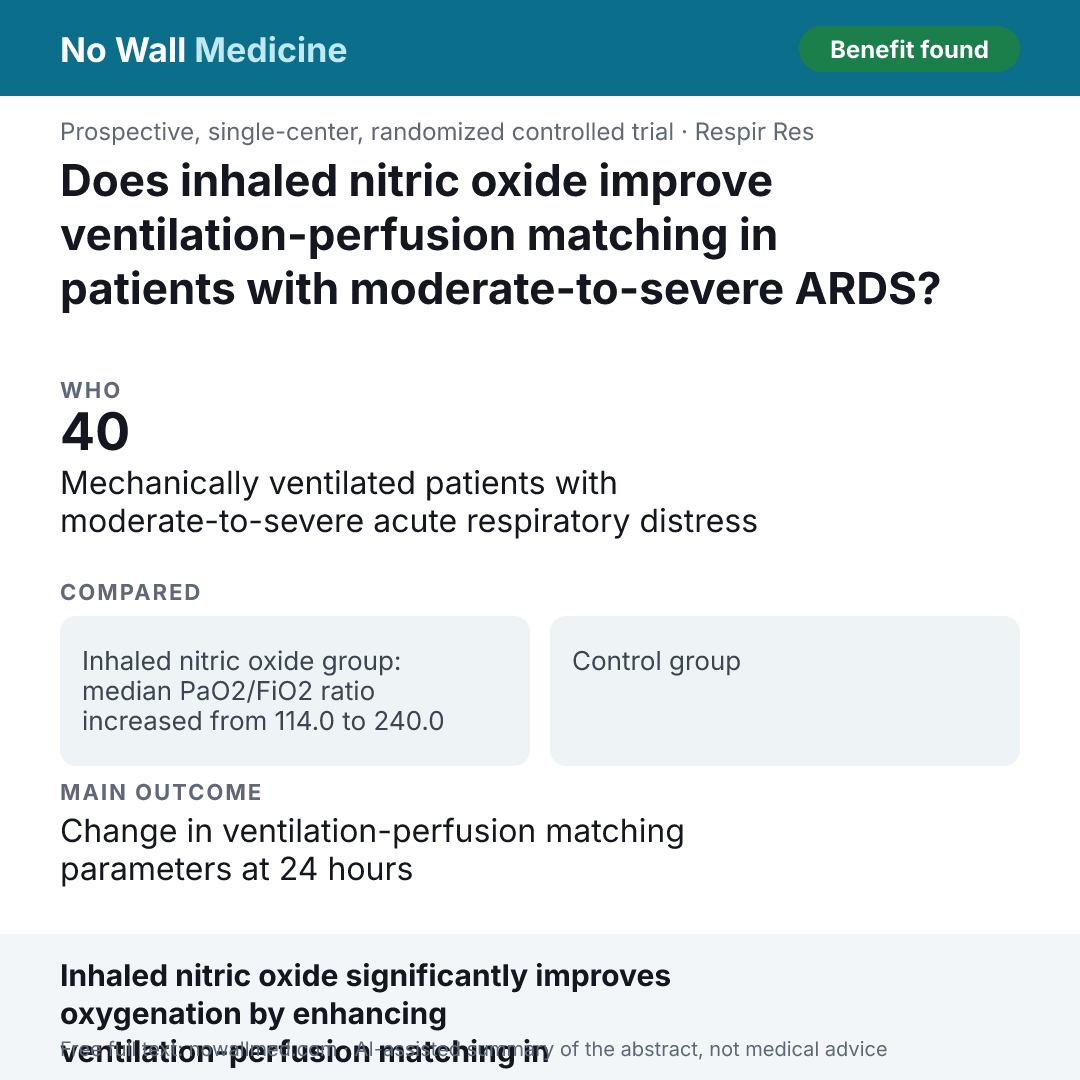
Clinical question: Does inhaled nitric oxide improve ventilation-perfusion matching in patients with moderate-to-severe ARDS?
Why it matters: The precise physiological effects of inhaled nitric oxide on ventilation-perfusion matching and inflammation in patients with acute respiratory distress syndrome remain to be fully understood.
Key points
- Researchers studied 40 mechanically ventilated patients with moderate-to-severe acute respiratory distress syndrome, comparing inhaled nitric oxide to standard ventilation.
- After 24 hours, the inhaled nitric oxide group showed significantly greater improvements in ventilation-perfusion matching, dead space, and shunt compared to the control group.
- The median oxygenation ratio increased from 114.0 to 240.0 in the inhaled nitric oxide group, and no significant differences were found in inflammatory biomarkers.
Headline and key points written with AI from the paper’s abstract, with every number checked against it. Read the paper before relying on them.
Was this summary helpful?
Subject terms
Headline, design, result, key points, caveat and citation as plain text.
Cite this article
Yu Y, Tian R, Zhang L, et al. Effects of inhaled nitric oxide on ventilation/perfusion mismatch assessed by electrical impedance tomography in intubated patients with moderate-to-severe ARDS: a prospective physiological study. Respir Res. 2026;27(1). doi:10.1186/s12931-026-03744-w
Spotted a mistake? Suggest a correction