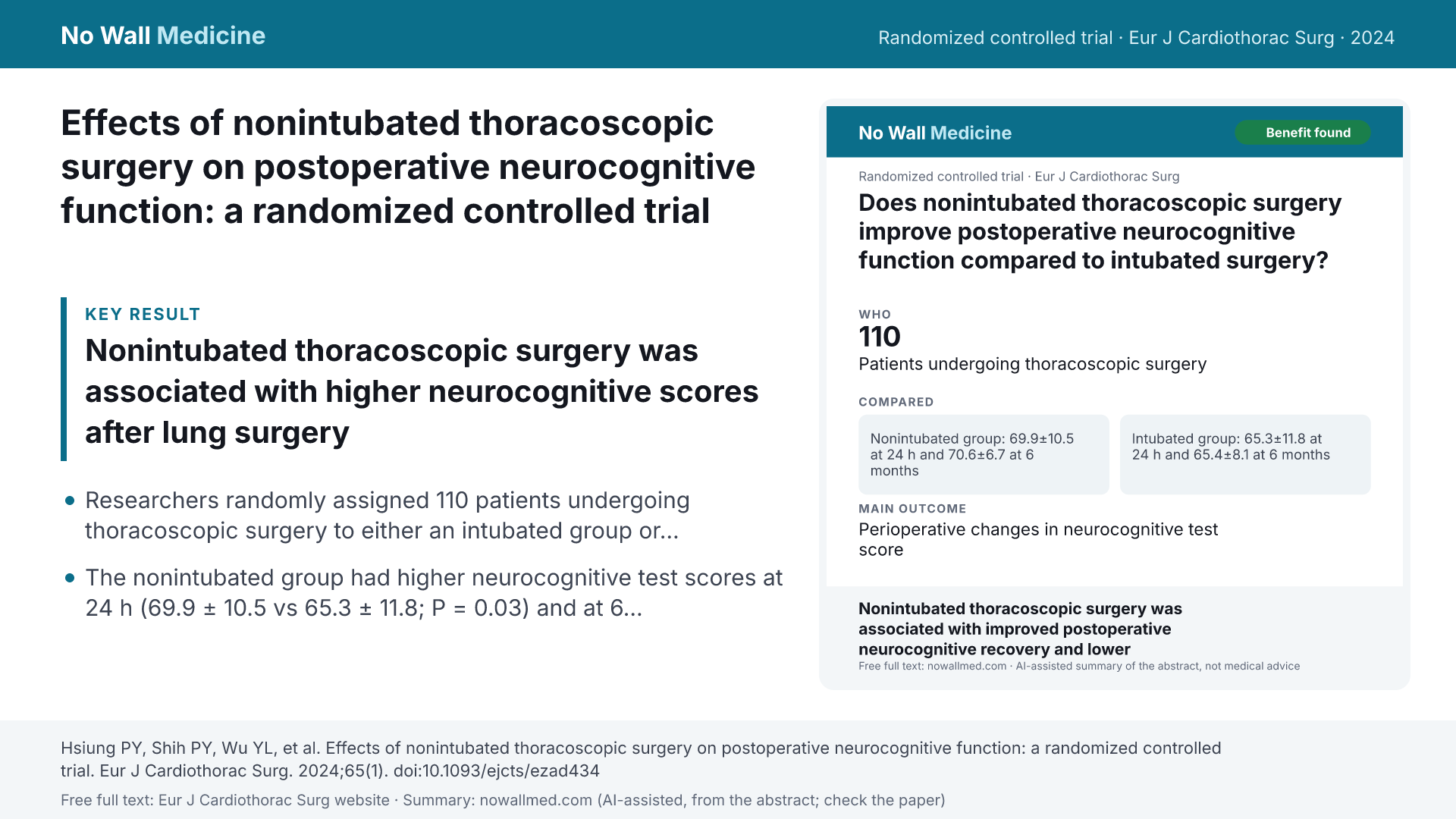
Nonintubated thoracoscopic surgery was associated with higher neurocognitive scores after lung surgery
Effects of nonintubated thoracoscopic surgery on postoperative neurocognitive function: a randomized controlled trial
Randomized controlled trialBenefit found
Does nonintubated thoracoscopic surgery improve postoperative neurocognitive function compared to intubated surgery?
Who
110
Patients undergoing thoracoscopic surgery
Compared
Nonintubated group: 69.9±10.5 at 24 h and 70.6±6.7 at 6 months
Intubated group: 65.3±11.8 at 24 h and 65.4±8.1 at 6 months
Main outcome
Perioperative changes in neurocognitive test score
Bottom line: Nonintubated thoracoscopic surgery was associated with improved postoperative neurocognitive recovery and lower complication severity.
Eur J Cardiothorac Surg · 2024-01-04Download image
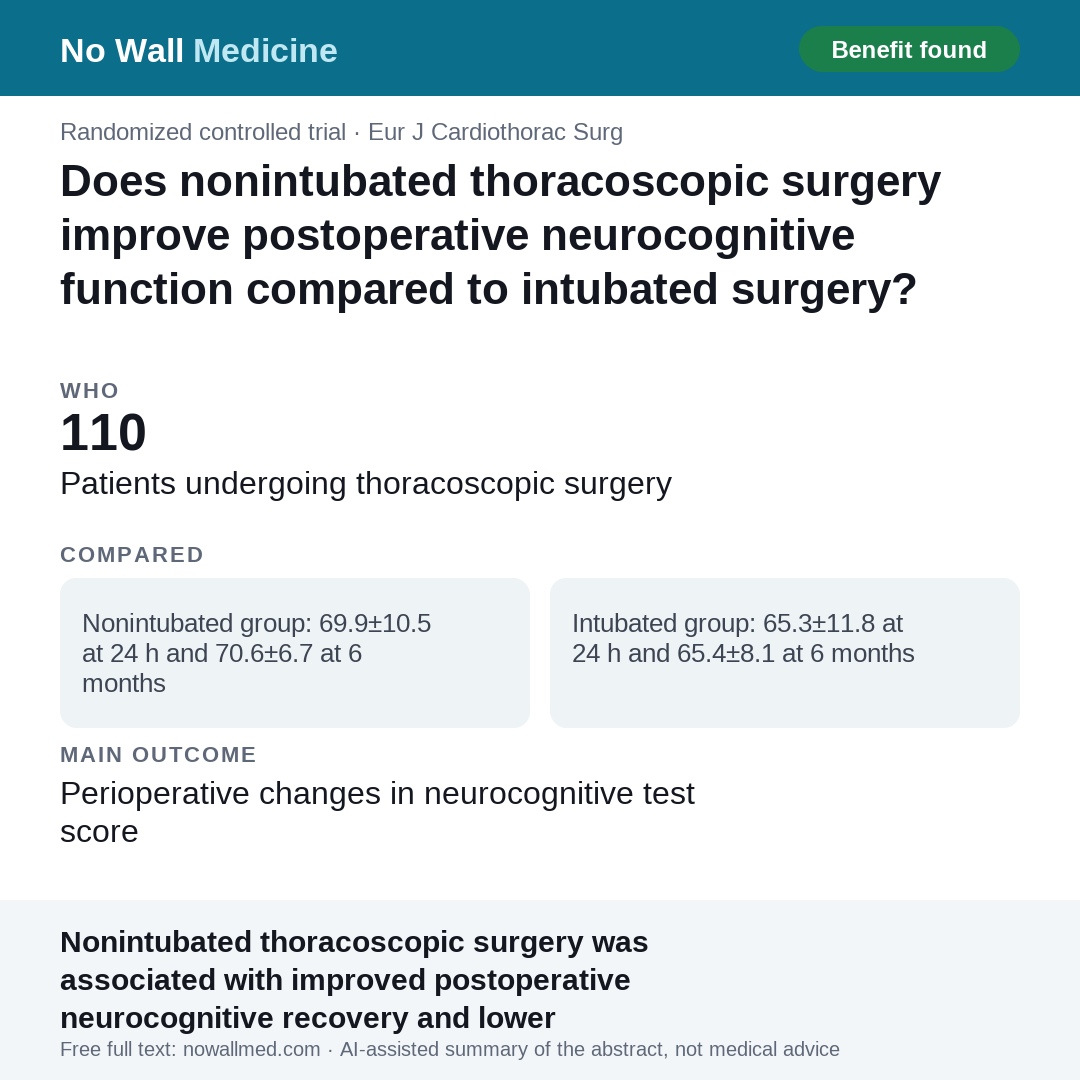
Clinical question: Does nonintubated thoracoscopic surgery improve postoperative neurocognitive function compared to intubated surgery?
Key points
- Researchers randomly assigned 110 patients undergoing thoracoscopic surgery to either an intubated group or a nonintubated group using regional anesthesia and spontaneous breathing.
- The nonintubated group had higher neurocognitive test scores at 24 h (69.9 ± 10.5 vs 65.3 ± 11.8; P = 0.03) and at 6 months (70.6 ± 6.7 vs 65.4 ± 8.1; P < 0.01).
- Patients in the nonintubated group showed significantly higher regional cerebral oxygenation during one-lung ventilation and a lower Comprehensive Complication Index (6.1 ± 7.1 vs 9.0 ± 8.2; P < 0.05).
Headline and key points written with AI from the paper’s abstract, with every number checked against it. Read the paper before relying on them.
Was this summary helpful?
Subject terms
Headline, design, result, key points, caveat and citation as plain text.
Cite this article
Hsiung PY, Shih PY, Wu YL, et al. Effects of nonintubated thoracoscopic surgery on postoperative neurocognitive function: a randomized controlled trial. Eur J Cardiothorac Surg. 2024. doi:10.1093/ejcts/ezad434
Spotted a mistake? Suggest a correction