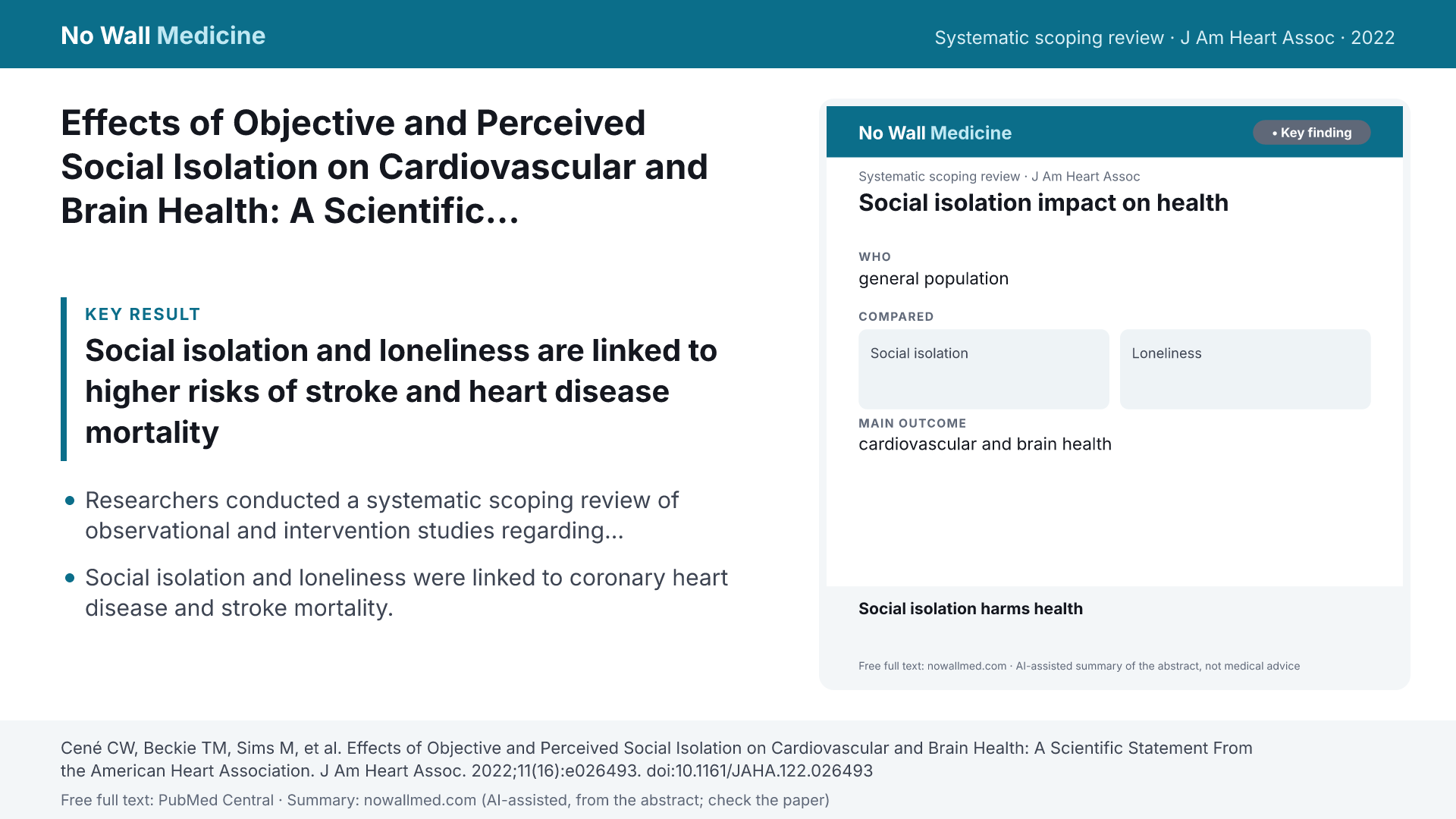
Effects of Objective and Perceived Social Isolation on Cardiovascular and Brain Health: A Scientific Statement From the American Heart Association
Key result: Social isolation and loneliness are linked to higher risks of stroke and heart disease mortality
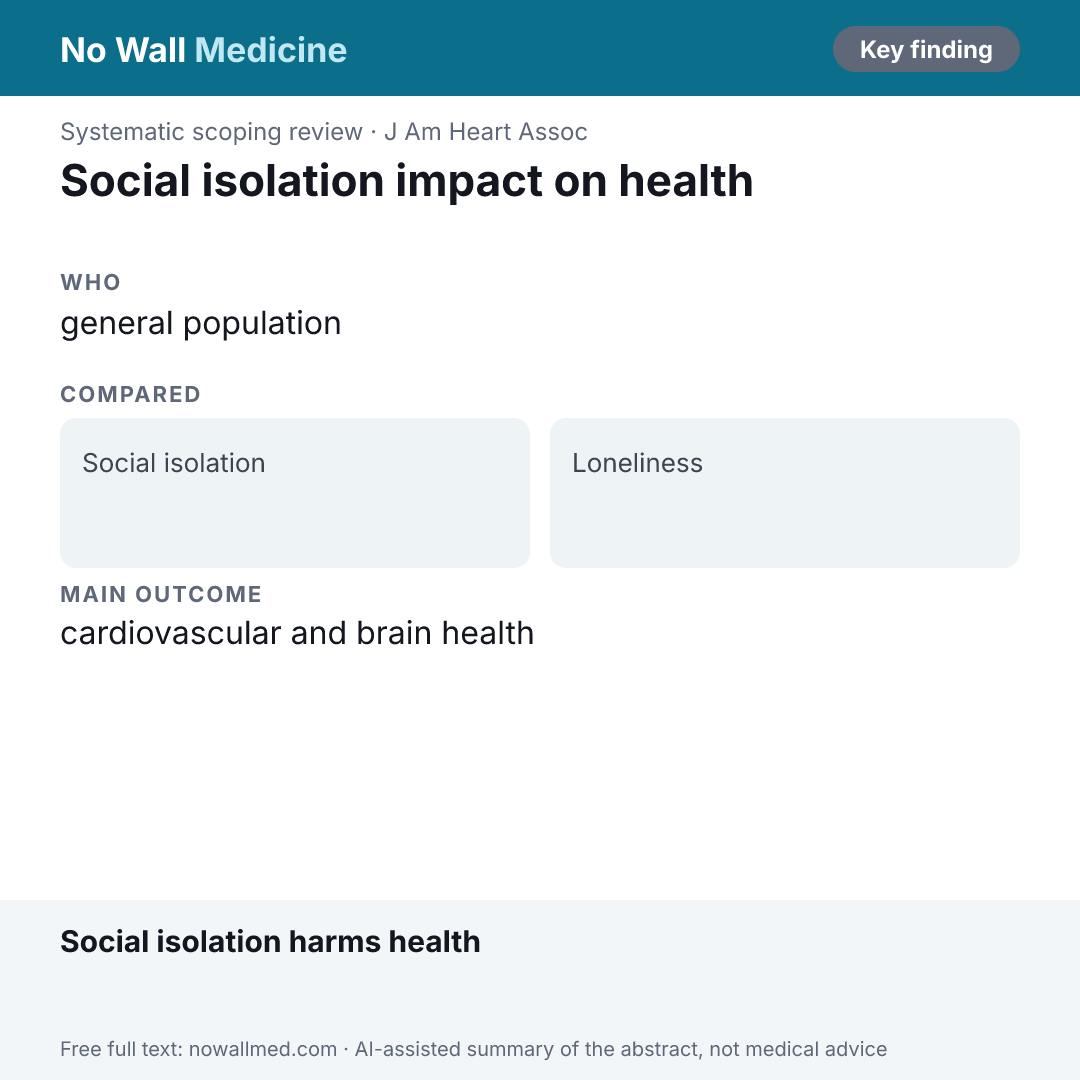
Key points
- Researchers conducted a systematic scoping review of observational and intervention studies regarding social isolation and loneliness.
- Social isolation and loneliness were linked to coronary heart disease and stroke mortality.
- The associations between these social factors and heart failure, dementia, or cognitive impairment were found to be sparse and less robust.
Why it matters: The specific connections between social isolation, loneliness, and various cardiovascular and brain health outcomes remain inconsistent across different medical conditions.
Limitation the authors note: The authors noted that effect estimates are small, unmeasured confounding factors may exist, and research on high-risk groups is limited.
Discussion prompts
- Would these patients look like yours? Who was left out?
- Is the main outcome one that matters to patients?
- Is the difference large enough to change what you do?
Cite: Cené CW, Beckie TM, Sims M, et al. Effects of Objective and Perceived Social Isolation on Cardiovascular and Brain Health: A Scientific Statement From the American Heart Association. J Am Heart Assoc. 2022;11(16):e026493. doi:10.1161/JAHA.122.026493
Free full text: PubMed Central · Summary and visual abstract: nowallmed.com/a/effects-of-objective-and-perceived-social-isolation-on-cardiovascular-1f352tl/ (AI-assisted from the abstract; check the paper before relying on it).