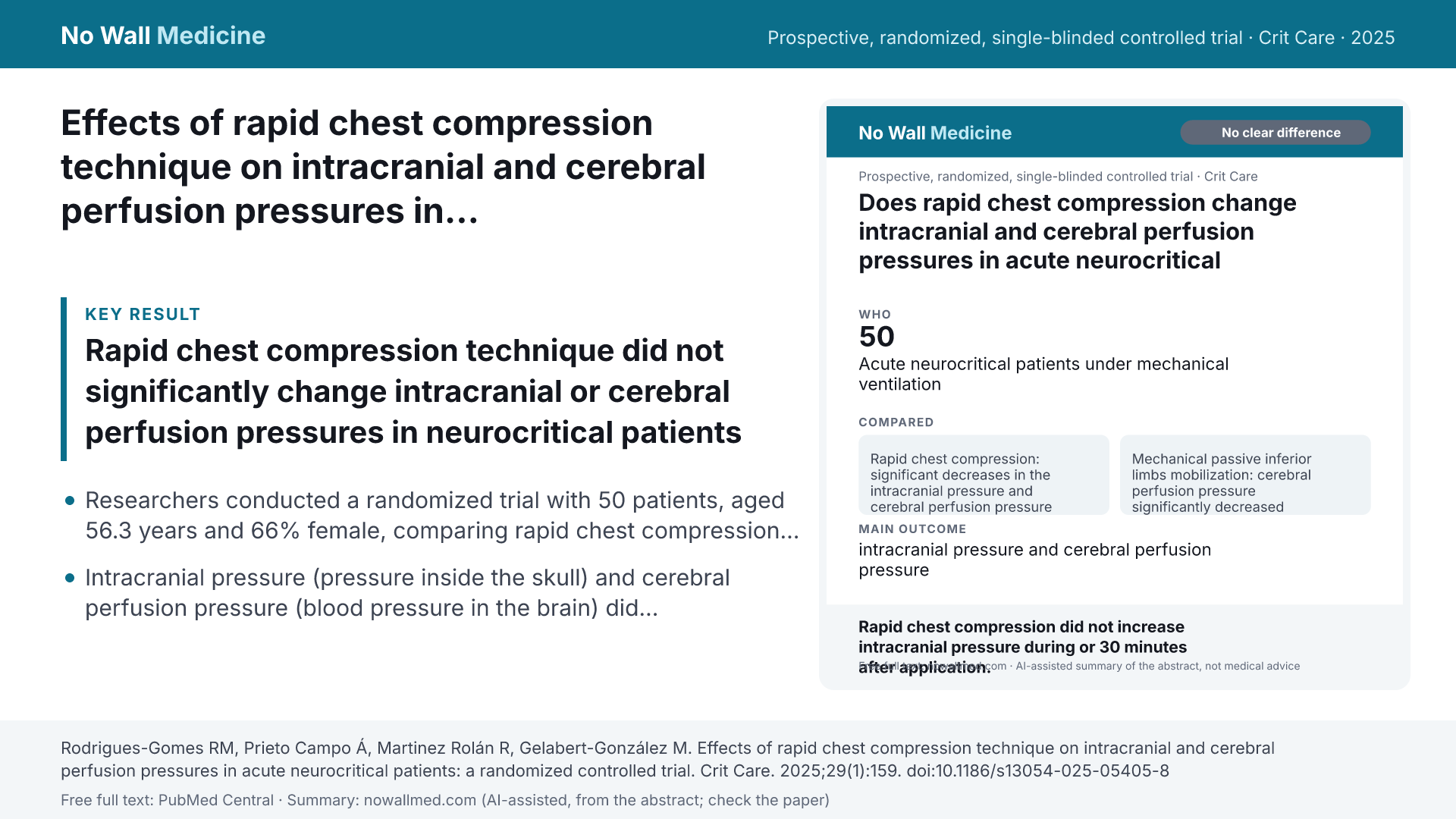
Effects of rapid chest compression technique on intracranial and cerebral perfusion pressures in acute neurocritical patients: a randomized controlled trial
Key result: Rapid chest compression technique did not significantly change intracranial or cerebral perfusion pressures in neurocritical patients
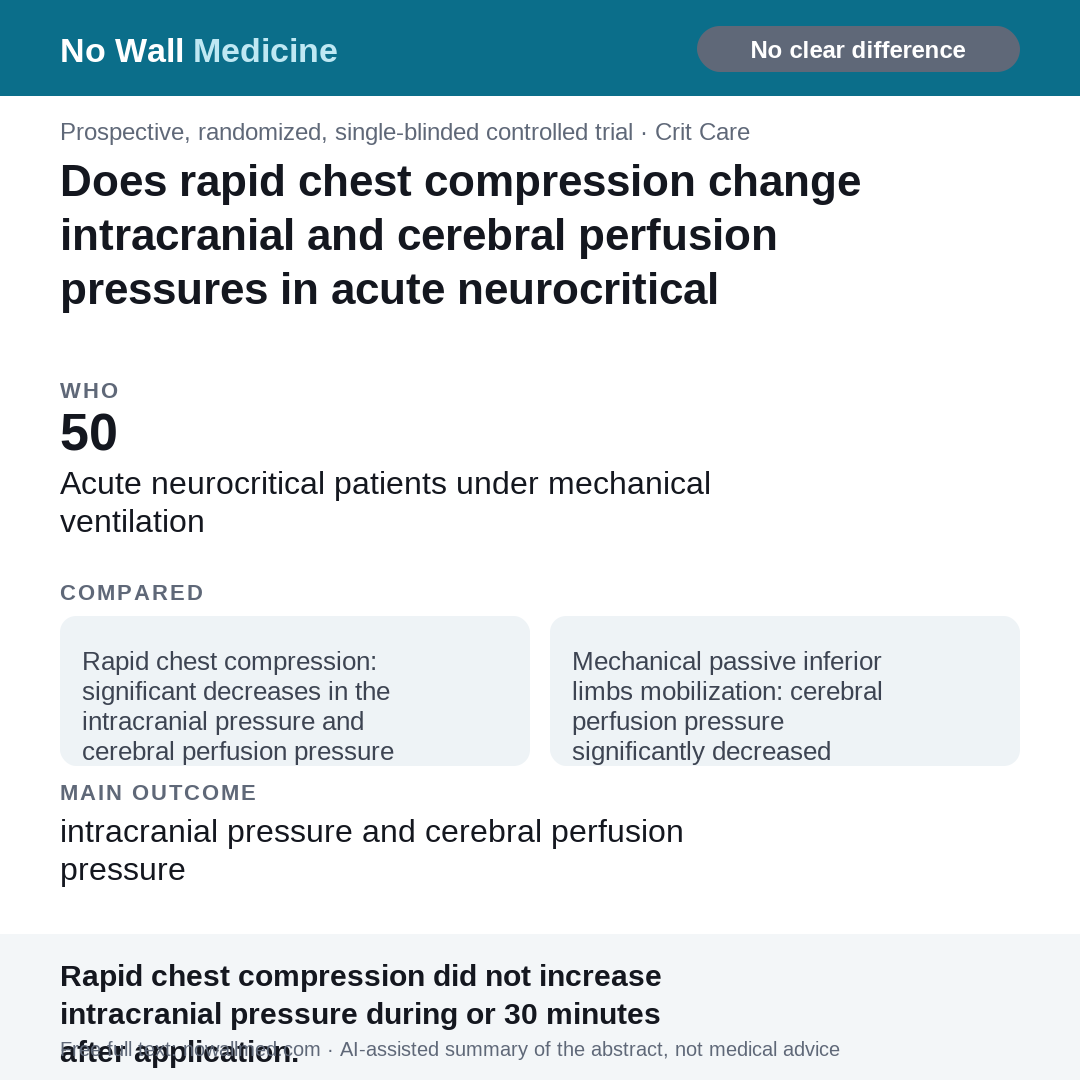
Prospective, randomized, single-blinded controlled trialNo clear difference
Does rapid chest compression change intracranial and cerebral perfusion pressures in acute neurocritical patients?
Who
50
Acute neurocritical patients under mechanical ventilation
Compared
Rapid chest compression: significant decreases in the intracranial pressure and cerebral perfusion pressure
Mechanical passive inferior limbs mobilization: cerebral perfusion pressure significantly decreased
Main outcome
intracranial pressure and cerebral perfusion pressure
Bottom line: Rapid chest compression did not increase intracranial pressure during or 30 minutes after application.
Crit Care · 2025-04-23Download image
Key points
- Researchers conducted a randomized trial with 50 patients, aged 56.3 years and 66% female, comparing rapid chest compression to passive leg mobilization.
- Intracranial pressure (pressure inside the skull) and cerebral perfusion pressure (blood pressure in the brain) did not significantly differ between the two groups.
- The rapid chest compression group had significantly lower carbon dioxide levels in the blood than the control group at the end of the study.
Discussion prompts
- Would these patients look like yours? Who was left out?
- Is the main outcome one that matters to patients?
- Is the difference large enough to change what you do?
Cite: Rodrigues-Gomes RM, Prieto Campo Á, Martinez Rolán R, Gelabert-González M. Effects of rapid chest compression technique on intracranial and cerebral perfusion pressures in acute neurocritical patients: a randomized controlled trial. Crit Care. 2025. doi:10.1186/s13054-025-05405-8
Free full text: PubMed Central · Summary and visual abstract: nowallmed.com/a/effects-of-rapid-chest-compression-technique-on-intracranial-and-19i35ev/ (AI-assisted from the abstract; check the paper before relying on it).