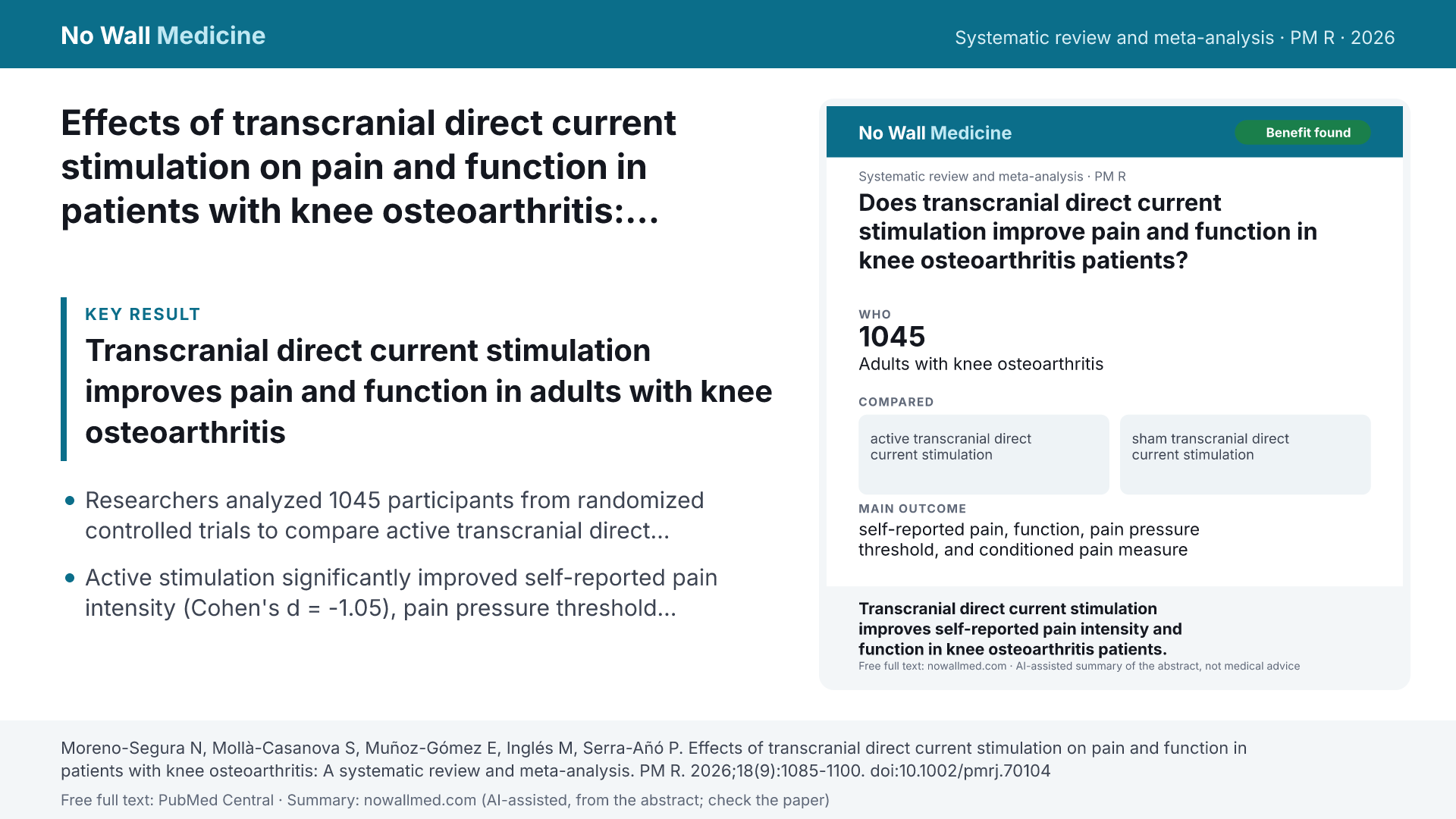
Effects of transcranial direct current stimulation on pain and function in patients with knee osteoarthritis: A systematic review and meta-analysis
Key result: Transcranial direct current stimulation improves pain and function in adults with knee osteoarthritis
Systematic review and meta-analysisBenefit found
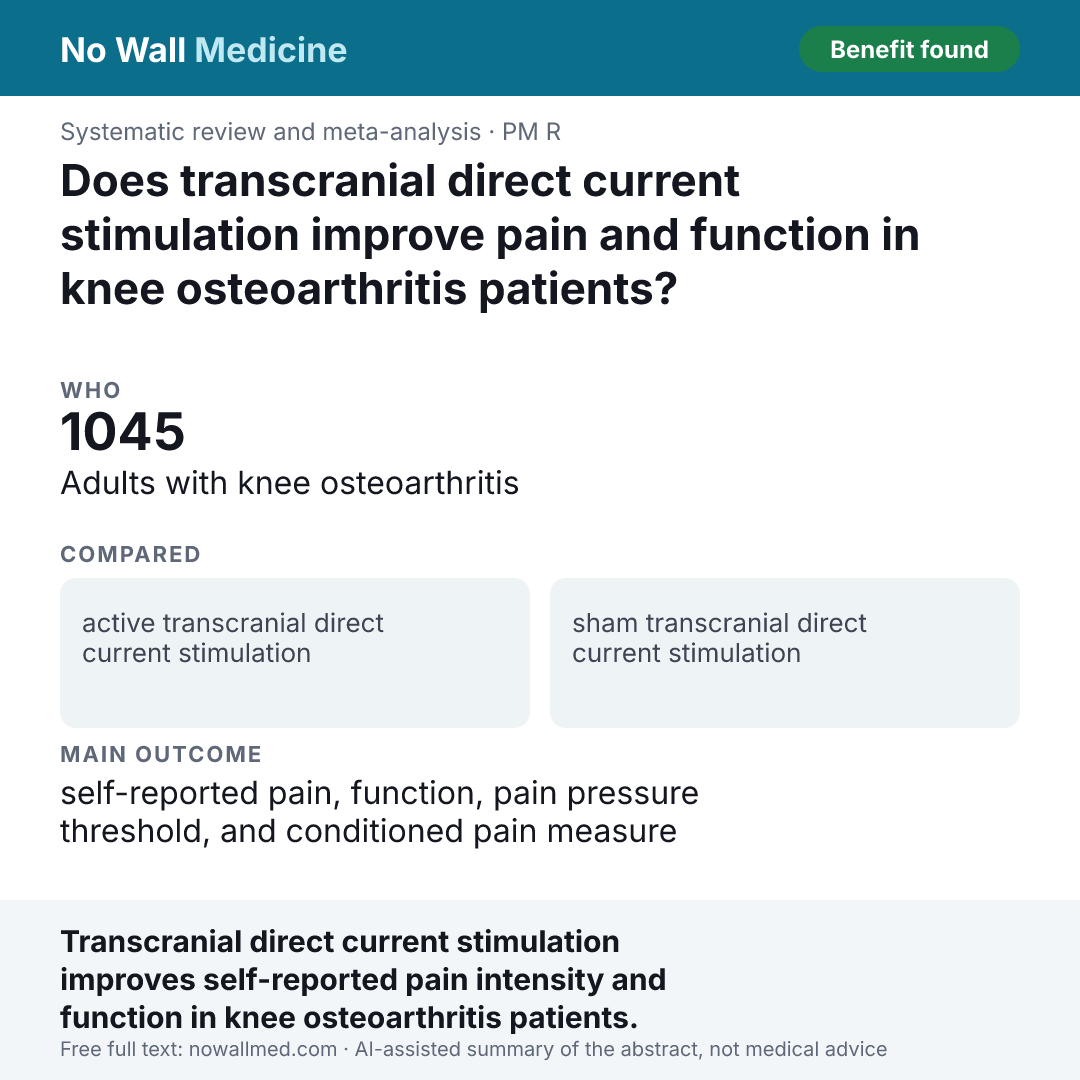
Does transcranial direct current stimulation improve pain and function in knee osteoarthritis patients?
Who
1045
Adults with knee osteoarthritis
Compared
active transcranial direct current stimulation
sham transcranial direct current stimulation
Main outcome
self-reported pain, function, pain pressure threshold, and conditioned pain measure
Result: Cohen's d -1.05 (95% CI -1.40 to -0.70) for pain intensity
Bottom line: Transcranial direct current stimulation improves self-reported pain intensity and function in knee osteoarthritis patients.
PM R · 2026-03-24 · Save PNG
Key points
- Researchers analyzed 1045 participants from randomized controlled trials to compare active transcranial direct current stimulation against a sham or placebo stimulation.
- Active stimulation significantly improved self-reported pain intensity (Cohen's d = -1.05), pain pressure threshold (Cohen's d = -0.77), and physical function (Cohen's d = -0.29).
- The intervention showed no difference between active and sham stimulation regarding the conditioned pain measure, which assesses the body's internal pain inhibition system.
Discussion prompts
- Would these patients look like yours? Who was left out?
- Is the main outcome one that matters to patients?
- Is the difference large enough to change what you do?
Cite: Moreno-Segura N, Mollà-Casanova S, Muñoz-Gómez E, Inglés M, Serra-Añó P. Effects of transcranial direct current stimulation on pain and function in patients with knee osteoarthritis: A systematic review and meta-analysis. PM R. 2026;18(9):1085-1100. doi:10.1002/pmrj.70104
Free full text: PubMed Central · Summary and visual abstract: nowallmed.com/a/effects-of-transcranial-direct-current-stimulation-on-pain-and-1wknoah/ (AI-assisted from the abstract; check the paper before relying on it).