Transcranial pulse stimulation was associated with reduced autism symptoms in a randomized controlled trial
Effects of transcranial pulse stimulation on autism spectrum disorder: a double-blind, randomized, sham-controlled trial
Double-blind, randomized, sham-controlled trialBenefit found
Does transcranial pulse stimulation improve executive and social functions in autism spectrum disorder?
Who
32
32 participants aged 12-17 years with autism spectrum disorder
Compared
verum transcranial pulse stimulation: 24% reduction in total Childhood Autism Rating Scale score
sham transcranial pulse stimulation
Main outcome
Childhood Autism Rating Scale score changes
Result: d = 0.83-0.95
Bottom line: Transcranial pulse stimulation over the right temporoparietal junction effectively reduces core autism spectrum disorder symptoms.
Limitation: Future replication should include a larger sample from multi-nations.
Brain Commun · 2023-08-18 · Save PNG
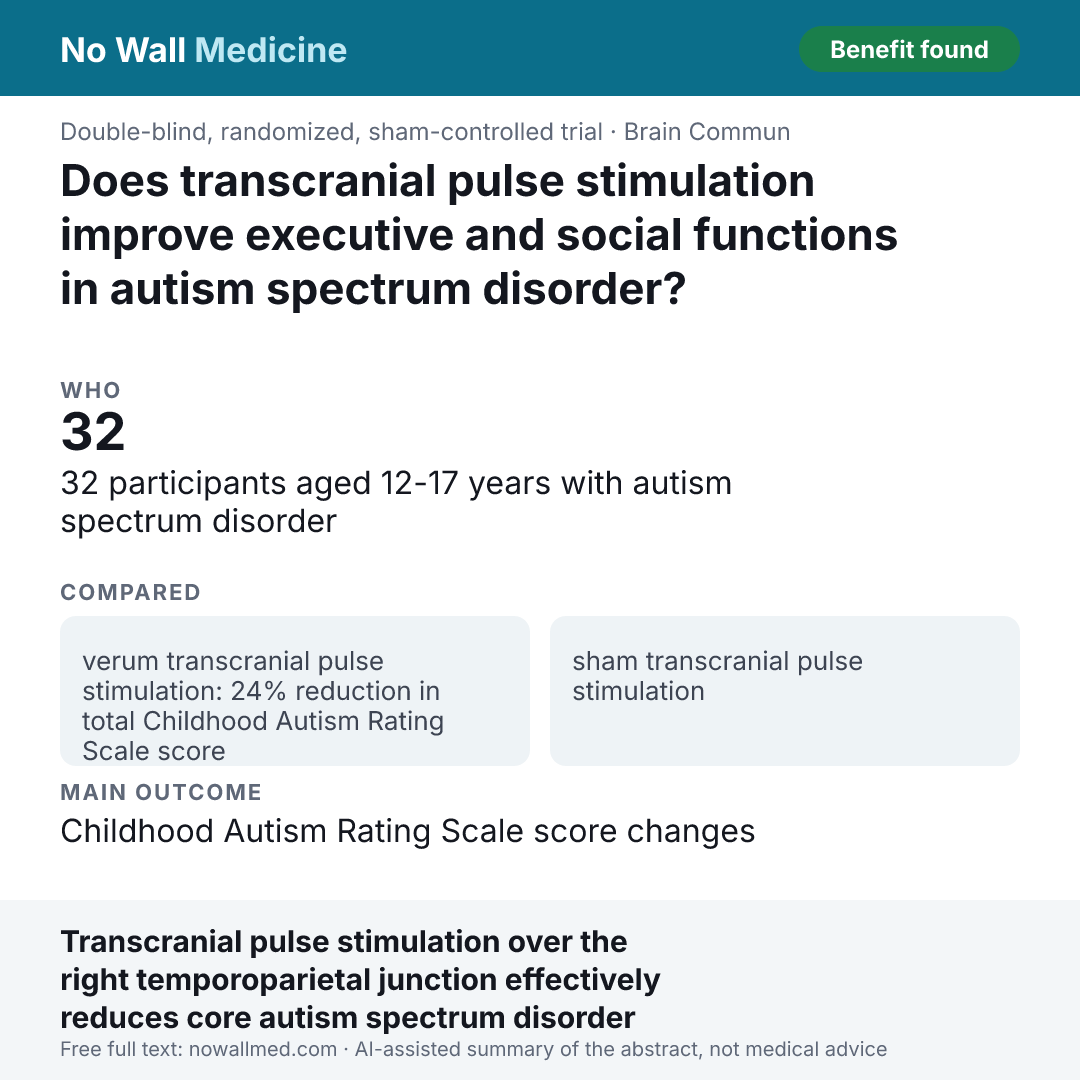
Clinical question: Does transcranial pulse stimulation improve executive and social functions in autism spectrum disorder?
Why it matters: Evidence regarding the effectiveness of transcranial pulse stimulation for neuropsychiatric disorders other than Alzheimer's disease remains limited.
Key points
- The study included 32 participants aged 12-17 years with autism spectrum disorder who received either real or sham transcranial pulse stimulation.
- The verum group showed a 24% reduction in total Childhood Autism Rating Scale scores and a 53.7% reduction in clinical global impression total scores at 3-month follow-up.
- While many secondary outcomes showed significant effects, some neuropsychological test results were deemed statistically insignificant.
Limitation the authors note: Future replication should include a larger sample derived from multi-nations.
Headline and key points written with AI from the paper’s abstract, with every number checked against it. Read the paper before relying on them.
Was this summary helpful?
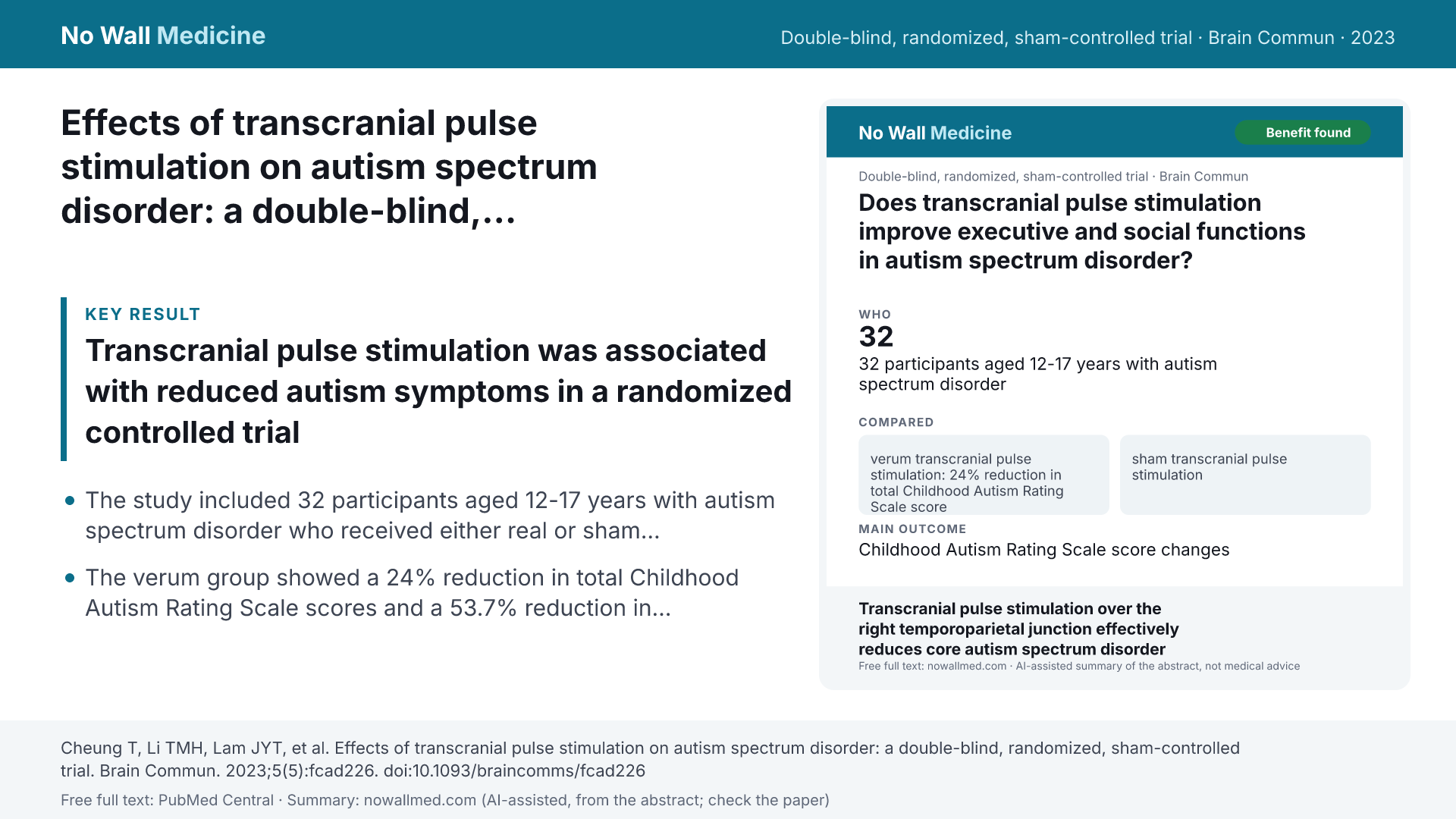
Headline, design, result, key points, caveat and citation as plain text.
Cite this article
Cheung T, Li TMH, Lam JYT, et al. Effects of transcranial pulse stimulation on autism spectrum disorder: a double-blind, randomized, sham-controlled trial. Brain Commun. 2023;5(5):fcad226. doi:10.1093/braincomms/fcad226
Spotted a mistake? Suggest a correction