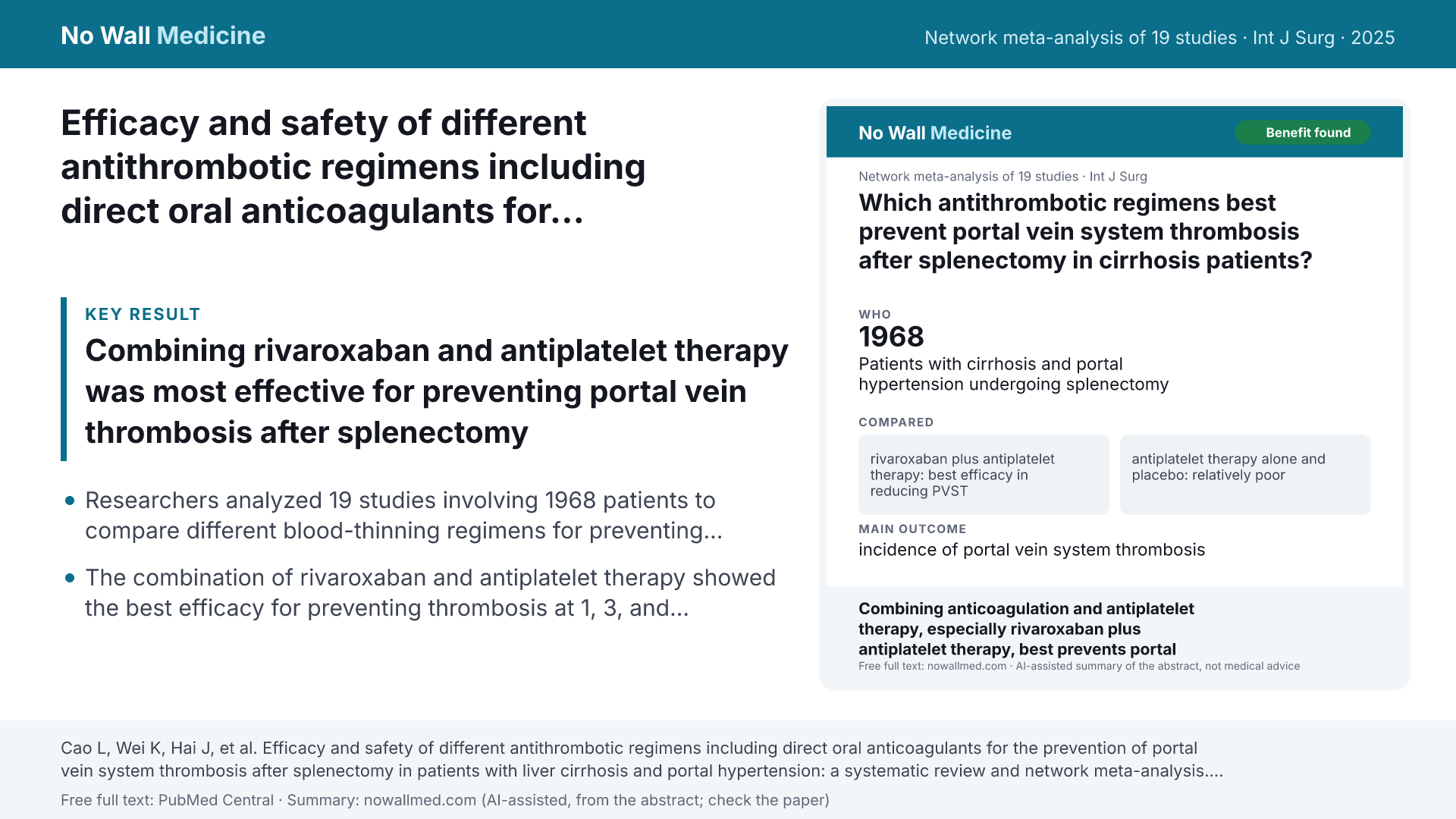
Combining rivaroxaban and antiplatelet therapy was most effective for preventing portal vein thrombosis after splenectomy
Efficacy and safety of different antithrombotic regimens including direct oral anticoagulants for the prevention of portal vein system thrombosis after splenectomy in patients with liver cirrhosis and portal hypertension: a systematic review and network meta-analysis
Network meta-analysis of 19 studiesBenefit found
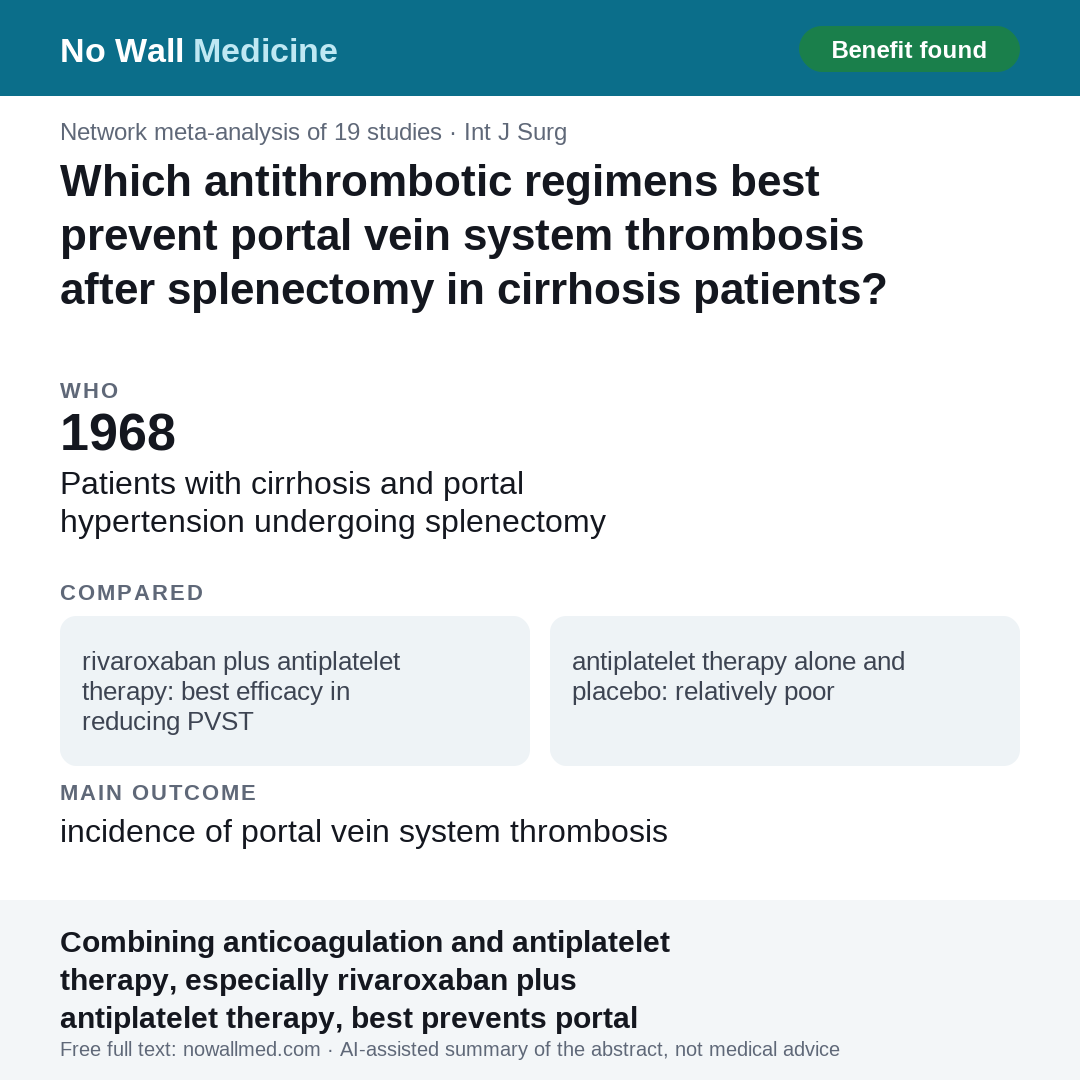
Which antithrombotic regimens best prevent portal vein system thrombosis after splenectomy in cirrhosis patients?
Who
1968
Patients with cirrhosis and portal hypertension undergoing splenectomy
Compared
rivaroxaban plus antiplatelet therapy: best efficacy in reducing PVST
antiplatelet therapy alone and placebo: relatively poor
Main outcome
incidence of portal vein system thrombosis
Bottom line: Combining anticoagulation and antiplatelet therapy, especially rivaroxaban plus antiplatelet therapy, best prevents portal vein system thrombosis.
Int J Surg · 2025-09-18Download image
Clinical question: Which antithrombotic regimens best prevent portal vein system thrombosis after splenectomy in cirrhosis patients?
Why it matters: It is unclear which antithrombotic regimen is most effective for preventing portal vein system thrombosis in patients with liver cirrhosis undergoing splenectomy.
Key points
- Researchers analyzed 19 studies involving 1968 patients to compare different blood-thinning regimens for preventing portal vein system thrombosis after spleen removal.
- The combination of rivaroxaban and antiplatelet therapy showed the best efficacy for preventing thrombosis at 1, 3, and 6 months postoperative.
- The incidence rate of bleeding was similar across all different antithrombotic regimens studied.
Headline and key points written with AI from the paper’s abstract, with every number checked against it. Read the paper before relying on them.
Was this summary helpful?
Subject terms
Cite this article
Cao L, Wei K, Hai J, et al. Efficacy and safety of different antithrombotic regimens including direct oral anticoagulants for the prevention of portal vein system thrombosis after splenectomy in patients with liver cirrhosis and portal hypertension: a systematic review and network meta-analysis. Int J Surg. 2025. doi:10.1097/JS9.0000000000003220
Spotted a mistake? Suggest a correction