Combination therapies show better survival and progression outcomes than sorafenib for advanced liver cancer
Efficacy and safety of frontline systemic therapy for advanced HCC: A network meta-analysis of landmark phase III trials
Network meta-analysis of 15 phase III studiesBenefit found
What are the efficacy and safety of frontline systemic therapies for advanced hepatocellular carcinoma?
Who
10820
Patients with advanced hepatocellular carcinoma
Compared
Sintilimab + IBI350: HR 0.57 (95% CI 0.43-0.75)
Camrelizumab + rivoceranib: HR 0.62 (95% CI 0.49-0.79)
Atezolizumab + bevacizumab: HR 0.66 (95% CI 0.52-0.84)
Sorafenib: Reference
Main outcome
Overall survival, progression-free survival, response rates, and adverse events
Result: HR 0.57 (95% CI 0.43-0.75) for Sintilimab + IBI350 vs sorafenib
Bottom line: Combination therapies of immune checkpoint inhibitors with anti-angiogenic agents or double immune checkpoint inhibitors provide the greatest survival benefit.
JHEP Rep · 2023-02-18 · Save PNG
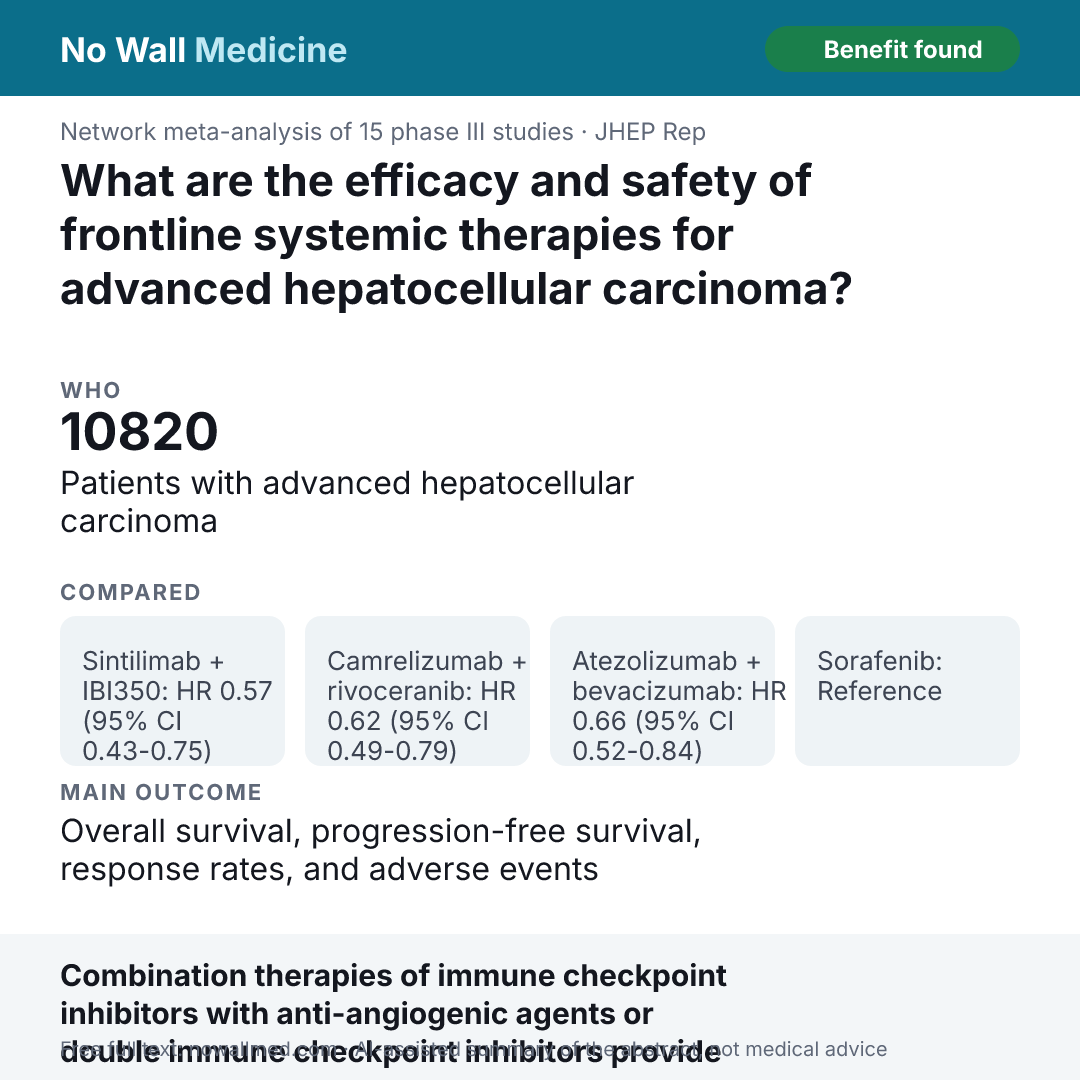
Clinical question: What are the efficacy and safety of frontline systemic therapies for advanced hepatocellular carcinoma?
Why it matters: Direct comparisons between different first-line systemic treatment regimens for advanced hepatocellular carcinoma are not available.
Key points
- Researchers analyzed 15 phase III trials involving 10,820 patients to compare first-line treatments for advanced hepatocellular carcinoma, a type of primary liver cancer.
- Sintilimab + IBI350, camrelizumab + rivoceranib, and atezolizumab + bevacizumab were associated with the greatest reduction in death risk compared to sorafenib, with hazard ratios of 0.57, 0.62, and 0.66.
- Camrelizumab + rivoceranib and pembrolizumab + lenvatinib were associated with the greatest reduction in progression-free survival events, while immune checkpoint inhibitor monotherapies had the lowest risk for adverse events.
Headline and key points written with AI from the paper’s abstract, with every number checked against it. Read the paper before relying on them.
Was this summary helpful?
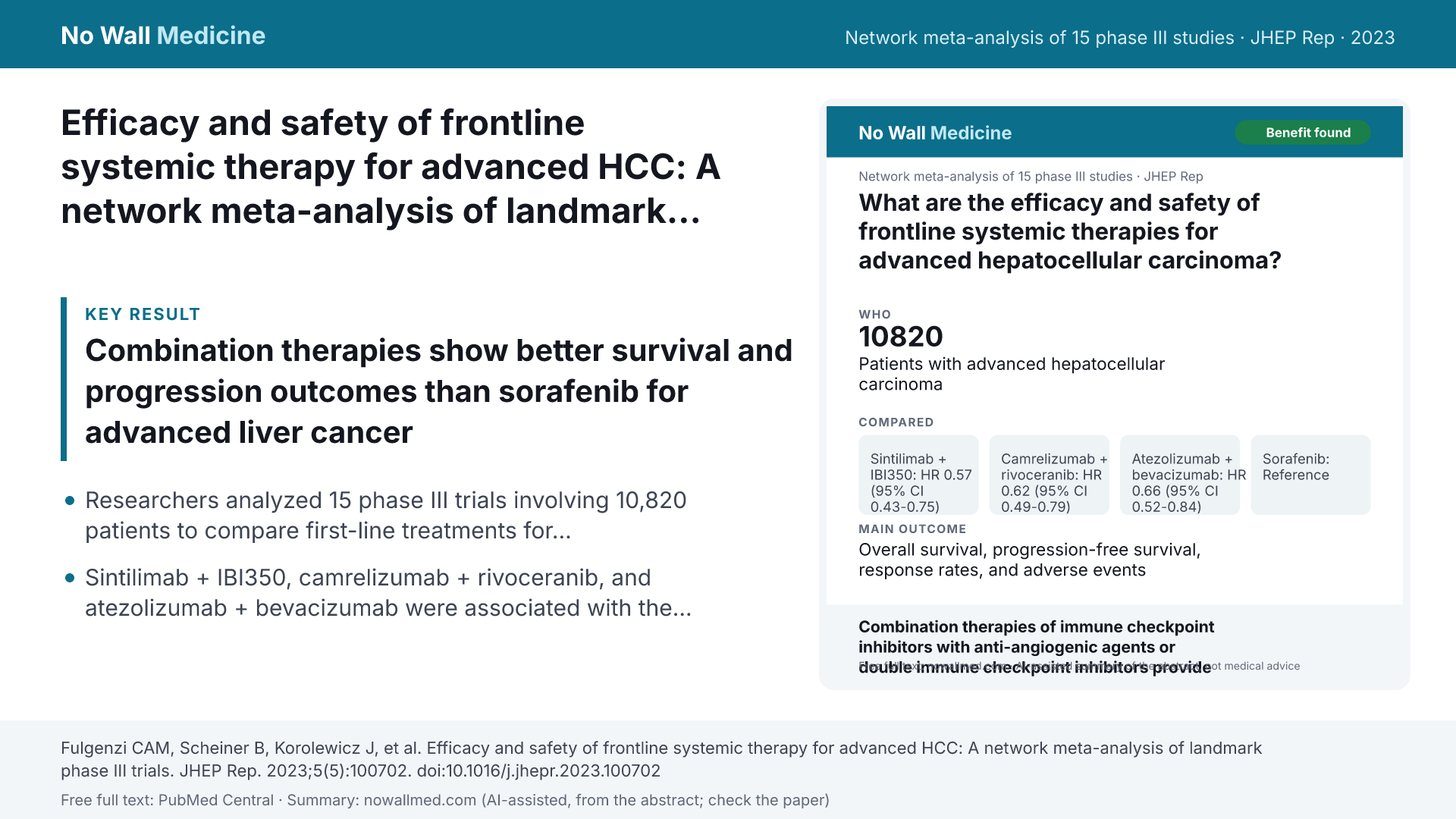
Headline, design, result, key points, caveat and citation as plain text.
Cite this article
Fulgenzi CAM, Scheiner B, Korolewicz J, et al. Efficacy and safety of frontline systemic therapy for advanced HCC: A network meta-analysis of landmark phase III trials. JHEP Rep. 2023;5(5):100702. doi:10.1016/j.jhepr.2023.100702
Spotted a mistake? Suggest a correction