Most Alzheimer disease drug trials use clinical outcomes and biomarkers as efficacy measures
Efficacy Measures Used in Alzheimer Disease Clinical Trials Between 2015 and 2025: A Systematic Review
Systematic reviewMixed results
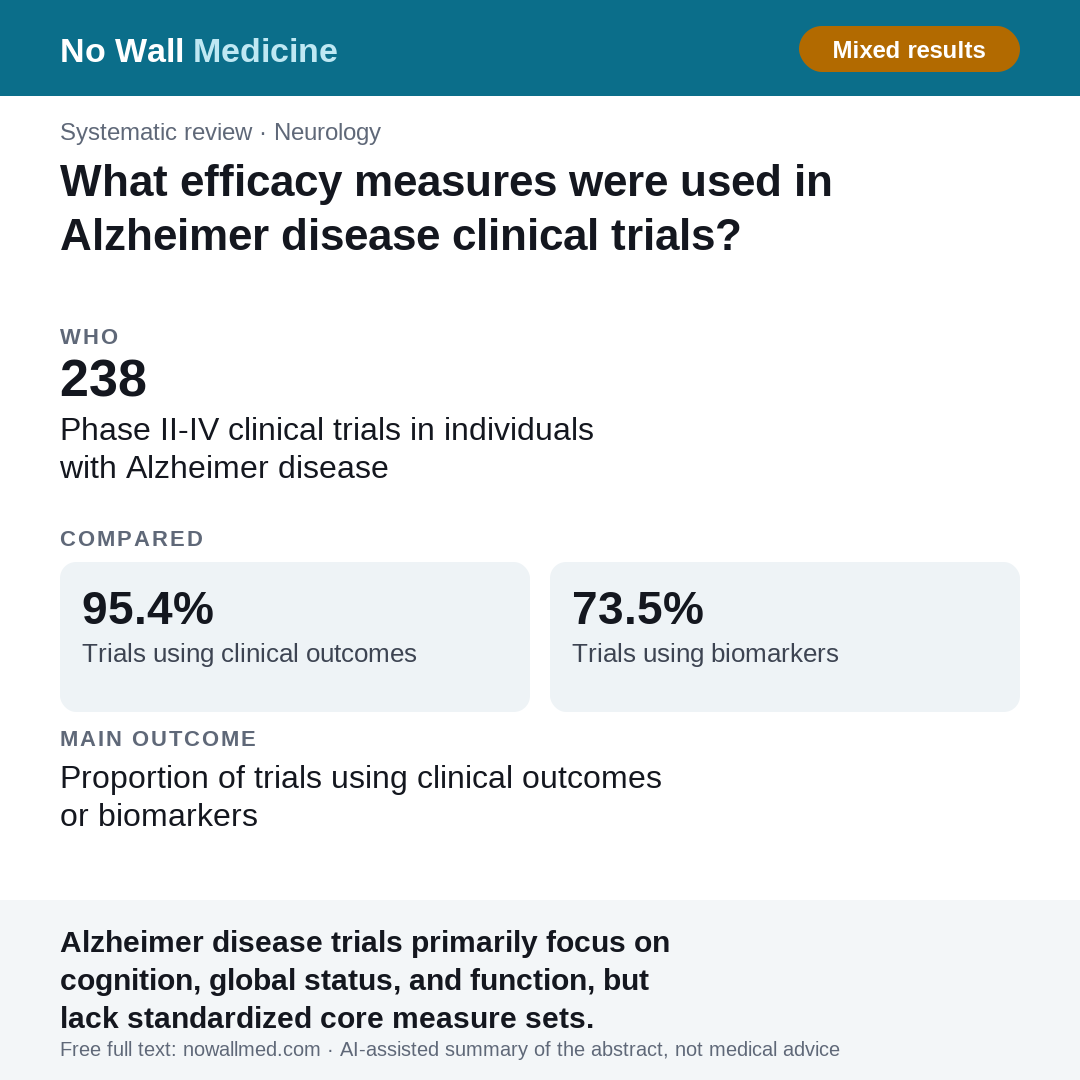
What efficacy measures were used in Alzheimer disease clinical trials?
Who
238
Phase II-IV clinical trials in individuals with Alzheimer disease
Compared
95.4%Trials using clinical outcomes (227/238)
73.5%Trials using biomarkers (175/238)
Main outcome
Proportion of trials using clinical outcomes or biomarkers
Bottom line: Alzheimer disease trials primarily focus on cognition, global status, and function, but lack standardized core measure sets.
Limitation: Substantial heterogeneity in efficacy measure use limits comparability across trials.
Neurology · 2026-07-23Download image
Clinical question: What efficacy measures were used in Alzheimer disease clinical trials?
Why it matters: No contemporary review has examined the clinical relevance and variety of efficacy measures used in Alzheimer disease drug trials.
Key points
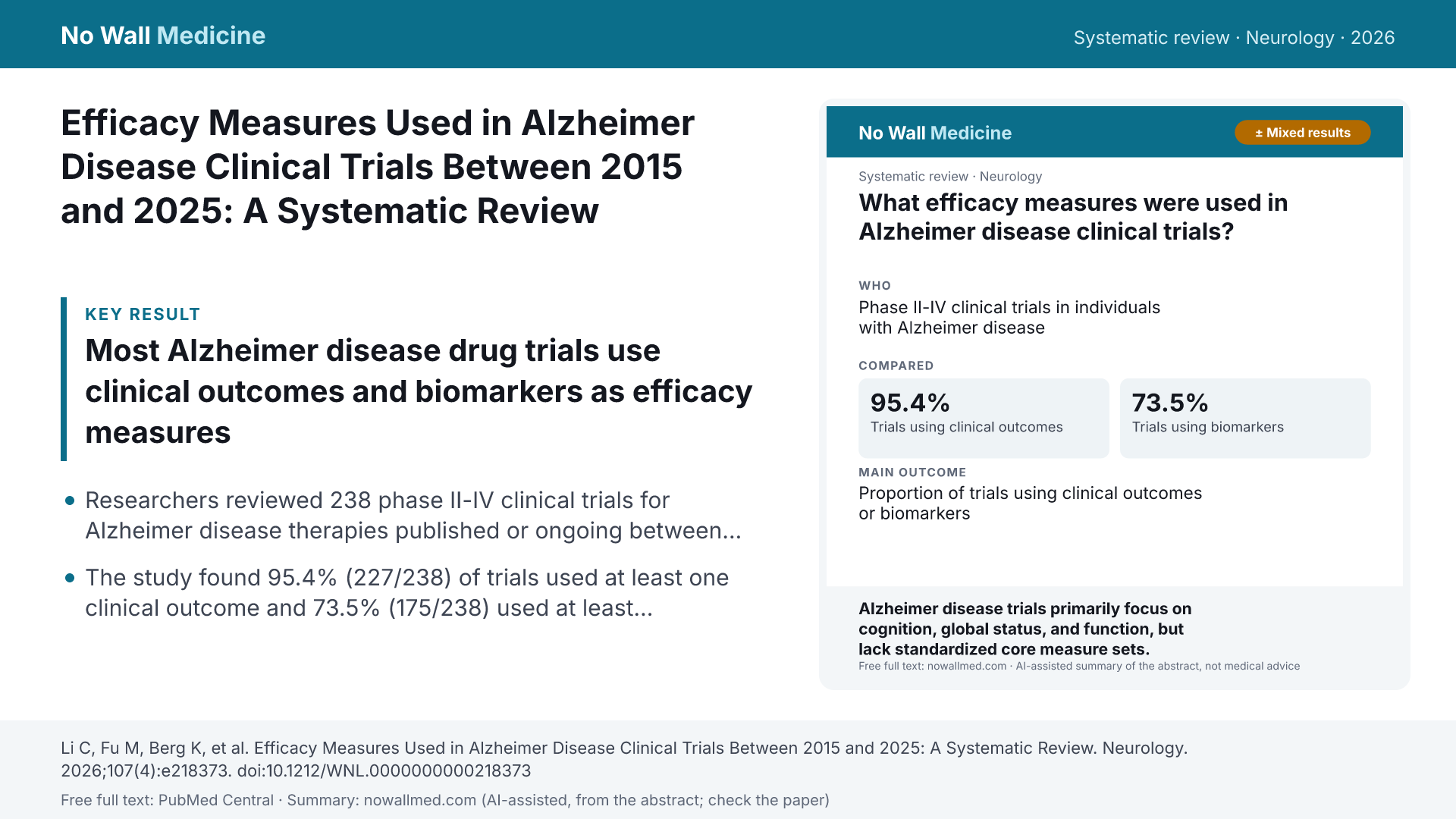
- Researchers reviewed 238 phase II-IV clinical trials for Alzheimer disease therapies published or ongoing between 2015 and 2025.
- The study found 95.4% (227/238) of trials used at least one clinical outcome and 73.5% (175/238) used at least one biomarker.
- Cognitive abilities were measured in 87.0% (207/238) of trials, while quality of life for patients was measured in only 16.0% (38/238).
Headline and key points written with AI from the paper’s abstract, with every number checked against it. Read the paper before relying on them.
Was this summary helpful?
Subject terms
Cite this article
Li C, Fu M, Berg K, et al. Efficacy Measures Used in Alzheimer Disease Clinical Trials Between 2015 and 2025: A Systematic Review. Neurology. 2026. doi:10.1212/WNL.0000000000218373
Spotted a mistake? Suggest a correction